Network Neutrality: An Update

loading


Yesterday (30.08.2017) will be marked as a watershed day by observers for Network Neutrality. The issue is being hotly contested in arguably the world’s most capitalistically advanced jurisdiction for telecom and the internet (U.S.A.) as well as the jurisdiction with potentially the biggest telecom and internet market, both by the number of users as well as revenue (India) and yesterday was an eventful day in both.

In India, the Telecom Regulatory Authority of India (T.R.A.I.)  held and concluded an Open House Session in New Delhi on the issue of Network Neutrality. Unfortunately, being bed – ridden with a fracture, I was unable to attend it myself, but I am informed that all parties were “extremely vocal” with their opinions. T.R.A.I. is likely to publish its recommendations by October. On a side note, Certain telecom companies also complained against SIM-locked handsets coupled with a tariff plan and said that a limited access to certain applications through such devices was as good as a “walled – garden” and against Network Neutrality (No prizes for guessing who they’re talking about).

At the opposite end of the globe, yesterday was the last day to file comments on the Federal Communications Commission plan to deregulate broadband service and roll back net neutrality rules, and at least 21.9 million comments have been confirmed to have been received. Voting by the F.C.C. on the issue is not expected anytime soon, as the Commission is known to take it’s time with decisions after such commentary periods.

Here’s to waiting and watching and hoping for the best.

C.C.I./T.R.A.I. and Flashbacks to Old Posts

collage-inside-CCI-TRAI-1

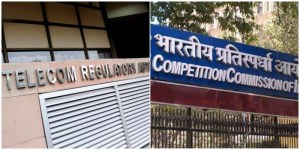
The recent C.C.I. – T.R.A.I. jurisdiction conflict regarding tariff investigations reminded of an old post which was written a long time ago. Those were very early days for the Competition Act and the C.C.I., but a theoretical conflict was spoken off even then. Personally, I find it surprising that it took so long for a dispute between the two to come to the fore, but without a doubt, sooner or later, it was bound to rear its head.

The old posts can be found here and here. I have nothing more to add, except factually, the C.C.I. appears to have failed to hold its own in Court when it’s jurisdiction came to be challenged regards the C.E.R.C. and the P.N.G.R.B. The P.N.G.R.B. Case was pending even at the time the previous posts were written, but subsequently fell below the radar. Surprisingly, neither of the Judgements (the C.E.R.C. Case or the P.N.G.R.B. Case) can be found. Please do post a link in the comments in case you find them or have access to them.

T.R.A.I. Consultation Paper on Differential Pricing for Data Services (A.K.A.) What Has Now Become The Fight Over “Free Basics”. (Part – II).

Its-free


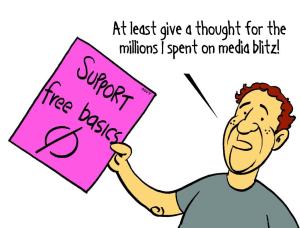
Now coming to the the Scheme which has been grabbing all the attention in the mass media, which includes news and paid correspondence !! Frankly, don’t remember the last time I saw the kind of advertising and media blitzkrieg which Facebook has released on the Indian public to promote “Free Basics”. The past week has been a mixture of multiple full page advertisements in all major newspapers giving us an insight into “what Network Neutrality Activists Won’t Tell You”, “A First Step Towards Digital Equality” and “Support Ganesh: Support Digital Equality”. Some of Facebook’s tactics displayed in full the desperation of the omnipresent social networking website as well as the gullibility of the Indian (atleast online) populace. Mark Zuckerberg has himself become part of the PR overdrive in order to push support for what he genuinely seems to believe should be the next big leap in connectivity in India.

Now lets get two facts straight at the very outset. There is NO DIFFERENCE between “Free Basics” and “Internet,org”. “Internet.org” was a failure because it generated too much unexpected negative publicity for Facebook and the websites/organisations joining the initiative. This led to most of them opting out of the service, which is why Facebook decided to re-christen the programme and to push it through this time they decided to also launch the “Free basics – Digital Equality” campaign in order to generate some public support for the Scheme. So far, it has been an expensive campaign with little to show for it, except for a lot (allegedly 3.2 million as per facebook itself) of virtual verbatim blind click mails and signatures which Facebook claims is the “support” they have received from the Indian online community. [UPDATE: The T.R.A.I. has now stated that it considers these mails/signatures as a valueless opinion poll and are not an adequate response to the questions framed by it.] Secondly, it would be most unfair to not acknowledge the fact that “Free Basics” has the potential to be beneficial to the citizens of India, especially the unconnected parts of the country. However, as I outline below, the Scheme as it’s terms and conditions stand today, are more harmful for internet connectivity in the Country than the ancillary benefits which may accrue.


FACEBOOK CONTROLS EVERYTHING ON FREE BASICS/INTERNET.ORG

It is Facebook which acts as a guardian of the gate who will decide who enters the Free Basics platform and who doesn’t. Frankly, I am not comfortable with one entity exercising such overarching controls over a programme which it aims to spread itself throughout the country, and further throughout the world. Make no mistake, philanthropy aside, there are two major reasons why Facebook actively pursues “Internet.org/Free Basics”:- One, more eyeballs for the advertisements generated on its website as new users sign into Facebook. Second, for the shear amount of data it will generate for analysis through its user-base. Facebook is at the end of the day a business and while it is natural for a business to want to expand its customer base and generate higher revenues/profits, this cannot come at a cost of taking advantage of an individuals lack of literacy or understanding of how expansive the internet really is and attempt to keep him or her confined to select websites which have “conformed” to the standards set by Facebook. In simple terms, Facebook has no right to act as a hand holding teacher and “guide” people through a particular path. People must be allowed to understand that the internet is more than what they will see through “Free Basics” and choose for themselves what they wish to do or see on it, whether it be researching on new farming techniques or even be as voyeuristic as watching porn. Don’t get me wrong. Am sure the “Ganesh” in the Full page newspaper ads must have genuinely benefited, but did he have any idea that what he saw was just perhaps two percent of the accessible internet ??

Let me substantiate this with a real life example of what is happening in poorer parts of the world. Millions of Facebook users have no idea they’re using the internet !! A research survey, with a special focus on Indonesia and Nigeria where surveys were carried out, displays how people were not aware about the internet, but yet used to directly access Facebook, to the extent that in opinion polls a higher percentage would state that they had accessed Facebook, but a lower percentage would state that they had accessed the internet !! And do note, the article discussing the findings is dated 9th February, 2015 and states that the trends were noticed three years ago, when “Internet.org” was merely a concept in discussion and roll out had not even started. Imagine what internet connectivity could become with “Internet.org/Free Basics” implementation at its peak ?!?!


THE PROBLEM IS NOT PRESENT ABUSE. IT IS POTENTIAL FOR ABUSE

As of now, Facebook has stated that it has never rejected an Application which fulfill’s the qualifying parameters for developers on “Internet.org/Free Basics”. That’s fine for now, but what about the future?? Is Facebook willing to give a commitment that the “parameters” will always be broad and will never be to the detriment of a genuinely useful Application for the people?? No it won’t, not because it may or may not want to, but because it can’t !! The engineers at Facebook are not oracles to see the future, and what can be good or not got good or worthy or not worthy to be accessed by the Indian internet community cannot be subject to parameters laid down at a single given point of time, no matter how broad they may be. This will always be subject to the ever changing values of any given society and furthermore, to the ever important evolution of technology which in today’s furiously paced world is not just extremely hard, but downright impossible to predict. Anybody could come up with a technology or programme to give Facebook a run for its money. Can Facebook give an absolute guarantee in writing that such an Application/Programme would be allowed on Free basics?? I highly doubt it. (You can already see a potential for such abuse relating to an upstart Facebook rival “Tsu.co”)

One look at the Reliance Free Basics website for details on the websites which as of today on the platform shows that only thirty one websites/Applications are part of the Free services available under “Free Basics”. The only social networking websites, no guesses required here, are Facebook and Facebook Messenger. Over and above this, the only search portal was “Bing”, the only Jobs portal was “BabaJob” (I hadn’t even heard or read of them before seeing them here) and the only shopping website was “OLX”. The result is a potentially serious anti-competitive scenario over the internet resulting


THE INTERNET IS NOT A BUSINESS. 

David Kirkpatrick, in a Linkedin Pulse Blog Post, is one of the few who has come out in defence of Facebook/Free Basics. He opined a marxist argument questioning in bold words “Do all these elite and generally upper-class and affluent Indian pundits, professors and anti-corporate activists have a better way to get many millions of less-privileged Indians onto the Internet?” and further goes on declare as follows:

“But in my view Free Basics is a fine example of what many call “doing well by doing good.” There is nothing wrong with being in business. There is nothing wrong with a business trying to acquire new customers. There is nothing wrong with offering something for free that you might charge for later. And however ruefully people elsewhere sometimes view it, there’s nothing wrong with Facebook being an American company operating successfully around the world.

Do all these elite and generally upper-class and affluent Indian pundits, professors and anti-corporate activists have a better way to get many millions of less-privileged Indians onto the Internet? If they don’t, their arguments are hollow. It’s hard to understand why Facebook shouldn’t be able to subsidize new customers’ entrance into the contemporary world of information power. For the poor, the opponents’ arguments add up to literally nothing. That’s what those people would get without Free Basics. But then, that’s what such people have had in India for millenia.

As I have already acknowledged, I too believe that Mark Zuckerberg is pursuing his endeavour with such zeal partly due to the obvious enormous potential advantage it can generate in favour of Facebook as well as a sense of idealism and an intent to do some good. But Kirkpatrick misses the point. THE INTERNET IS NOT A BUSINESS. It is a resource. You may use the internet to build a profitable business, but one cannot be allowed to make a business of the internet itself. The internet is a resource which is first and foremost, in the custody of the State which acts as a custodian of the resource on behalf of the citizens of that State. Which is why you have spectrum auctions. The Central Government, which is the custodian and owner of all spectrum in the Country, effectively leases bandwiths in different circles to different businesses which can harness the spectrum to provide internet services and/or use the internet itself. What Free Basics aims to do is to make a business out of the Internet itself. by allowing access to some applications while denying access to others (on technical grounds, if not more nefarious reasons), it effectively seeks to control what you consider as “The Internet”. Furthermore, it is important to note that Facebook itself has acknowledged that it is open to advertisement on the Free Basics platform to generate revenue in the future.


LACK OF CONNECTIVITY IN INDIA IS BECAUSE OF LACK OF INFRASTRUCTURE. NOT LACK OF FREE BASICS

The lack of connectivity in India is not because of lack of money. If a man or a woman can afford a smartphone, it’s safe to presume that he or she can also afford a 3G/4G pack along with it or be able to access wi-fi from some point, either at home or work or both. The problem of connectivity has more to with lack of infrastructure, both in rural and urban areas, and “Free Basics” does nothing to solve this. It does not help to build mobile towers or help in contributing additional spectrum for public use. All that it does is allow access to some websites for free. But what would be the point to allowing free access to websites on the internet if they cannot get the signal/bars to access the internet in the first place ?!?! If anything, it has the potential to add to the burden of the overused and under developed mobile connectivity services.


CONCLUSION


To conclude:
Untitled                                                                                                                                          (R. Prasad)


Facebook may have just lost some serious love and respect in one of its biggest markets.

P.S. : HAPPY NEW YEAR. 🙂

T.R.A.I. Consultation Paper on Differential Pricing for Data Services (A.K.A.) What Has Now Become The Fight Over “Free Basics”. (Part – I)

5629f14533909-logo


At the very outset, it must be stated that the Supreme Court Winter vacations have a tendency to induce one into a hibernating lethargy (in my case, lying tucked in bed with two blankets, a book and a halogen heater), which is the reason this post has taken such a long time to finally come to an end and be published. (For those who may not have understood by now, I am a true summer fan and sincerely dislike winter !!)

While this delay has allowed me to observe and note the developments in the past few days which have taken place regarding the issue, i.e., the “Free basics” fight which has broken out between Facebook and internet freedom activists, it has also at the same time forced me to expand this post to include a discussion on “Free Basics” as a service and whether it can actually help the citizens of India or not.

Coming first to the T.R.A.I. Consultation Paper on Differential Pricing for Data Services, the first question which immediately springs to mind is:- WHY ?? This issue was specifically raised and discussed in the previous T.R.A.I. Consultation Paper On Regulatory Framework for Over-the-Top (O.T.T.) Services (see page 98 onwards, specifically pages 106 – 107) wherein the agreement between Facebook and Reliance (earlier known as “Internet.org” and now reincarnated as “Free Basics”) was specifically discussed and comments on such pacts were called for (Question 13 in the earlier Consultation Paper). Therefore, it makes little sense to release another brand new Consultation Paper to exclusively once again discuss an issue, the responses to which are going to be obvious and the same as they were before. Surprisingly, there is absolutely no mention in the Differential Pricing Consultation Paper about the previous O.T.T. Consultation Paper, which again makes no sense considering the similarity of the issue.

Taking the liberty to speculate, there can only be two reasons for this move by T.R.A.I. One, the T.R.A.I. is in a genuine quandary on “Zero Rating” and is hoping for clarity on whether to allow such services, and this might also explain why it has failed to release its recommendations on the O.T.T. Consultation Paper till date. OR two, it has already taken a decision to allow Zero Rating plans by treating them out of the umbrella of network neutrality but which will be subject to regulation by it and the purpose of the present Paper is only to develop a working regulatory model on consensus.

However, whether one likes it or not, a new separate Consultation Paper on Differential Pricing for Data Services does now exist, and therefore warrants a look, even for those who oppose it.:-

  1. On reading, one can notice that this Consultation Paper focuses more from a perspective of regulation of tariffs. The first three paragraphs of the paper are a clear indication of the direction which T.R.A.I. wants the debate to take,i.e. the debate is being steered away from the one on network neutrality to that of viability of tariff regulation.:

“1. The Telecom Regulatory Authority of India Act, 1997 empowers the Authority to notify tariff for various Telecommunication Services. In exercise of this power, Telecommunication Tariff Order, 1999 (TTO, 1999) was notified for the first time on 9th March, 1999. Amendments in the TTO, 1999 were issued from time to time to reflect the changes in tariff framework. Initially, the tariffs were regulated. However, as the market matured and competition increased, TRAI gradually moved towards a ‘forbearance’ regime and forborne the tariffs for the wireless and the wire line segment in 2002 and 2003 respectively. Currently, except for the national roaming, rural telephony and leased lines, the tariffs for other telecommunication service are under forbearance. As per the policy of ‘light-touch’ regulation being followed, the tariff framework provides the Telecom Service Providers, which include Internet Service Providers and Data Service Providers (hereinafter referred to as TSPs) the freedom to design the tariffs according to the prevailing market conditions.

2. While the tariff regime has been left to forbearance, regulatory oversight is required so that the tariff framework follows the broad regulatory principles elaborated hereafter. Thus, TRAI needs to regularly watch and review the tariffs prevalent in the market. TTO provides for filing of tariffs by TSPs within seven working days of launch. The tariff filing provision plays a critical role in enabling TRAI to scan the prevalent tariff landscape and effectively intervene, wherever required to ensure that the tariff offers are reasonable, transparent, non-discriminatory and are not anti-competitive.

3. The TSPs have the flexibility to decide various tariff components for different service areas of their operation subject to the reporting requirement and other regulatory guidelines in vogue. Tariffs are offered by the TSPs taking into account several factors including input costs, level of competition, commercial considerations 2 and individual business case for each service provider. Even though tariff forbearance and flexibility to the TSPs to determine the rates are core principles of tariff framework, several regulatory guidelines have been prescribed to ensure orderly growth of the telecom sector and protection of consumer interest. Prevention of discriminatory tariff offers and ensuring transparency in tariff offers are amongst the most important principles which the Authority has consistently endeavored to uphold.”

2. Paragraph nineteen provides a fair and reasonable solution to the problem of differential pricing which should be acceptable to clans both for and against “zero rating”. It suggests de-linking free internet access from specific content, and instead limiting it by volume or time. This is a viable solution to the debate and should be eagerly pursued by T.R.A.I. in order to prevent future disputes and litigation on the issue. (The Airtel offer of fifty percent internet “cashback” if used after midnight is an example of such a scheme.)

3. The Paper obviously focuses on mobile data services, which brings us to the larger issue which even western jurisdictions, particularly the E.U., have had to pay extra attention to with regard to mobile network neutrality. (The link is an excellent paper by Christopher Marsden on the issue published in the European Journal of Law and Technology). In India, this assumes further significance since the trend in internet penetration is now confirmed to progress in the hinterland through mobile connectivity. A more detailed discussion will follow during our analysis of “Free Basics”.


In the next post, I will focus on “Free Basics” and discuss the merits and demerits of the scheme being actively promoted by Facebook.


A few Thoughts on the T.R.A.I. Consultation Paper on regulatory Framework for OTT Services

IMG_20150428_110920_0Bar & Bench recently published an Article of mine expressing my views on the T.R.A.I. “Consultation Paper On Regulatory Framework for Over-the-top (OTT) services” which was released on 27th March, 2015 for comments from the general public.

You can read the full article here.

Also, in other news, while Telecom Operators have had to back off on their demands in India, they may finally get their way in Europe.

There IS a Better Way to Call India: A Quick Comment On Competition Law And Advertising.

Airtel-Talk

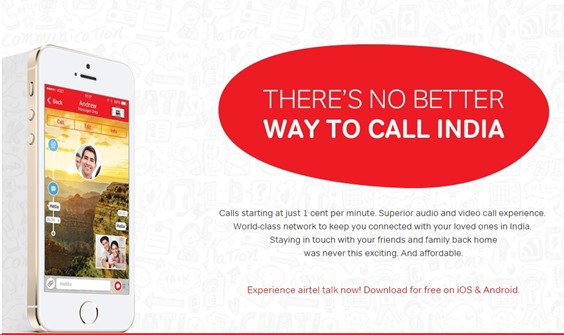
In all the chaotic hullabaloo which arose on Airtel’s VoIP Data charges issue (detailed article on the issue currently in progress), another protest which drew comparatively little attention (probably due to the substantially lesser individuals/entities it affected) was the protest by International Long distance(I.L.D.) Operators against the Company’s practice of advertising it’s own VoIP Application Airtel Talk over long distance calls. Specifically, a few seconds before connecting the call.

I am a total outsider to the precise details of the case, and the facts are also disputed (I.L.D. Operators claim the advertisement was run selectively only on those networks with whom Airtel had not entered into collaboration agreements. Airtel denies this and claims that the advertisement was played on all networks equally without any discrimination.) But it did get me thinking on the issue of Advertising in Competition Law.

Prima-facie, one would consider advertising and competition law as congruous to each other. After all, advertising is an essential part of the competitive process in any economy. If a consumer is not aware as to what goods and services are on offer and at what price they are on offer, he or she will be unable to choose between the suppliers of the goods or services, and therefore, competition between suppliers may get diminished. But in this imperfect and admittedly anti-competitive world that we live in, it never is that simple. There are two different scenarios which need to be considered while addressing the issue of advertising and competition law.:

Individual Advertising

Individual Advertising is what I referred  to above, i.e., an individual entity choosing to advertise it’s products with the aim to grab market share from competitors in the same sector. This would generally not be subject to perceived anti-competitive harm. Misleading and false advertising, including comparative advertising, may be concerns, but in India they would dealt before other fora. There is however some literature which suggests that advertising paradoxically carries with it an inherent anti-competitive effect as advertising costs act as a serious barrier to the entry of new entities wishing to enter a market which is already dominated by a few relatively large competitors, especially in markets which inherently require enormous amounts to be spent in building up a brand name for the product/company. In fact, Bork has even gone so far as to state that it should be considered as a Barrier to trade !! (See Robert H. Bork, The Antitrust Paradox.)

Horizontal Agreements on Advertising

This refers to agreements among competitors in a market, and needless to say, these are a bit problematic. Any agreement among entities which restricts advertising would generally be considered as an anti-competitive agreement.

However, the reaction of the European Commission (E.C.) has been mixed depending upon the facts and circumstances of each case. While in the case of Belgian Roofing Felt, OJ [1986] L 232/15 (later upheld on Appeal in Belasco v. Commission, [1989] ECR 2117) the Commission ruled against joint advertising which led to a uniform image of products in a market wherein individual advertising would have facilitated differentiation, and consequently competition, on the other hand, in Re CECIMO, OJ [1969] L 69/13 and UNIDI, OJ [1984] L 322/10 (later upheld on Appeal in ANCIDES v. Commission, [1987] ECR 3131), it was accepted that it is sometimes desirable to rationalise and coordinate advertising efforts while imposing certain conditions on such coordination.

Post Script: The Advertising Market

As a post script, other than the above, an important area where competition needs to be maintained is the advertising market itself. It is important that the advertising media itself should function in a competitive manner free from any anti-competitive practices, including (but not limited to) any practice which might lead to reduction of advertising space in the market. This has been affirmed in the U.S. as far back as 1951 in Lorain Journal Co. v. United States, 342 US 143 (1951). One such allegation has already arisen before the C.C.I. is the case of Advertising Agencies Guild v. Indian Broadcasting Foundation, Case No. 35 of 2013. Though that particular Information was closed, the currently running Google Investigation before the C.C.I. involves similar issues (among others) and one will have to wait and watch for further competition law developments in this area.


Dish TV India Limited v. Hathway Cable & Datacom Limited and Others, Case No. 78 of 2013

images


Here’s something which came up sooner than I had expected. A D.T.H. Service Provider filed an information against several M.S.O.’s (Multiple Service Operators) alleging a collective abuse of dominance by them. The issue raised is genuine as we’ve highlighted before herehere and here.


To be frank, am disappointed with the Information. The Informant seem to have pressed for “Collective Dominance”, which every Indian competition lawyer worth his salt knows is presently not addressed in the Act and their seems to have been no elaboration on the Relevant Market (Though not sure about this one. Only have access to the Order and not to the copy of the Information itself.) Furthermore, there seems to have been no attempt to build a case under Section 3. Needless to say, the Information was dismissed without a submission to the D.G. for an investigation. At the same time, it is surprising that the C.C.I. chose to dismiss this straightaway, since there already exists a T.R.A.I. Consultation Paper on this issue. In case it was worried about a regulatory conflict, it should have clearly stated so in the Order.


Interestingly, D.T.H. Service Providers are also facing scrutiny under the Competition Act. An Information against TATA Sky was dismissed in 2011, but the same as been appealed against and is presently pending before the Competition Appellate Tribunal.

T.R.A.I. Releases Recommendations On “Monopoly/Market dominance in Cable T.V. services”

SET-TOP_BOX__TV_1666785f

The Telecom Regulatory Authority of India (T.R.A.I.), as per a newspaper report, has released  it’s recommendations on the Monopoly and Market Dominance in the cable T.V. Sector. The document has not as yet been uploaded on the T.R.A.I. Website, so will post a link whenever it’s available, and if required, may even comment upon it.

In the meantime, you can read our comments on the issue here and here. (Long story on the why they are on different blogs.)

Update: Click here for the recommendations.

A quick reading gives the following impression:

1. Overall, it is a well drafted and well researched Recommendation Paper.

2. It agrees with our reasoning that the particular state should be considered as the relevant market.

3. The Authority recommends that market dominance should be determined based on market share in terms of the number of active subscribers of M.S.O.’s in the relevant market and that for measuring the level of competition or market concentration in a relevant market, the Herfindahl–Hirschman Index (H.H.I.) should be used. I have already outlined by disagreements with this method in the previous posts.

4. The Paper has favoured the T.R.A.I. to look into mergers and acquisitions in the sector. This is obviously debatable, as has been noted in the Paper itself, and will most likely lead to some initial conflict and requiring clarification. And what doesn’t  help is the fact that the Recommendations are based on definitions given under the Competition Act, 2002.