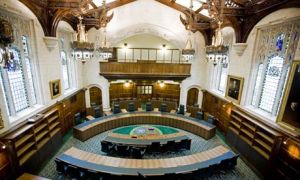
I just came across an interesting Judgement by the Supreme Court of United Kingdom on mergers delivered recently on 16.12.2015 titled Société Coopérative de Production SeaFrance SA v The Competition and Markets Authority and Another, [2015] UKSC 75 (Hat tip to SCC Online) wherein it has been observed that the merger control provisions of the Enterprise Act, 2002 are not limited to the acquisition of a business that is a “going concern” but would include even the acquisition of the assets of a defunct business. According to the Court, “An enterprise is subject to merger control if the capacity to perform those activities as part of the same business subsists.”
BACKGROUND TO THE APPEAL
SeaFrance SA, a French company, operated a ferry service between Dover and Calais until it ceased operations on 16 November 2011. It was formally liquidated on 9 January 2012, and most of its employees were dismissed. Groupe Eurotunnel SA (“GET”), the parent company of the Group operating the Channel Tunnel, and Société Coopérative De Production SeaFrance SA (“SCOP”), a workers’ co-operative incorporated by a number of former SeaFrance employees to secure the continuance of the ferry service, acquired substantially all of SeaFrance’s assets on 2 July 2012. This included three of the four SeaFrance vessels, trademarks, IT systems, goodwill and customer lists. GET and SCOP resumed ferry services on 20 August 2012 through GET’s subsidiary company, MyFerryLink SAS. The vessels were operated by employees who had almost all worked for SeaFrance. The reemployment of those employees had been incentivised by a statutory Plan de Sauvegarde de l’Emploi (known as the PSE3), by which SeaFrance’s parent company SNCF would provide payments to employers for employing ex-SeaFrance employees.
The acquisition was referred to the Competition Commission, the regulator at the time. It concluded that there was a “relevant merger situation” for the purpose of the merger control provisions of the Enterprise Act 2002, which could be expected to result in a substantial lessening of competition in the cross-Channel market. The “enterprise” of SeaFrance continued since its “activities” continued, even though there had been a hiatus of over seven months in its operations. The Commission imposed restrictions on the operation of the service by GET and SCOP, including a ban on using the exSeaFrance vessels for ferry services from Dover for 10 years. On appeal to the Competition Appeal Tribunal, the Tribunal gave guidance on the meaning of “enterprise” in the Eurotunnel I judgment, and remitted the question of jurisdiction back to the new regulator, the Competition and Markets Authority.
Upon the remission, the Competition and Markets Authority (which had assumed the functions of the Commission) considered that what had been acquired was an “enterprise”, and therefore that a “relevant merger situation” existed. Accordingly they confirmed the restrictions previously imposed by the Commission. That decision was upheld by the Competition Appeal Tribunal in the Eurotunnel II judgment.
The Court of Appeal allowed an appeal by a majority, holding that GET and SCOP had not acquired an “enterprise”, but only the means of constructing a new (but similar) one. In particular, this was because they had not acquired SeaFrance’s crews. They concluded that it was irrational for the Competition and Markets Authority to reach any other conclusion on the facts.
REASONS FOR THE JUDGMENT
The merger control provisions of the Enterprise Act 2002 are not limited to the acquisition of a business that is a “going concern”. The possession of “activities” is a descriptive characteristic of an enterprise under the Act. An enterprise is subject to merger control if the capacity to perform those activities as part of the same business subsists. [32-35]
The test is one of economic continuity. An Acquirer acquiring assets acquires an “enterprise” where (i) those assets give the Acquirer more than might have otherwise been acquired by going into the market and buying factors of production and (ii) the extra is attributable to the fact that the assets were previously employed in combination in the “activities” of the target enterprise. The period of time between cessation of trading and acquisition of control of the assets may be a relevant factor, but is not necessarily decisive. [36-40]
This was substantially the same principle set out by the Competition Appeal Tribunal in Eurotunnel I, which the Competition and Markets Authority applied in this case. [40-41]
The Court of Appeal’s finding that the Authority’s evaluation was irrational was unjustified. GET and SCOP acquired substantially all the assets of SeaFrance, including trademarks, goodwill, specialist vessels maintained in a serviceable condition, and substantially the same personnel. The Authority’s conclusion that this demonstrated “considerable continuity and momentum” and “the embers of an enterprise”, which could be passed to GET and SCOP, was unimpeachable. The order of the French Court of 9 January 2012 to dismiss the employees did not disrupt that continuity and momentum because the order was made on terms that the PS3 preserved the prospect of employment on the ships for the dismissed crew members. [41-43]
The majority of the Court of Appeal was wrong to narrow the question of economic continuity to the legal effect of the decision of the French Court in January 2012 and whether this terminated the employment relationship between SeaFrance and its employees. The Competition and Markets Authority is not entitled to any special level of deference: the test for determining whether there is a “relevant merger situation” and relevant “activities” is a legal question. [31] But the Authority undertook a broader economic analysis, concluding that there was economic continuity. That evaluation was complex and sensitive to a whole range of factors. It was not a purely legal enquiry. Its economic analysis should be respected. [44-45]
References in square brackets are to paragraphs in the judgment
When one goes through Section 5 of our own Competition Act, 2002 as well as the definition of the term “Enterprise” under Section 2(h) of the Act, there appears scope for a similar dispute to arise in our own jurisdiction in the future. The definition of the term “Enterprise” under Section 2(h) also does not contemplate any such merger or acquisition of a defunct organisation. Yet, this happens on a frequent basis in the Indian corporate sector, albeit since individual transactions are on scales relatively small, they avoid triggering the C.C.I. combination process.




 Indian Competition and Anti-Trust Blog