First Combination Phase – II Investigation !!

images


For the first time in since it’s inception, the Commission has begun a Phase – II investigation into the proposed Sun-Pharmaceuticals-Ranbaxy Merger. The Commission will in all probability order an investigation to be conducted by the Director General.


It is pertinent to note that the Commission does not seem to be focused on the consequent fifth largest Pharmaceutical Corporation in the world which would be created as a result of the merger, but rather has chosen to keep it’s focus limited to India on the impact on drug prices ans their availability in the Country. (There are approximately forty six drugs which will be manufactured by both together merged as the single entity.) It goes without saying that this is speculative and the focus could widen considerably as the case progresses.


UPDATE:

C.C.I. Invites Public Comments on Sun-Ranbaxy Deal. 

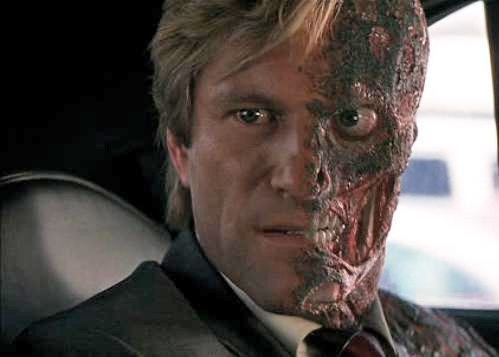
Combination Consultations and the “Harvey Two Face” Concern.

Two_Face_(Nolanverse)


With the C.C.I. expanding it’s informal Pre-Notification consultation to include substantive issues regarding filing of notice with the C.C.I., we are now looking at a scenario in competition regulation where there will be a significant growth in the level of interaction between the Regulator and the Practitioner. This growth of informal interaction leads to what I like to call the “Harvey Two-Face” concern (Batman enthusiasts will understand why I choose him for this particular post. Others, maybe not so much.):

1. “Clean face” Harvey: The amendment to the Regulation and the consequent expansion in effective communication Simplifies procedures and most importantly, will result in clearances being granted smoothly within a shorter span of time, thus aiding business growth and consolidation wherever it may be necessary. Plus, it gives a chance for the Commission to be “prepared” for what will be coming and think up replies and make quick decisions to any complications which may be part of the merger proposal.

2.  “Burnt face” Harvey: It threatens the impartiality of the entire combination procedure and may probably raise corridor gossip about lobbying to clear combination proposals. As it is, the present lack of “effective combination research”, i.e.,  effectively assessing complicated market dynamics in complicated mergers(The Jet-Etihad Combination is one such example) at the Commission has created some disquiet among a few (myself included) at the heavy reliance which is being placed on the submissions of parties rather than individual independent research. Handling conflict of interest is not one of the strong suits of the Indian Executive (or to be frank, of Indians in general) and this raises concerns as to overt reliance on the proponent of the Combination to understand it in the first place.


The Almost Redundant Swaziland Competition Commission


600px-Flag_of_Swaziland.svg


Here’s an interesting bit of news from Africa. As per a well known Blog on African Competition Law, the Swaziland Competition Commission has all but shuttered it’s doors since the formation of C.O.M.E.S.A.

For the uninitiated, the Common Market for Eastern and Southern Africa (C.O.M.E.S.A.) is a Free Trade Agreement/Free Trade Area similar to the Schengen Area/Schengen Agreement in Europe. It comprises of twenty Member States and is considered one of the pillars of the African Economic Community. The COMESA Competition Commission was formed under Article 6 of the Regulations and is based in Lilongwe, Malawi and commenced work on 14th January, 2013.

According to the post, since the creation of its competition-law authority in 2007, C.O.M.E.S.A. member state Swaziland has seen only two enforcement matters, according to a report by the Observer.  Even by C.O.M.E.S.A.’s statistical standards, two matters in seven years amounts to a record low.

This is the first time I have ever heard of a State Competition Authority being over board by a Multi-State Organisation. European Member States are in fact quite particular about asserting their individual sovereignty under the T.F.E.U. (E.U. Community Law is applicable only when trade between the E.U. Member States is affected.)

Invitation for Applications for Vacant “Member” Posts.


images


The C.C.I. has invited Applications for filling up of the two vacant “Member” positions in the Commission. How meritorious the selection will be remains to be seen, as such positions are often prone to bureaucratic and judicial lobbying. Nevertheless, one must learn to retain faith in the system, for if we can’t, then we might as well live in Hobbes’ anarchic world where are lives would be “Solitary, Poor, Nasty, Brutish and Short.” [Have just finished “Law’s Empire” by Ronald Dworkin (finally, if I might add !!), which coupled with the Gopal Subramanium Fracas has put me in a sadly philosophical mood.]

Last date for Submitting Applications is 24th July, 2014.


Further details can be found here.

Antitrust Programme for Young Professionals 2014

iica5


The Indian Institute of Corporate Affairs (I.I.C.A.), in partnership with the Competition Commission of India (C.C.I.), is pleased to invite applicants for the 2014 first edition of the “Antitrust Programme for Young Professionals 2014”. This Programme is a five-day signature practice oriented workshop and envisaged to be an annual event. It brings together a selected gathering of young lawyers, professionals and researchers drawn from prestigious Universities.
The Summer School provides the unique opportunity for professionals to interact with globally reputed faculty and experts from competition law (including academics, practitioners, in-house counsels, foreign competition law experts) through a combination of coursework that extensively covers lectures, discussions, skill oriented sessions and innovative learning processes like mock trial session, case studies, quiz, movies and peer-group activities.

The I.I.C.A. as part of the programme, is also organising an Antitrust Writing Contest. details for both of them can be found below.


Details

Registration Form.

Tentative Programme.

Is The Noose Tightening ??

download


Is the C.C.I. noose slowly tightening around Google ?? It sure does seem that way. The C.C.I. recently admitted another case against Google, and will probably club the Information with the ongoing investigation in the BharatMatrimony Case and the C.U.T.S Information Case. Speaking of BharatMatrimony and C.U.T.S., Google’s woes have risen with it being fined one crore for non-cooperation in the ongoing D.G. investigation.


So why is it facing so much difficulty in India ?? Probably because it may not be innocent after all. Not to express opinion on the merits of the case, but it is a fact that Google hasn’t exactly won any of the competition law cases filed against it across the world. Both the E.U. investigation and F.T.C. investigations were closed with settlements, which one can’t exactly count as a victory. All Google did was make certain commitments to the two bodies and consequently changed their programming to suit the settlement. It can’t do that in India, there being no provision for settlement/compromise of cases in the Competition Act, 2002. In fact, Google has lost a case against it’s Adwords programme in Australia, which has probably bolstered the hopes of those who feel discriminated by Google Adwords.


People may believe that I am against Google, considering how much I write about it (and according to many, against it). Rest assured, one could not be farther from the truth. In fact, I am one of Google’s biggest fans, but more on this later in another post which I have planned.


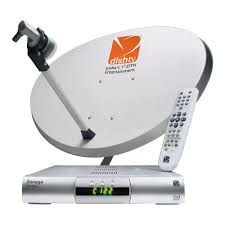
Dish TV India Limited v. Hathway Cable & Datacom Limited and Others, Case No. 78 of 2013

images


Here’s something which came up sooner than I had expected. A D.T.H. Service Provider filed an information against several M.S.O.’s (Multiple Service Operators) alleging a collective abuse of dominance by them. The issue raised is genuine as we’ve highlighted before herehere and here.


To be frank, am disappointed with the Information. The Informant seem to have pressed for “Collective Dominance”, which every Indian competition lawyer worth his salt knows is presently not addressed in the Act and their seems to have been no elaboration on the Relevant Market (Though not sure about this one. Only have access to the Order and not to the copy of the Information itself.) Furthermore, there seems to have been no attempt to build a case under Section 3. Needless to say, the Information was dismissed without a submission to the D.G. for an investigation. At the same time, it is surprising that the C.C.I. chose to dismiss this straightaway, since there already exists a T.R.A.I. Consultation Paper on this issue. In case it was worried about a regulatory conflict, it should have clearly stated so in the Order.


Interestingly, D.T.H. Service Providers are also facing scrutiny under the Competition Act. An Information against TATA Sky was dismissed in 2011, but the same as been appealed against and is presently pending before the Competition Appellate Tribunal.

Anonymous v. Bengal Greenfield Housing Dev. Co. Ltd And Others, Case No. 103/2013

durga-west-bengal


This is one case which has surprisingly been closed by the Commission, with the finding that that no case has been made out of the existence of an Anti-Competitive Agreement or of an Abuse of Dominant Position.  However, in my humble opinion, I am not so sure. While the conclusion of the D.G. in the end may have been that there was no Competition Law violation, it was definitely a case which merited a reference to the D.G. for further investigation.

The Informant in the present case claimed that the absorption of new supply of flats despite prices having gone up from Rs. 1,100/- to 4,800/- per square feet and the sale of Application Forms and allotment through lottery suggesting huge demand gave a clear impression of manipulation and restriction of supply and use of monopolistic and dominant status for monopolistic pricing as the the parcel of land for the township was being developed selectively despite the final allotment of land to the respective builders.

The reason the case is so important is because the Commission seems to have not given enough consideration, though it has been mentioned in the Order of the Commission, is that all the Respondents/Opposite Parties except for DLF Universal Ltd., are in fact joint ventures between the West Bengal Housing Board and various individual private entities. Therefore, all the entities have a common partner which definitely gives an impression of the various Respondents possessing the capability to effectively communicate with each other, or at the very least, coordinating with each other per force the directive of the W.B.H.B. Granted, it is a government body which claims as it’s objective to provide affordable housing to the people of West Bengal. But as we all already know, Government Bodies are not innocent when it comes to violation of Competition Law.


In my humble opinion, there exists a prima-facie case to be investigated on the violation of Section 3(3)(a) and Section 3(3)(b) of the Act and to be frank, it is unfortunate that the Commission chose to close the case.