
Famous U.S. Anti-Trust Cases

We finally have our first guest post on ICAB!! Judy Leeson has been a practicing lawyer for twelve years and also own the site www.lawdegree.net. Here she outlines and summarizes three of the most landmark judgements in U.S. anti-trust history. A detail discussion on them can also be found in the book The Master Switch by Timothy Wu. (A review of the book can be found on this blog itself.)


Standard Oil

Standard Oil was founded in 1870, when kerosene cost 30 cents per gallon. By 1897, the company had driven the price down to 6 cents a gallon, which put many of its competitors out of business. Although the trust was broken up in the state of Ohio in 1892, Standard simply separated the Ohio branch and kept control of the company.

A few years later, a law change in New Jersey allowed a company to hold shares in other companies, even those in other states. Thus, in 1899 Standard Oil Trust became a holding company based in New York which owned stock in Standard Oil of Ohio and 41 other companies – many of which owned stock in companies themselves. Standard Oil effectively became the largest company in the world.

In 1906, the U.S. government filed suit against Standard Oil for violating the Sherman Antitrust Act. The company was found guilty in 1909 and the decision was affirmed by the U.S. Supreme Court in 1911. Standard was forced to break up into 34 independent companies, some of which have since merged into the multinational corporation, ExxonMobil.

AT&T

AT&T was granted “natural monopoly” status by the U.S. government for many years in the first half of the 20th century, but even after new competitors the market it was frequently challenged it as a monopoly. Finally in 1974, the U.S. Attorney General filed suit against the company for violating antitrust laws. The case took seven years before a settlement was reached to split the company into seven new companies, each serving a different region of the U.S. However, five of the seven have since merged to become AT&T Incorporated, which is now the 14th largest company in the world.

Microsoft

In 1991 the FTC began to investigate whether Microsoft was abusing its monopoly on the market for PC operating systems. They closed the investigation in 1993 but the U.S. Department of Justice opened a new investigation later that year. In a 1994 settlement, Microsoft consented not to tie other Microsoft products to the sale of Windows but could still integrate new features into the operating system.

When Internet Explorer was introduced in 1995, Microsoft insisted that it was a feature rather than a new Windows product. The U.S. Department of Justice did not agree and filed suit against Microsoft for illegally discouraging competition to protect extend its software monopoly. In 2000, the court ordered Microsoft to break into two separate units, one for the operating system and another to produce software.

Following court appeals, a new settlement ordered less severe penalty that required Microsoft to share application programming interfaces with third-party companies. Nine states did not agree with the settlement, calling it a mere “slap on the wrist,” that was not severe enough.
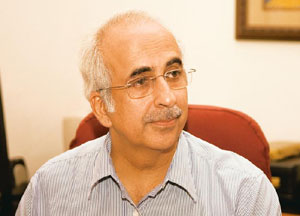

A New Chairman, But A Right One ??

Former finance secretary Ashok Chawla was on Thursday sworn in as the new Chairman of the Competition Commission of India, filling up the key post that was lying vacant for over four months.

The appointment of a new Chairman is welcome, but one must wonder whether the former head of the Committee on Allocation, Pricing and Utilisation of Natural Resources is up to the task which he will now have to shoulder. The Commission has been subject to severe criticism in the past few months over the reasoning of its decisions and clearly requires an individual with not only a sound bent of logic and intelligence (which no doubt Mr. Chawla has), but also an individual with excellent knowledge and experience of competition law. Unfortunately, the latter characteristic is presently comparatively hard to find in India.

According to Hindustan Times, when asked about his mandate after taking charge, Chawla said, “It is difficult for me to prioritise any matter right now as I am yet to take a stock of the Commission.”

Also among the nominees was Mr. Anurag Goel, a Member of the Commission. With no intentions to demean Mr. Chawla, perhaps it would have been better to let an individual who has prior experience in the working of the Commission be made in charge of the regulatory authority.

It seems best to reserve judgement and to let the new Chairman’s work speak for itself.

Competition Surfing

An interesting pastime, if albeit, a tad bit nerdy for me has always been what I like to call “Competition Surfing”. Essentially, it involves randomly browsing through the internet for anything interesting related to competition law. Its fun to share a few such discoveries, just to spread the word about them.

An old but interesting video which was found during one of these surfing sessions was this one below. As part of our 25th  Anniversary celebration the Federalist Society presented a full-day Conference on June 26, 2007, honouring Judge Robert H. Bork and his contributions to the law. The hon’ble Judge has always been of the view that “antitrust enforcement had overzealously applied the law in a manner that led to the protection of inefficient firms and the sanctioning of efficient firms, to the ultimate detriment of consumers. This form of interference in the free market, he argued, raised consumer prices by supporting flagging companies in order to maintain the perception of competition.” The panel discusses his views and their effect on anti-trust law and enforcement over time.

It is a bit long, but worth the watch.

Google’s Anti-Trust Woes: An Update

Google CEO Eric Schmidt testified yesterday before eight members of the Antitrust, Competition and Consumer Rights Subcommittee of the Senate Committee on the Judiciary claiming that Google had fully complied with U.S. anti-trust laws.

The written testimony can be found here.

Wikileaks + Competition

The Wikileaks crusade for transparency has even managed to envelop the competition sector. Check out the article on the Wikileaks Release of a  U. S. Diplomatic Cable About the Oracle-Sun Merger Deal.

The diplomatic cable claims that U. S. government pressured the European Union to approve the Oracle-Sun merger deal.

Answers to questions raised in Authors Guild v. Google Inc.

I have finally written a reply to my previous post on Authors Guild v. Google Inc.: Some Questions on the Ruling and the Proposed Settlement. It can be found here.

There are some who may complain that there is a certain amount of neglect for this Blog, for which I apologise. It has become increasingly difficult to take out time to write new posts with the gruelling new College schedule.

A Comment on the Walt Disney (South Asia) and UTV Combination Order

At the very outset, it should be mentioned that the speedy clearance for the proposal of combination of The Walt Disney Company (South Asia) and UTV Software Communications Limited is encouraging, despite the apparent staff shortage at the CCI. However, while I find no reason as of now to oppose the merger, the reasoning of the Commission on a certain ground is questionable and does lay some credence to the criticisms leveled against the Commission on the reasoning of its orders.

The Commission seems to have relied heavily on the fact that Disney is primarily an English broadcasting medium whereas UTV is a Hindi broadcasting medium. Such reasoning is unsound and questionable. The language of communication in any merger of broadcasting or media companies is irrelevant. What is relevant is the impact which the merger would have on the entertainment industry, and consequently, the audience as a whole. Assuming hypothetically that the merger would result in dominant position in the media entertainment market for Disney, the language of broadcasting would not matter in case it tried to abuse its dominance. If Disney had to do so, it would do it by asserting itself in the industry as a whole, not in the Hindi or English segment specifically. In other words, the ‘relevant market’ to be determined should not be based on the language of broadcasting but rather the entire broadcasting industry as a whole.

The Order can be found here.

Authors Guild v. Google Inc.: Some Questions on the Ruling and the Proposed Settlement

I have written a post titled “Authors Guild v. Google Inc. : Some Questions on the Ruling on the Proposed Settlement”   for the Indian Law and Technology Blog. In this post, I have raised certain questions related to the judgement and the status of free websites under competition law. I hope to find some answers in another post.

Please click here to view the post.