Scope of Determination of Relevant Market under Horizontal Agreements

We have a guest post here by Tilak Dangi. Tilak is law student pursuing B. A. LLB. (Hons.) from the NALSAR University of Law and is currently in his 4th Year.

Introduction  

Section 3 of the Competition Act (hereinafter the Act)[1] prohibits anti-competitive agreement(s) which cause or are likely to cause an Appreciable Adverse effect on Competition within India. Currently, Section 3 has two limbs. Firstly, horizontal agreements which are prohibited under Section 3(3) of the act and are presumed to be anti-competitive unless the presumption is rebutted. Secondly, vertical agreements are prohibited under Section 3(4) and are determined based on the ‘rule of reason’ approach. Also, section 3 does not mandatorily require the determination of the relevant market. The Competition Law Review committee (hereinafter CLRC) [2] deliberated the issue of making it mandatory and came to the conclusion that such a mandate will make a Section 3(3) enforcement too rigorous since the CCI has to delineate the relevant market for dealing with all the alleged contravention in this provision and thus the term ‘relevant market’ should not be introduced in section 3(3) of the act.

In this article, the author argues as to why the determination of the relevant market should be mandatory in cases concerning horizontal agreements under section 3(3) as well.

Analysis

In the case of CCI v Coordination Committee of Artists and Technicians of West Bengal Film and Television Industry[3], the case concerning Section 3(3), the apex court said that the primary step is to find out what constitutes the ‘relevant market’? Moreover, the court also mentioned that the factors mentioned under Section 19(7) to determine the relevant market that includes physical characteristics or end-use of goods, classification of industrial products price of goods and services, etc [4] are supposed to be taken into consideration while determining the same.

Thereafter, the CCI approached the apex court for a clarification as it was concerned that the judgment in respect of the “relevant market” may looks like that there is also a necessity to delineate the relevant market in all such cases of Section 3(3). The court clarified the same by mentioning that the determination of the “relevant market” is not a mandatory pre-condition for assessing the alleged violation Under Section 3 of the Act.

Now Section 3(3) states that:

Any agreement entered into between.…xxx…..including cartels, engaged in identical or similar trade of goods or provision of services, which–…”

Thus, the wordings of the section makes it clear that the essential condition of Section 3(3) is that the opposing parties must be engaged in similar or identical trade.

To counter such allegations, the parties in the case can argue that they do not deal in a similar market and hence Section 3(3) wouldn’t apply to them. Therefore, the Commission has to establish that the entities are engaged under the same relevant market which has to be ascertained by taking factors mentioned under Section 19(7) [5] into consideration.

Factors under Section 19(7) assist to establish that the commodities provided by the different opposing parties are substitutes to each other and therefore both the parties deal with similar or identical trade. It is the question of fact and the CCI cannot presume that the opposing parties deal within a similar trade but have to establish the same. Therefore, only after determining relevant market by factors mentioned under Section 19(7), will the entities will be considered as dealing under the same relevant market.

The CCI has also consistently determined the market in the cases of horizontal agreements. The EPS systems market was mentioned in a suo motu case.[6] In another case,[7] the CCI took note that the market for the supply of such commodity was conducive for cartelisation wherein the DG also mentioned that other companies were market players involved in the cartel. In another case,[8] the Commission analysed anti-competitive conduct in the Dry-Cell Batteries Market in India.

The word ‘market’ in the above cases shall only have meaning of ‘relevant market’ and nothing else[9] which shows the determination of relevant market in terms of the wording ‘similar and identical trade’ of clause of Section 3(3) is mandatory. Therefore, to prove the allegations under section 3(3), it has to be established that the parties deal in the same trade i.e., deal in the same relevant market. This in turn has to be ascertained according to the factors mentioned under Section 19(7).

The reason for the determination of the relevant market being non-mandatory in cases of Section 3(3) as given by the CCI to the apex court is that the AAEC is presumed in such cases. [10] However, it is a settled position of law that the presumption is rebuttable as these agreements are not considered as conclusive proof of the fact that it would result in AAEC. [11] In case such evidence is led, which rebuts the presumption, then the CCI has to take into consideration the factors mentioned in Section 19(3) of the Act and see as to whether all or any of these factors are established.

Therefore, when an agreement under Section 3(3) has been established, the parties can rebut the presumption, and thus, the commission has to show that the presumption has not been rebutted. Before doing so, the parties will have to establish the relevant market to determine the AAEC and the same cannot be escaped.

The clarification of Supreme Court [12] and report of the CLRC with this aspect is per se problematic because a plain reading of Section 19(3) would show that the factors mentioned thereunder have to be taken into consideration to rebut and re-establish the presumption of the AAEC, which makes the determination of relevant market mandatory. Therefore, to determine AAEC which is inevitable, the requirement of the relevant market has to be necessary as the apex court has noted that the word ‘market’ used in Section 19(3) has reference to ‘relevant market’.

In case of Nagrik Chetna Manch v SAAR IT resource Pvt Ltd. and Ors, [13] the Commission considered the factors of Section 19(3) while dealing with the submission of rebuttal of presumption by the opposing party. The CCI  observed that the argument of no entry barriers does not stand as the bidding process itself thwarts provision of goods and services by credible players, who lose out in the absence of conditions which foster competition. Therefore, commission observed anti-competitive effects in the case but ironically did not determine the relevant market.

In another case,[14] the Commission went on to mention that by mandating certain requirements, the distributors have been discouraged in entering the distribution channel, their entry may be restricted even if they are otherwise satisfying the requisite criteria. Further, such a restrictive practice does not accrue any benefits to end consumers in as much as the availability of products to the consumers can be adversely affected both in terms of quantity as well as its availability at competitive prices. The contravening trade association and company had failed to exhibit that such practice is in any manner beneficial in terms of factors laid down under clauses (d), (e), and (f) of Section 19(3) of the Act.

The abovementioned cases show the factors mentioned under Section 19(3) were taken into consideration but the irony being that these factors were considered without delineating the relevant market which is the prima facie condition under Section 19(3).

Conclusion

The CLRC report mentions that making determination of the relevant market under Section 3(3) will make it rigorous but at the same time the Commission can’t evade essential requirements mentioned under the Act itself. The pre-requisite mentioned under Section 3(3) itself requires entities entering into such agreements to be dealing in the same relevant market. Moreover, since the presumption is rebuttable and the practice of the Commission in dealing with AAEC arguments also shows the requirement of determination of relevant market. Therefore, the judgment by the apex court as well as the report with this aspect requires reconsideration as determination of relevant market in Section 3(3) is inevitable.

Endnotes:

[1] The Competition Act, 2002, No. 12, Acts of Parliament, 2002.

[2] Ministry of Corporate Affairs, Report of the Competition Law Review Committee, (2019)

[3] Competition Commission of India Vs. Co-ordination Committee of Artists and Ors., AIR 2017 SC 1449.

[4] The Competition Act, 2002, No. 12, Acts of Parliament, 2002.

[5] id.

[6] In Re: NSK Limited and Ors., MANU/CO/0041/2019.

[7] Hindustan Petroleum Corporation Ltd. vs. Allampally Brothers Ltd. and Ors., MANU/CO/0038/2019

[8] Cartelisation in respect of zinc carbon dry cell batteries market in India Vs. Eveready Industries India Ltd. and Ors., 2018 CompLR 467 (CCI).

[9] Competition Commission of India Vs. Co-ordination Committee of Artists and Ors., AIR 2017 SC 1449.

[10] Competition Commission of India Vs. Coordination Committee of Artists and Technicians of West Bengal Film and Television Industry, [2018] 144 CLA 403(SC).

[11] Rajasthan Cylinders and Containers Limited Vs. Respondent: Union of India (UOI) and Ors., [2018]150SCL1(SC)

[12] Competition Commission of India Vs. Coordination Committee of Artists and Technicians of West Bengal Film and Television Industry, [2018] 144 CLA 403(SC).

[13] Nagrik Chetna Manch Vs. SAAR IT Resources Private Limited and Ors., MANU/CO/0033/2019.

[14] Madhya Pradesh Chemists and Distributors Federation Vs. Respondent: Madhya Pradesh Chemists and Druggist Association and Ors., MANU/CO/0021/2019.
Foundation of Media Professionals v. Union Territory of Jammu and Kashmir and Anr., Writ Petition Diary No. 10817 of 2020 : Another Opportunity to press for Right to Internet ?

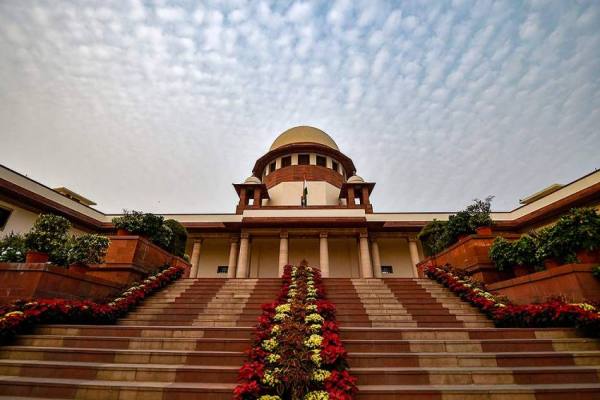
Supreme-court_20181102_570_850


The Union Territory of Jammu and Kashmir (which before the Supreme Court is almost always represented by a Counsel for the Union of India) a few days ago filed an Affidavit expressly making a statement that the right to access the internet is not a fundamental right. To quote the text verbatim below:

“It is submitted that the right to access the internet is not a fundamental right and thus the type and breadth of access for exercising the right to freedom of speech and expression under Article 19(1)(a) and/or to carry on any trade or business under Article 19(1)(g) of the Constitution of India (CoI) through the medium of internet can be curtailed….”

The submission was made in the specific context of the action of the Union to not allow the speed of the internet to be more than that of a 2G cellular network. But my excitement at this statement is not a rage against any high handedness (which is presently sub-judice before the Court) by the administration but rather the opportunity which once again arises to argue a right to internet access !!

It appears to be a common misconception among the public that the Supreme Court has settled this question once and for all in Anuradha Bhasin v. Union of India and Ors., W. P. (Civil) 1031 of 2019. On the contrary however, it specifically observed that:

“28. None of the counsels have argued for declaring the right to access the internet as a fundamental right and therefore we are not expressing any view on the same. We are confining ourselves to declaring that the right to freedom of speech and expression under Article 19(1)(a), and the right to carry on any trade or business under 19(1)(g), using the medium of internet is constitutionally protected.”

Rather, what it went on to hold was that:

“…the freedom of speech and expression and the freedom to practice any profession or carry on any trade, business or occupation over the medium of internet enjoys constitutional protection under Article 19(1)(a) and Article 19(1)(g). The restriction upon such fundamental rights should be in consonance with the mandate under Article 19 (2) and (6) of the Constitution, inclusive of the test of proportionality.” (Emphasis added)

Yes, I agree that there is scope for a submission that the answer might be the same even if the issue was worded differently to specifically make submissions on the right to access the internet, but that doesn’t degrade the importance of the issue and its affect on policy matters such as Network Neutrality, concerning which passionate arguments from both sides of the fence tend to be based, at their core, on the  right of access to the internet !! (The difference between the two sides is the interpretation of such a right and what is encompassed within it.)

The Court also itself recognised that it the issue could not be simply dismissed as irrelevant and required some serious consideration, if not on that day, then definitely someday later. Certain paragraphs in the first half of the Judgement are encouraging.:

“22. Now, we need to concern ourselves about the freedom of expression over the medium of internet. There is no gainsaying that in today’s world the internet stands as the most utilized and accessible medium for exchange of information. The revolution within the cyberspace has been phenomenal in the past decade, wherein the limitation of storage space and accessibility of print medium has been remedied by the usage of internet.

23. At this point it is important to note the argument of Mr. Vinton G. Cerf, one of the ‘fathers of the internet’. He argued that while the internet is very important, however, it cannot be elevated to   the status of a human right. Technology, in his view, is an
enabler of rights and not a right in and of itself. He distinguishes between placing technology among the exalted category of other human rights, such as the freedom of conscience, equality etc. With great respect to his opinion, the prevalence and extent of internet proliferation cannot be undermined in one’s life.

24. Law and technology seldom mix like oil and water. There is a consistent criticism that the development of technology is not met by equivalent movement in the law. In this context, we need to note that the law should imbibe the technological development
and accordingly mould its rules so as to cater to the needs of society. Non recognition of technology within the sphere of law is only a disservice to the inevitable. In this light, the importance of internet cannot be underestimated, as from morning to night we are encapsulated within the cyberspace and our most basic activities are enabled by the use of internet.

25. We need to distinguish between the internet as a tool and the freedom of expression through the internet. There is no dispute that freedom of speech and expression includes the right to disseminate information to as wide a section of the population as is possible. The wider range of circulation of information or its greater impact cannot restrict the content of the right nor can it justify its denial. [refer to Secretary, Ministry of Information & Broadcasting Government of India v. Cricket Association of Bengal, (1995) 2 SCC 161; Shreya Singhal v. Union of India, (2015) 5 SCC 1].” (Emphasis added)

My only disgruntlement is with the first line of paragraph twenty five which has been quoted above, because I am firmly of the opinion that the internet cannot and should not be classified as a tool, but rather as a resource which is used by individuals and entities to create tools and services for mankind. I’ve focused on this here and here, and am now thinking of doing a separate piece altogether on the justification for such a classification.

Hopes can be belied of course, and with the present Covid – 19 situation in New Delhi, it’s best not to hazard a guess as to when the Court will start functioning on a regular schedule again, and even if it does, whether such full fledged arguments as I hope for will even actually take place. But then, no harm being optimistic. 🙂

Foundation of Media Professionals v. Union Territory of Jammu and Kashmir and Anr., Writ Petition Diary No. 10817 of 2020. [An Update]

Supreme-court_20181102_570_850

As per Bar and Bench, A three judge bench of the Supreme Court led by Justice NV Ramana  today heard detailed submissions on behalf of all the parties and reserved orders on the batch of matters concerning internet access in Jammu and Kashmir.

On a reading of the LIVE updates provided by Bar & Bench, it appears that the petitioners chose to not specifically argue a right to internet access but rather toed a line similar to that in Anuradha Bhasin, by emphasizing that the “Right to education” and “Right to healthcare” was being hampered due to the slow internet speeds.

Facebook – Reliance Jio Tie up: Try, Try and Hope that you will Succeed.

collag_660_220420094005(Business Today)

Initial informed rumours have finally culminated in an official announcement a few hours ago.  Facebook will invest an amount of Rs. 43,574 crores for a 9.99 percent stake in Reliance Jio Platforms. The limited percentage is probably to prevent the investment from facing a regulatory hurdle before the C.C.I.

(Official  video statement by Mukesh Ambani via Moneycontrol)

Financially, it makes sense for Reliance. It has for some time now been scouting for means to reduce Jio’s growing debt burden, and with the Reliance – Aramco investment deal definitely on hold for the foreseeable future as a consequence of the oil market debacle, it seems to have worked out fine for him (AS USUAL, if I may add). And an operations and commercial tie up with Facebook can only accelerate Jio’s growth and dominance in the country, and perhaps, over time even abroad (Africa is still one of the major markets with relatively low mobile and internet penetration).

Facebook, on the other hand, is relishing the opportunity to take another crack and penetrating the Indian market beyond social media (Remember the PR disaster that was “Free Basics” ?? – Our previous posts can be found here and here). And what better way to do it than to invest in the telecom company with officially the largest user base in India as well as revenue. Add to this the double icing on the cake which is the series of acquisitions made by Jio over the last three to four years with the obvious intent to create a formidable digital platform and the Promotor of the Company being without a doubt the biggest corporate influencer in the country.  In fact, subject to correction, “Free Basics” seems to have been the first attempt by both the companies to try to work together and this is the second major attempt. Looks like Facebook has learnt a few lessons from its previous debacle.

While my previous concerns with Facebook’s attempts to penetrate the Indian market were primarily concerning network neutrality and the threat of information manipulation which accompanies Facebook everywhere in its “walled garden”esque operation style, a lot has happened since then. Typical of technology, issues concerning such investments have now jumped to a whole new dimension, where every big technology company is under scrutiny in multiple jurisdictions on competition and privacy concerns.  In the past, the transaction probably shouldn’t have raised much concern for competition enforcers because Reliance would not be competing directly with Facebook. Today however, concerns are mounting on how tech companies are leveraging their control over data to push their own dominance not just in their original market, but also across vertical segments. And Facebook’s acquisition of both WhatsApp in 2014 and Instagram in 2012 has already created a Social Media behemoth which many worry about.

Even though C.C.I. has only recently begun to take nascent steps in examining Big Tech transactions, there is an additional dimension to the Reliance – Facebook tie up which definitely merits the C.C.I. taking the transaction seriously. My personal opinion is that this will definitely go through without any major hiccup, but how the two companies cooperate commercially is something to keep a watch on. Jio has today forayed into almost every form of digital media, including social media (Jio Chat). This coalescence which one sees in Jio’s acquisitions is however, not innovative. It is merely copying the playbook of a number of companies all across the planet, the most notable and successful examples being Alibaba and Tencent, of building entire ecosystems of digital media, communications and commerce with B2B and B2C connect. Google appears to have succeeded the best at this outside China, with a Google ID sign in now becoming a norm for most login transactions and a Google App available for almost every internet transaction you can think of. (On a side note, Google’s acquisition of FitBit has also raised similar concerns). Consequently, the lines between social media and other forms of entertainment have blurred over time.  Facebook was simply late to the game, and is now playing catch up, and since it suffers from no dearth of cash, such investments help it to gain ground quickly, with a long term potential growth with Jio helping it to succeed where it has managed to only take a few tottering steps till now.


In Re : Reference to the discontinuation of Internet Services by the State Authorities.

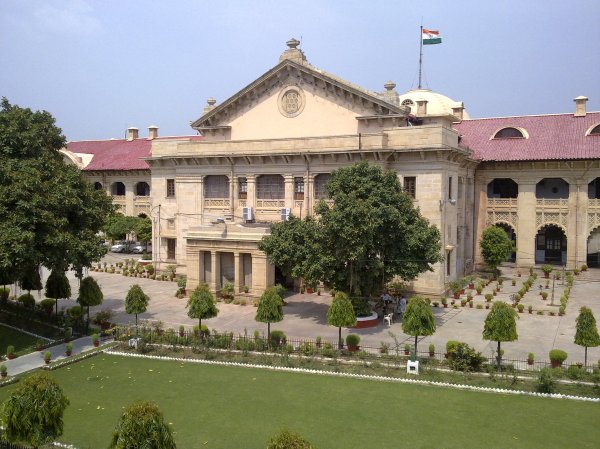
Allahabad_high_court

So we finally have our first petition on the internet as an essential service !! The Allahabad High Court, has suo moto, in In Re : Reference to the discontinuation of Internet Services by the State Authorities (unnumbered as of now it seems), issued notice to the State of Uttar Pradesh for the internet blackouts which have been prevalent across the state since the protests against the Citizenship (Amendment) Act, 2019 began.

The Notice was actually passed on 20.12.2019, but took some time to come out in public (the Registry needs the internet to upload the order on the website right !!) In fact, it was problems in the performance of judicial work which raised the hackles of the court in the first place.

The matter was directed to be listed on 03.01.2020, but I did not find the matter on the cause list uploaded on the website and haven’t received any updated on it as of now. Will keep you posted on it.

The “Lifeline Program”: A Perfect example of how NOT to promote Digital India.

13959900047_bede3e5ba4_o-100705434-large

At the very outset, in all fairness, India as on date does not have a program similar to the “Lifeline Program” of the F.C.C., but it doesn’t hurt to put out a pre-emptive rant to make sure they never even consider one in the future.

BACKGROUND

As per the website of the F.C.C., the Lifeline Program for Low Income Consumers  has since 1985, provided a discount on phone service for qualifying low-income consumers to ensure that all Americans have the opportunities and security that phone service brings, including being able to connect to jobs, family and emergency services. Lifeline is part of the Universal Service Fund. The Lifeline program is available to eligible low-income consumers in every state, territory, commonwealth, and on Tribal lands. The Lifeline program is administered by the Universal Service Administrative Company (U.S.A.C.). The U.S.A.C. is responsible for data collection and maintenance, support calculation, and disbursement for the low-income program. Cellphone subscriptions were included in 2005. Furthermore, On 31st March, 2016, the F.C.C. adopted a comprehensive reform and modernization of the Lifeline program. In the 2016 Lifeline Modernization Order, the Commission included broadband as a support service in the Lifeline program. The Commission also set out minimum service standards for Lifeline-supported services to ensure maximum value for the universal service dollar, and established a National Eligibility Verifier to make independent subscriber eligibility determinations.

PROBLEMS

The program is definitely a laudable initiative, and considering the high cost of mobile service in the U.S., probably a much needed initiative which recognises digital communication service as an essential service. Maybe it even implies it as a human right, though the same is no where expressly mentioned. However, the pitfalls of the program have led to severe criticism against it, with the current dispensation more than happy to cut its budget and probably let it die a slow death.

The problems with the Lifeline program are the same which so many government subsidy programmes and poverty alleviation programmes  In India suffer from: inflated costs, allegations of fraud, lack of access to key systems and data to weed out inefficiences and fake enrollments. and the hard reality is, the deficiencies in such a program can never be fully eradicated. All one can constantly focus on is the benefits out weighting the costs. But the core reason why the program suffers from so many issues because it chooses to focus on individual benefits rather than provide macro solutions to the problem of affordable access.

UNIVERSAL SERVICE OBLIGATION IN INDIA: THE WAY TO CONTINUE ONWARDS

This is where we in India are fortunately doing a better job under the Universal Service Obligation Fund. 

The Universal Service Obligation Fund (U.S.O.F.) is the primary scheme administering spread of broadband connectivity in rural areas. According to the Department of Telecommunications (D.o.T.), “…apart from the higher capital cost of providing telecom services in rural and remote areas, these areas also generate lower revenue due to lower population density, low income and lack of commercial activity. Thus normal market forces alone would not direct the telecom sector to adequately serve backward and rural areas. Keeping in mind the inadequacy of the market mechanism to serve rural and inaccessible areas on one hand and the importance of providing vital telecom connectivity on the other, the New Telecom Policy – 1999 (NTP’99) provided that the resources for meeting the Universal Service Obligation (USO) would be raised through a ‘Universal Access Levy (UAL)’, which would be a percentage of the revenue earned by the operators under various licenses. The Universal Service Support Policy came into effect from 01.04.2002. The Indian Telegraph (Amendment) Act, 2003 giving statutory status to the Universal Service Obligation Fund (USOF) was passed by both Houses of Parliament in December 2003. The Rules for administration of the Fund known as Indian Telegraph (Amendment) Rules, 2004 were notified on 26.03.2004. As per the Indian Telegraph Act 1885 (as amended in 2003, 2006 and 2008), the Fund is to be utilized exclusively for meeting the Universal Service Obligation.” In summary, the U.S.O.F. uses

The recently cabinet approved National Digital Communications Policy, 2018 further pushes four initiatives to be funded by USOF:

(i) BharatNet: Providing 1 Gbps to Gram Panchayats upgradeable to 10 Gbps
(ii) GramNet:  Connecting all key rural development institutions with 10 Mbps upgradeable to 100 Mbps
(iii) NagarNet: Establishing 1 Million public Wi-Fi Hotspots in urban areas
(iv) JanWiFi:  Establishing 2 Million Wi-Fi Hotspots in rural areas

These targets are ambitious, and they may not even be achieved during the duration of this policy at all, but achieving even fifty percent of this target would be a fantastic growth in internet access to the underprivileged.

Time for the “Right to Internet” to assume its Rightful Forefront.

Internet-human-right-970x687


When internet shutdowns become a regular newspaper headlines, you know it’s about time to start the movement of interpreting a right to internet into Part III of the Constitution.

My personal interest piqued on an edited interview of Farooq Khan, Advisor to the Lieutenant Governor of Jammu and Kashmir in the Economic Times, where he blithely stated that internet was just a facility. It’s not as if one doesn’t know that internet shutdowns do happen in the country, and the reasons can even be genuine, but the inkling that those in power are starting to cross a line starts when despite looking at the newspaper headlines casually, one yet finds an alarming rise on the topic.

Now the inkling in my head only started this year with the Jammu & Kashmir Reorganisation Act, 2019 and thereafter the Citizenship (Amendment) Act, 2019, but what was startling was a Forbes/Statista Infographic which showed 154 shutdowns in the country between January, 2016 to May, 2018 !! This is old data, when the phenomena of internet shutdowns was less noticeable, which can only make one wonder what the real time statistics would be right now !!

Update: Bloomberg Quint, in an Article titled “India’s Internet Shutdown Rules Need A Relook, Experts Say”, claims that there have been seventy seven internet shutdowns in the country this year up to October.

The TCCCP Regulations, 2018 and Blockchain Technology

blockchain-vs-distributed-ledger


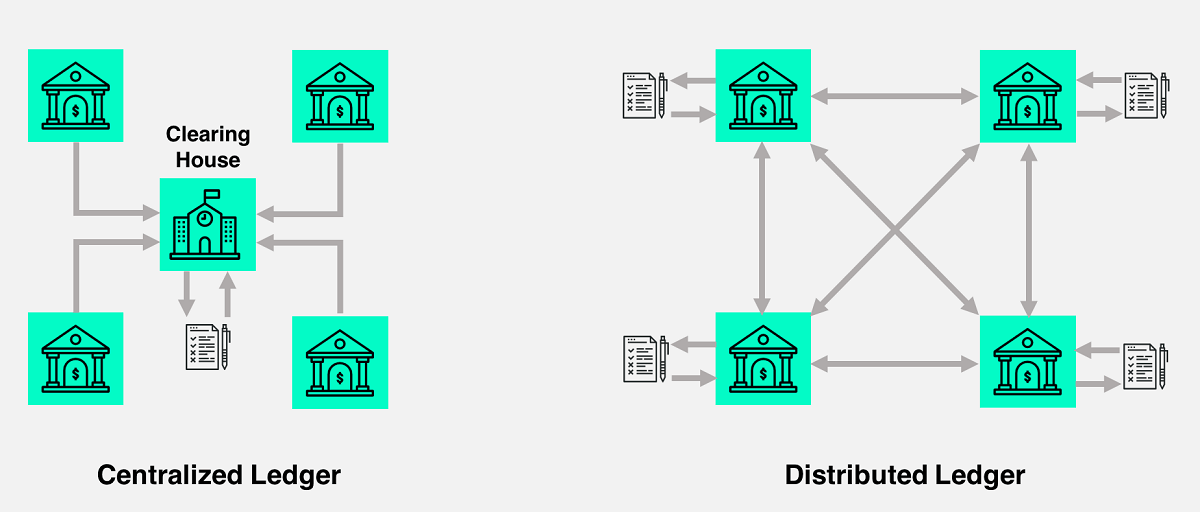
I recently wrote an article pointing out how the recent TCCCP Regulations, 2018 actually recognise Blockchain/Digital Ledger Technology !! Ya it’s a nice surprise, and it’s heartening to see an attempt by the regulator to warm up to a new technology which is here to stay and use it to the advantage of the consumer instead of being the usual cave man regulator running behind the times.

You can check out the article here.