N.L.U. Jodhpur: Competition Law Cirque

nlu-jodhpur

“The Competition Law Cirque is pleased to announce its inaugural edition, which is to be published in November this year. The Editorial Board of Competition Law Cirque is inviting submissions for Vol.1, Issue 1 from legal academicians, professional and students.

The working paper series seeks to publish outstanding scholarly articles relating to competition law and policy. Its mission is to help foster learning and debate about how competition law and policy can continue to develop in an economically rational way. Articles published in the Working Paper Series are subject to rigorous peer review by leading experts from around India and Europe.”

For details, click here.

In Re M/s Puja Enterprises et. al., Ref. Case No. 01 of 2012 : A Critique

220px-The_Devil_Wears_Prada_main_onesheet

Click here for the Order.

FACTS:

The reference was filed by Director General (Supplies & Disposals), Directorate General of Supplies & Disposals (D.G. S&D), Department of Commerce, Ministry of Commerce & Industry, Government of India, New Delhi (“the Informant”) under Section 19(1)(b) of the Competition Act, 2002 against opposite parties alleging Bid Rigging and market allocation in contravention of the provisions of Section 3 of the Act while bidding against the Tender Enquiry dated 14.06.2011 floated by D.G. S&D for concluding Rate Contracts (R.C.) of product (Polyester Blended Duck Ankle Boot Rubber Sole) for the period from 01.12.2011 to 30.11.2012.

The Wool and Leather (W.L.) Directorate of D.G. S&D had issued Tender Enquiry No. AB(Duck)/WL-6/ RC-11050000/ 1112/ 66 dated 14.06.2011 for conclusion of new Rate Contracts relating to the period from 01.12.2011 to 30.11.2012 for polyester blended duck ankle boots rubber sole (‘the product’), with tender opening date as 29.07.2011. The estimated requirement indicated in the Tender Enquiry was valued at Rs. 10.45 crores. The Tender Enquiry consisted of 45 items of different sizes and colours of the product, as in the previous Rate Contract for the year 2010-11 which was awarded to the eleven parties who were also  holding the Rate Contract for the year 2009-10. On scrutiny of the tenders for year 2011-12 opened on 29.07.2011, it was found that the difference in quoted prices of different bidders was in a very narrow range and all the tenderers barring one, had restricted the quantity to be supplied by it during the Rate Contract period. Nine tenderers had also stipulated the maximum quantity to  be supplied by them to a particular Direct Demanding Officer (D.D.O.). This
was stated to indicate a pre-determined, collusive and restrictive bidding pattern or cartel formation by the bidders thereby violating the various provisions of the Act.

ISSUE(S):

Only one broad issue. Whether the opposite parties were guilty of Bid Rigging in the Tender ??

CRITIQUE:

While it is best to reserve judgement on the Final decision in the Order of the Commission on whether the parties were actually guilty of Bid Rigging (For all we know, they actually were), the reasoning used to arrive at the conclusion both by the D.G. and the C.C.I. definitely merits some assessment:

1.  The fact that the same set of bidders/manufacturers have been bidding consistently since the past few years cannot be a sufficient ground to accuse them of Bid Rigging. This is because if the bidders have over time come to understand the system and have learnt to bid intelligently, it shows that they’ve been smart, but certainly cannot clearly point to Bid Rigging.

2. Following from the above, the quantity restrictions could have easily been a move of efficiency to optimize production with maximum possible profits, again a consequence of having been smart enough to understand the modalities of production and supply of the product in the present tender.

3. It was pointed out on behalf of the opposite parties at the very outset that the units against which the investigation was ordered by the Commission were small/ micro enterprises enjoying certain concessions/ exemptions from the Government of India and the state Governments.

4. The D.G. took into account a meeting organized by Federation of Industries of India (F.I.I.) on 20.10.2009 to presume that the opposite parties could have shared the information and therefore, there was meeting of minds. Frankly, this is a bit absurd. It is one thing to infer such a conclusion  when the association was one specific to the industry, e.g., in the Cement Cartel Case. However, to assume similar conclusions in the case of a general industry body is in my respectful view pushing the ambit of circumstantial evidence in Competition Law a bit too far. Furthermore, there does not seem to have been any evidence to suggest that any of the opposite parties discussed the particular Rate Contract in the meeting.

5. Both the D.G. and the Commission seemed to have omitted considering that fluctuation in the prices of raw materials is not a good enough indicator to determine cost for two reasons. Firstly, sensible industries do not buy raw materials at spot rates. They buy them under long term contracts at fixed rates. Secondly, manufacturers will often hedge against the cost of the raw materials to ensure effective cost considerations both during production and accounting.

6. Practical experience while dealing with the government is a good enough reason for anybody to impose quantitative restrictions on production. Ask any businessman having to deal with the government. The unanimous opinion will be that it is a headache when it comes to demand, supply and payment for providing goods and services !!

In conclusion, to reiterate, it is quite possible that the opposite parties actually were guilty of Big Rigging, and in fact, there are certain evidences unearthed by the D.G. in it’s favour. What I really want to indicate through this post is that if the reasoning in Orders are going to be so flawed or open to loopholes and cracks of ambiguity, then it will become all the more easy to defend against them in Appellate forums.


FIFA 2014 Antitrust Investigation

download

This is for all the football fans among the readers of this Blog.

FIFA Partner Faces Brazil World Cup Antitrust Complaint

For the sake of information, the Antitrust authority in Brazil is  the Conselho Administrativo de Defesa Econômica (C.A.D.E.), literally translated as the Council for Economic Defence.


National Seminar on “Trade Associations and the Indian Competition Regime – Compliance Issues”

PHD House, August Kranti Marg, New Delhi, 9/6/2013 12:00:00 AM

The seminar will dwell on why is competition law compliance important for Trade Associations, what type of conduct does competition law regulate, what are restrictive agreements or concerted practices, abuse of a dominant position & How to comply with Competition Law.

Organized by PHD Chamber of Commerce and Industry jointly with Society of Indian Law Firms on Friday, 6th September 2013 at 03:45 P.M. at PHD House, 4/2 Siri Institutional Area, August Kranti Marg, New Delhi.

Details can be sought from shikha_s@phdcci.in / kirti@phdcci.in. Entry will be confirmed with prior registration only.


Source: S.I.L.F. Release

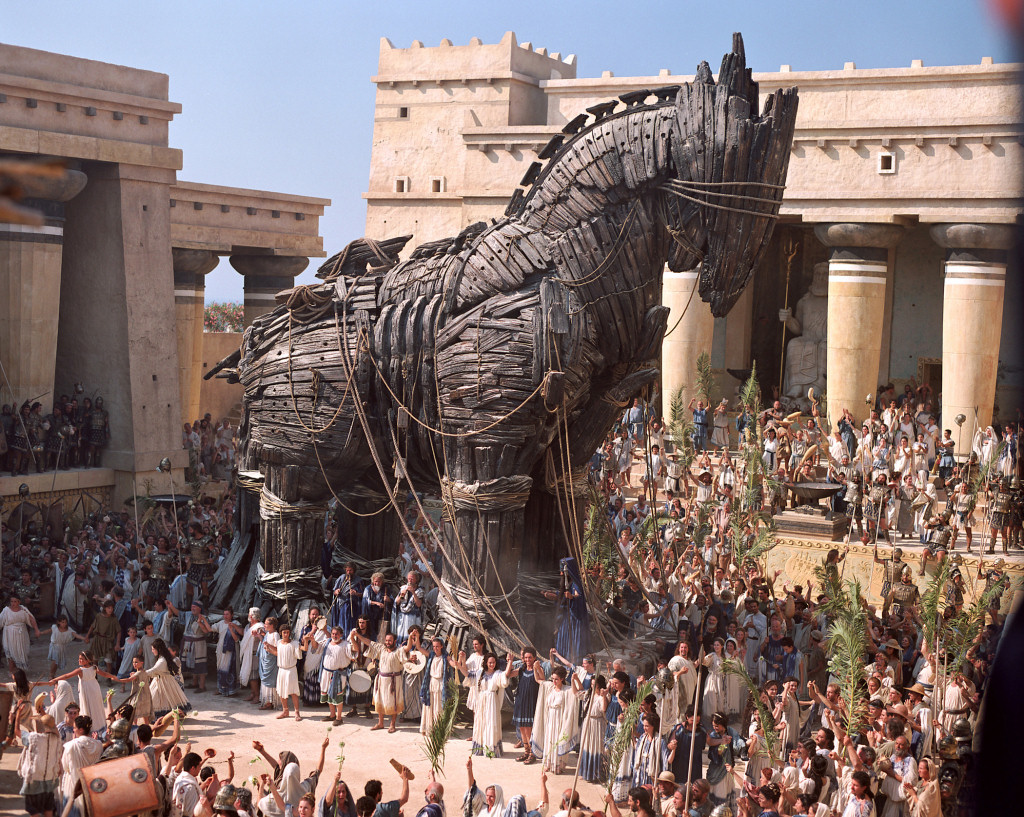
The Modern “Trojan Horse” Reworked For Capitalism

trojanhorse

This post is not strictly about Competition Law, but then, life is about more than Competition Law. And as it is, the just announced Microsoft-Nokia buyout deserves a post !!

Lets consider the facts. Stephen Elop, who was heading Microsoft’s business software division, left Microsoft in 2010 to join Nokia, allegedly  to lift Nokia out of the non-innovative rut which it had managed to get itself stuck in at the time, especially with Touchscreen phones and Smartphones. What did Nokia do under the leadership of its new C.E.O. ?? It tied up in a strategic partnership with Microsft to provide the software to its new line of “Lumia” smartphones. In addition to this, Nokia did not even try to pursue a growth startegy with the Android operating system on its phones. Correct me if am wrong, but not even a single Nokia Smartphone or Touchscreen phone is equipped with the Android operating system.

Furthermore, During the almost three years Stephen Elop was C.E.O. of Nokia, the Company fell from its position as the world’s largest smartphone vendor to assume the status of tenth largest. As a consequence, not only did Nokia obviously see its market share collapse, but more importantly, it’s share price literally shrivelled up to a pittance. Shares in Nokia may have surged around thirty percent to 4.01 Euros by late Tuesday, but while up from their decade-low of 1.33 Euros hit last year, they are still only a fraction of their year 2000 peak of 65 euros. It’s obvious that Microsoft is getting Nokia cheap.

I may sound like a conspiracy theorist here, but it almost seems Stephen Elop was SENT TO NOKIA WITH THE INTENTION FOR PREPARING IT’S MOBILE HANDSET BUSINESS FOR AN ACQUISITION BY MICROSOFT. What further lends credence to this theory is the fact that he will return to Microsoft to head the newly acquired Mobile Division.

In conclusion, unless Finnish and E.U. authorities wish to investigate, it does not seem as if the move was in any manner illegal. However, it does leave a bad taste in the mouth. Also, whether even this cut-throat strategy was worth it remains a question, considering Microsoft shareholders are less than impressed with the deal as of now. (Microsoft shares were down almost six percent at the time of publication fo this post.) And who can blame them ?? Windows phones haven’t been doing well in general, and the problem seems to be more with the acceptance of the software rather than there being anything wrong with the hardwware.

A Snacker

KFC_KFC_Snackeru_with_Crispy_Strip_Ultimate_Cheese_334132 (1)

An upcoming post on the recent Reference Case No. 01/2012, . M/s Puja Enterprises et al., has been slightly delayed, so here is a snacker till this Friday, by which I hope the post will be ready for upload.

1. Volume 5 of Fair Play is out. For the uninitiated, Fair Play is the Quaterly Newsletter of the C.C.I.

2. Typical of the workings of a Ministry, the Draft National Competition Policy has now been referred to a Committee of Secretaries for “further consideration”. [Press Release]

EC Dawn Raids: A human Rights Violation ?

I recently read an old 2008 article titled “EC Dawn Raids: A Human Rights Violation?” by Imran Aslam and Michael Ramsden.

The Paper examines whether the ‘Dawn Raid’ procedure provided in E.C. Regulation 1/2003 is consistent with two rights protected by the European Convention on Human Rights and Fundamental Freedoms: the privilege against self-incrimination (Article 6 E.C.H.R.) and the right to privacy (Article 8 E.C.H.R.). The paper argues that the protection provided by the European Court of Justice falls far short of protection necessary to undertakings. On this basis, it analyses what available source(s) of judicial remedy an undertaking has in order to avail itself of E.C.H.R. rights.

While the article is old, it does hold special relevance for India in light of the expansive powers which are proposed to be given to the C.C.I. in the still pending Competition Amendment Bill which proposes to amend Section 41 of the Act, conferring the authority on the Commission to grant powers of search and seizure to the Director General’s office as and when required.

Fire Sales in the Aviation Sector: Are they Really a Competition Law Abuse ??

ff1

Much has been said about the recent “Fire Sale” tactics adopted most recently by Jet Airways and also by SpiceJet in the past. While we debate on whether this is fit case to be considered by the C.C.I., I have to submit that in my  personal opinion, this incident can probably not be classified as an incident of predatory pricing, the reasons for which are as follows:

“Fire sales” or “pricing games” cannot per se be considered anti-comeptitive or a Predatory Pricing tactic. The Competition Act, 2002 clearly defines the phrase as when goods or the provision of services are sold BELOW COST. There is no proof that the sale of these tickets is actually below cost, as is further affirmed by the article itself which clarifies that the tickets are exclusive of taxes, effectively bringing the prices at par with other airline ticket prices.

As to the airline declaring losses in a particular quarter or the general lack of financial health in the aviation sector, such general economic scenarios cannot be used to determine Predatory Pricing or any evidence thereof. Predatory Pricing must be determined according to the specific incident which is alleged as Predatory Pricing, i.e., it would be required to show that the tickets that were sold in the fire sale itself were below cost. In the case where one can show them as having been sold above cost, the financial health of the airline would be irrelevant. Furthermore, if the airline could show that my selling large volumes, it was in fact able to make a profit, it would further render the case of he C.C.I. all the more weak.

One may counter this by submitting that my argument is inherently contradictory as a loss making airline would imply tickets having been sold at below cost. However, this is where the peculiarities of the aviation sector itself would need to be taken into consideration. The entire sector is suffering from severe financial strain due to many other factors other than the variable price of tickets. I am of the opinion one could successfully argue that it is these additional factors which play a significant role in the final balance sheet of the airline rather than one individual incident of fire sale.