
The “Lifeline Program”: A Perfect example of how NOT to promote Digital India.

13959900047_bede3e5ba4_o-100705434-large

At the very outset, in all fairness, India as on date does not have a program similar to the “Lifeline Program” of the F.C.C., but it doesn’t hurt to put out a pre-emptive rant to make sure they never even consider one in the future.

BACKGROUND

As per the website of the F.C.C., the Lifeline Program for Low Income Consumers  has since 1985, provided a discount on phone service for qualifying low-income consumers to ensure that all Americans have the opportunities and security that phone service brings, including being able to connect to jobs, family and emergency services. Lifeline is part of the Universal Service Fund. The Lifeline program is available to eligible low-income consumers in every state, territory, commonwealth, and on Tribal lands. The Lifeline program is administered by the Universal Service Administrative Company (U.S.A.C.). The U.S.A.C. is responsible for data collection and maintenance, support calculation, and disbursement for the low-income program. Cellphone subscriptions were included in 2005. Furthermore, On 31st March, 2016, the F.C.C. adopted a comprehensive reform and modernization of the Lifeline program. In the 2016 Lifeline Modernization Order, the Commission included broadband as a support service in the Lifeline program. The Commission also set out minimum service standards for Lifeline-supported services to ensure maximum value for the universal service dollar, and established a National Eligibility Verifier to make independent subscriber eligibility determinations.

PROBLEMS

The program is definitely a laudable initiative, and considering the high cost of mobile service in the U.S., probably a much needed initiative which recognises digital communication service as an essential service. Maybe it even implies it as a human right, though the same is no where expressly mentioned. However, the pitfalls of the program have led to severe criticism against it, with the current dispensation more than happy to cut its budget and probably let it die a slow death.

The problems with the Lifeline program are the same which so many government subsidy programmes and poverty alleviation programmes  In India suffer from: inflated costs, allegations of fraud, lack of access to key systems and data to weed out inefficiences and fake enrollments. and the hard reality is, the deficiencies in such a program can never be fully eradicated. All one can constantly focus on is the benefits out weighting the costs. But the core reason why the program suffers from so many issues because it chooses to focus on individual benefits rather than provide macro solutions to the problem of affordable access.

UNIVERSAL SERVICE OBLIGATION IN INDIA: THE WAY TO CONTINUE ONWARDS

This is where we in India are fortunately doing a better job under the Universal Service Obligation Fund. 

The Universal Service Obligation Fund (U.S.O.F.) is the primary scheme administering spread of broadband connectivity in rural areas. According to the Department of Telecommunications (D.o.T.), “…apart from the higher capital cost of providing telecom services in rural and remote areas, these areas also generate lower revenue due to lower population density, low income and lack of commercial activity. Thus normal market forces alone would not direct the telecom sector to adequately serve backward and rural areas. Keeping in mind the inadequacy of the market mechanism to serve rural and inaccessible areas on one hand and the importance of providing vital telecom connectivity on the other, the New Telecom Policy – 1999 (NTP’99) provided that the resources for meeting the Universal Service Obligation (USO) would be raised through a ‘Universal Access Levy (UAL)’, which would be a percentage of the revenue earned by the operators under various licenses. The Universal Service Support Policy came into effect from 01.04.2002. The Indian Telegraph (Amendment) Act, 2003 giving statutory status to the Universal Service Obligation Fund (USOF) was passed by both Houses of Parliament in December 2003. The Rules for administration of the Fund known as Indian Telegraph (Amendment) Rules, 2004 were notified on 26.03.2004. As per the Indian Telegraph Act 1885 (as amended in 2003, 2006 and 2008), the Fund is to be utilized exclusively for meeting the Universal Service Obligation.” In summary, the U.S.O.F. uses

The recently cabinet approved National Digital Communications Policy, 2018 further pushes four initiatives to be funded by USOF:

(i) BharatNet: Providing 1 Gbps to Gram Panchayats upgradeable to 10 Gbps
(ii) GramNet:  Connecting all key rural development institutions with 10 Mbps upgradeable to 100 Mbps
(iii) NagarNet: Establishing 1 Million public Wi-Fi Hotspots in urban areas
(iv) JanWiFi:  Establishing 2 Million Wi-Fi Hotspots in rural areas

These targets are ambitious, and they may not even be achieved during the duration of this policy at all, but achieving even fifty percent of this target would be a fantastic growth in internet access to the underprivileged.

The Big Bang Tech.


71Afo54hfeL._SL1500_

Things in the media have become typically quiet after the initial flurry of headlines, and as usual, I was supposed to write a lengthy blog post on the antitrust actions against Big Tech , and as usual, it kept getting delayed to the extent that it has now become an exercise in futility. (Man I need to get more disciplined with my writing !! )

So to just bring this to the closure in my own head more than anything else, here is a list of the major and most informative headlines (in no particular order of importance) on the issue:

Silicon Valley pressured as Washington turns up antitrust heat

Unheard for years, smaller fished finally get a say against tech sharks.

On priority: Regulating online giants for financial viability of news business

Senator Warren urges antitrust chief to recuse himself from Google, Apple probes

Four reasons why antitrust actions will likely fail to break up Big Tech

Regulating or breaking up Big Tech: an antitrust explainer

Fast Track Call Cab Pvt. Ltd. and Anr. v. ANI Technologies Pvt. Ltd., Case No. 6 and 74 of 2015

uber-ola

download

There are certain cases in any area of jurisprudence in law, including competition law, which tend to make an individual mark of their own. This may be simply due to the parties involved, or because the cases involve seminal questions in law which would help clarify the legislation involved for future use, or because the ramifications (not necessarily negative) of the Final Order go beyond just the law involved, and into the arena of a change in the very economics or social structure of the system the case may question.

In my personal opinion, Fast Track Call Cab Pvt. Ltd. and Anr. v. ANI Technologies Pvt. Ltd., Case No. 6 and 74 of 2015 falls into this category and for all the reasons stated above.

My criticism of past Orders of the Commission through this Blog is well known, but this time, I must bring on record my appreciation. The Final Order is by no means perfect or maybe even completely legally sound in all aspects, but it does display not only the growing maturity of competition jurisprudence by the Commission, but also at least an attempt by the D.G. to not be content with a superficial investigation of  relevant market dynamics.

Both Ola and Uber have already suffered enough regulatory troubles regards surge pricing and driver registration from various transport departments across the country, and though Ola has won this round, there will most probably be an Appeal. But the biggest fallout for Ola (and even Uber), which in my personal opinions has made it a pyrrhic victory, is that the D.G. and the Commission have extensively written about the below cost pricing strategies adopted by both companies. In fact, the D.G. has gone so far as to note that the significant market share of Ola or Uber has nothing to do with technological innovation but is rather the pure consequent of below cost pricing. Whether the companies like it or not, it is probable that both Ola and Uber will be prodded to bring down the revenue drain, not just by investors but also by competitors and various state departments as economically, a market providing services below cost can under no circumstances be considered an economically sound market, and creates potential avenues for future investigations by the Commission.

COLLECTIVE DOMINANCE BACK IN THE LIMELIGHT

An alternative argument which was raised by the Informants while objecting to the D.G. Report was that there is a possibility of two entities exercising dominance at the same time. The Informants claimed that the analysis of the D.G. pointed towards the presence of more than one dominant player in the relevant market. Furthermore, they submitted that the D.G. in its report had admitted the growth of both Ola and Uber was not the result of any technological innovation or efficiency but the result of a practice to charge substantially below the average variable cost. The Informants also quoted the observations of the Canadian Competition Tribunal in the Visa Mastercard Case, which noted that both MasterCard and Visa can individually possess market power in the relevant market. It was thus submitted that a conclusion of simultaneous dominance of Ola and Uber was not incompatible with the provisions of the Competition Act, 2002.

I have already on a number of occasions discussed Collective Dominance (See here, here and here) and how it is not presently recognised under the Act. The Commission’s reasoning is similar to what we have already propagated here and I have nothing new to add in this area.

However, for the fun of it, let us hypothetically presume that Collective Dominance was recognised under the Competition Act. Could Ola and Uber have been held liable for abuse of dominant conduct ?? I would submit the answer would still be a no. 

Firstly, since the Uber investigation has been stayed by the Supreme Court, no finding or penalty could be imposed upon Uber. But beyond that, secondly and more importantly, is that Ola and Uber would never be able to breach the threshold for Collective Dominance under Competition Law, and to  understand why one needs to look into the case of U.S.A. v. VISA Et al., 344 F.3d 229 (United States Court of Appeals, second Circuit.). Similar issues were raised against VISA and Mastercard. To summarise, the United States Department of Justice brought enforcement action against the two payment card networks and licensor of one payment card brand, alleging that governance duality between networks and networks’ exclusivity rules were agreements in restraint of trade in violation of Sherman Antitrust Act. Challenging the organizational structure of two of the nation’s four major payment card systems, the complaint charged that MasterCard and Visa U.S.A., which are organized as joint ventures owned by their member banking institutions,conspired to restrain trade in two ways: (1) By enacting rules permitting a member-owner of one to function as a director of the other (an arrangement the government described as “dual governance”) (Count I); and (2) by enacting and enforcing “exclusionary rules,” which prohibit their member banks from issuing American Express (“Amex”) or Discover cards (Count II).

The Court held that Visa U.S.A. and MasterCard violated the Sherman Antitrust Act by enforcing their respective versions of the exclusionary rule, barring their member banks from issuing Amex or Discover cards. The Court further held that Visa International, which owns the Visa brand, licenses it to Visa U.S.A., and exercises certain governance powers over Visa U.S.A., was liable for participating in Visa U.S.A.’s violation. Factually, it is important to note that a member of either the Visa U.S.A. or MasterCard network could also be a member of the other network. Thus a bank that was a member of Visa U.S.A.’s network and issued Visa cards could also be a member of the MasterCard network and issue MasterCard cards. On the other hand, both MasterCard and Visa U.S.A. had promulgated rules that prohibited their members from issuing American Express or Discover cards. Evidence was also cited that atleast three major U.S. issuer banks would have contracted with American Express to issue Amex cards in the United States but for the exclusionary rules.

In other words, in Visa Mastercard, there was active collusion between the two entities to limit market access to the other two competitors, whereas in the case of Ola and Uber, it is anything but !! Both companies are constantly at each other’s throats on pricing and volume of rides in the country. We are starting to see a cut back on the below cost pricing strategy, but only a continual market watch on the sector will help to gather enough data to understand the consequent effects, and it is too early to take a firm decision as of today. Since Ola and Uber have together effectively turned the market as  one heavily based on network effects,  strong competition and constant change in market share might be the norm between the two for some time to come.

POST SCRIPT: UBER IN INDIA 

The Uber legal team would have been on their tenterhooks till this Order came out, and will be studying it closely (the investigation against Uber has been stayed due to questions of law regarding the powers of the erstwhile Competition Appellate Tribunal (COMPAT) and the matter is presently pending in the Supreme Court). The relevant market would obviously include Uber, and the D.G./Commission made a number of observations regarding the company, such as:

1. “…[i]n the first six months of 2015-16 (till September 2015), the D.G. noticed that while OP’s market share increased from marginally by 2% to 3%, Uber’s share increased at a faster rate i.e. by about 20%-22%.” [This is definitely due to a lower base rate.]

2. “It was further noted that from March 2015 onwards, Uber has maintained the second position. The D.G. also noted that from January to September 2015, Uber’s trip size registered growth of nearly 1200%, while OP’s growth has been about 63% during the same period.” [Same reason as above.]

3. “The D.G., thus, noted that backed by its marketing technology and logistics and financial support, Uber was able to successfully counter the pricing strategy of OP, and being able to sustain losses, which restrained OP from exercising market power in the relevant market. This was evident from the fact that similar strategy was followed by Uber and as a result, the gap in market share between OP and Uber narrowed down from 69% in January 2015 to 22% by September 2015.”

4.  “Further, with the steady increase in Uber’s market share from 6 – 7% in January 2015 to 36-37% in September 2015, it could not be said whether OP would be in a position to hold on to its market share for a sustainable period for assessment of dominance in the relevant market.”

5. “Thus, D.G. opined that both OP and Uber have adopted ‘below-cost pricing strategy’. However, since the scheme of the Act only attracts the provisions of Section 4 when an incumbent is found to be dominant, the D.G. stated that OP can be said to have
indulged in abuse by way of predatory pricing, only if it is found to be dominant in the relevant market. Since OP was not found to be dominant, the D.G. concluded that OP did not contravene the provisions of Section 4 of the Act.” [Emphasis added]

6.  “On the other hand, Uber, which entered the relevant market in 2013-14, expanded its network rapidly to account for nearly one third of the active fleet in the relevant market in 2015-16. In terms of annual number of trips, its share increased from 1 – 2% in 2013-14 to 30-31% in 2015-16.” 

7. “…[U]ber, entered the relevant market in the year 2013 and garnered a sizeable market share in just about two years’ time. In terms of number of trips on monthly basis, its share increased from 0-1% in August 2013 to 36-37% in September 2015. Further, Uber showed a steady growth February 2015 onwards, with its share in terms of monthly number of trips having increased from 6-7 % in January 2015 to 36-37% by September 2015. Its entry as well as steady growth during the period of investigation shows that the market was evolving. While Uber’s entry, as the Informant has argued, did not dislodge OP during the period of investigation, OP’s declining market share post January 2015 reflects the competitive constraint posed by Uber and the fragility of leadership position in a dynamic business environment, as discussed earlier.” 

8. “As a matter of record, in the present case, OP does not have an edge over all its competitors in terms of the size and resources. Interestingly, the investigation revealed that that Uber Inc., which is the parent company for Uber had a total capital investment of about 15 to 20 times of OP’s financial resources.” [The C.C.I. doesn’t seem to have made much of this, but it is important to note that “size and resources of the enterprise” and “economic power of the enterprise including commercial advantages over competitors” are two of the factors to be taken into consideration during an inquiry under Section 19(4)(b) and Section 19(4)(d) of the Act respectively.]

All this goes to show that Ola may owe Uber one for its victory, and also that Uber will be fully focused to ensure a favourable outcome in the Supreme Court to avoid the cross hairs of the D.G./C.C.I.

Network Neutrality: An Update

loading


Yesterday (30.08.2017) will be marked as a watershed day by observers for Network Neutrality. The issue is being hotly contested in arguably the world’s most capitalistically advanced jurisdiction for telecom and the internet (U.S.A.) as well as the jurisdiction with potentially the biggest telecom and internet market, both by the number of users as well as revenue (India) and yesterday was an eventful day in both.

In India, the Telecom Regulatory Authority of India (T.R.A.I.)  held and concluded an Open House Session in New Delhi on the issue of Network Neutrality. Unfortunately, being bed – ridden with a fracture, I was unable to attend it myself, but I am informed that all parties were “extremely vocal” with their opinions. T.R.A.I. is likely to publish its recommendations by October. On a side note, Certain telecom companies also complained against SIM-locked handsets coupled with a tariff plan and said that a limited access to certain applications through such devices was as good as a “walled – garden” and against Network Neutrality (No prizes for guessing who they’re talking about).

At the opposite end of the globe, yesterday was the last day to file comments on the Federal Communications Commission plan to deregulate broadband service and roll back net neutrality rules, and at least 21.9 million comments have been confirmed to have been received. Voting by the F.C.C. on the issue is not expected anytime soon, as the Commission is known to take it’s time with decisions after such commentary periods.

Here’s to waiting and watching and hoping for the best.

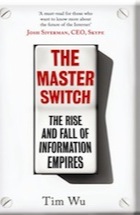
Book Review: The Master Switch by Tim Wu.

The-Master-Switch


(This is actually an old article which was originally published on the India Law and Technology Blog, where once upon a time I was a regular guest blogger. Unfortunately, sometime back all of them got wiped out. I often get messages about those posts, but sadly many of them were typed directly on the wordpress platform. Hence, no copy and as a consequence, permanently lost. Fortunately, while rummaging for something else, I chanced upon one of my earlier posts from the days when I still preferred to type a word draft first.)

At the very outset, I must confess, I have never been an absolute supporter of network neutrality and still am not. Another writer on this Blog has written before that he feels that the internet is inherently discriminatory, and I am inclined to agree with him. The writer of that post has summarized the reasons why the subject has become such a debatable issue among the learned, yet one can find that the subject has failed to convincingly grip the imagination and attention of the general pubic. And the various research papers and articles written and published in various journals of repute by the proponents of network neutrality are in the writers personal opinion, often too complex and long to enlighten and help an average reader to engage in an active debate on the topic. (After all, few individuals, except for law students or lawyers, will take the pains to read a seventy seven page article in the Harvard Journal of Law and Technology!!)

Notwithstanding what has been written above, THE MASTER SWITCH by Tim Wu is a welcome change to such articles. It is everything that should be asked of a book on a policy issue: Concise, simple, interesting so as to be able to grasp the attention of the reader, and most importantly, synchronized with itself, i.e., all the chapters within it. It also helps to better justify his stand as a proponent of network neutrality by using the “destruction of innovation” argument, which he failed to adequately explain in his papers and which has often been made into the weak link in the armour to be exploited by the those not in favour of network neutrality.

To summarise, he has used the Schumpetarian cycle of “destructive creation” to try and justify why there is a need to enact a Network Neutrality Legislation. He shows through historical examples how each new innovative medium of communication, from the Telegraph to the Television, has over time, though born as an innovative new and “free” medium to communicate, has slowly been centralized and been absorbed to be manipulated and controlled by the few large corporations who have eventually come to dominate the American industry and even Government policy. He then talks about how the Internet is a medium far more revolutionary then any of its communication predecessors and hence, any centralization of this medium shall, in fact result, in an unacceptable loss of freedom of expression.

After reading the book, one begins to understand that the reason a Network Neutrality Legislation needs to be enacted is not with the de jure intention of necessarily keeping the internet neutral, but with the de facto intention of actually controlling corporations from gaining too much control over the medium. A question which arises at this point is “why do we need a specific legislation? Why is the FTC (or, in India’s case, the CCI) not enough to control such an abuse of dominance, should it ever arise?” Wu answers this question, by again, citing historical examples on how these corporations have, through their clout, managed to subvert or walk around such Anti – Trust procedures through effective and efficient lobbying in the U.S. Congress. Despite its lack of effectiveness though, it is interesting to see how Anti – Trust law can act as an effective tool to against network discrimination.

If a complaint has to be raised against the book, it would be that for some reason it lacks any mention whatsoever of Facebook, which is quite surprising considering the status and clout which the site has achieved to influence individual opinion in our times. However, after reading, I must confess, I am far more convinced for the need for specific legislation on network neutrality than I was before.

As a post script, for all those interested in understanding the issue of network neutrality in simple language devoid of most technicalities, I recommend the following essay by Edward W. Felten:

http://dreadedmonkeygod.net/home/attachments/neutrality.pdf

December 4, 2015: D – Day for Network Neutrality.


Meade_and_Prettyman_Courthouse


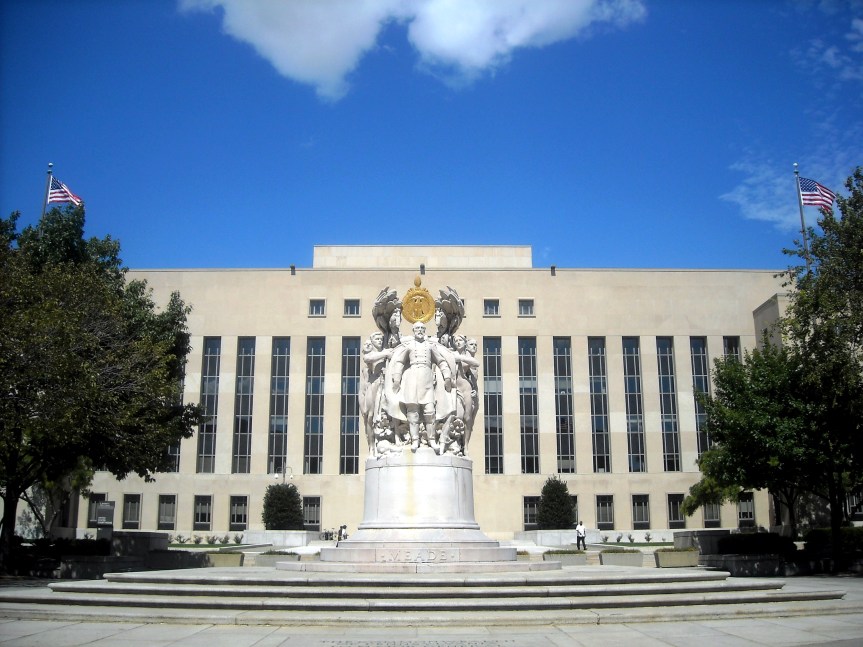
Sri Srinivasan, Stephen F. Williams and David S. Tatel are the three Judges of the U. S. Court of Appeals for the D. C. Circuit who will hear the challenge to the F.C.C.’s Network Neutrality Order on December 4th, 2015.

For a brief profile of the three Judges by Brian Fung of The Washington Post, Click here.

Also, see here the Hindustan Times coverage of Sri Srnivasan (Any surprise considering the obsession of India with famous PIO’s who may or may not even relate to our Country ?!?! 😀 )

There IS a Better Way to Call India: A Quick Comment On Competition Law And Advertising.

Airtel-Talk

In all the chaotic hullabaloo which arose on Airtel’s VoIP Data charges issue (detailed article on the issue currently in progress), another protest which drew comparatively little attention (probably due to the substantially lesser individuals/entities it affected) was the protest by International Long distance(I.L.D.) Operators against the Company’s practice of advertising it’s own VoIP Application Airtel Talk over long distance calls. Specifically, a few seconds before connecting the call.

I am a total outsider to the precise details of the case, and the facts are also disputed (I.L.D. Operators claim the advertisement was run selectively only on those networks with whom Airtel had not entered into collaboration agreements. Airtel denies this and claims that the advertisement was played on all networks equally without any discrimination.) But it did get me thinking on the issue of Advertising in Competition Law.

Prima-facie, one would consider advertising and competition law as congruous to each other. After all, advertising is an essential part of the competitive process in any economy. If a consumer is not aware as to what goods and services are on offer and at what price they are on offer, he or she will be unable to choose between the suppliers of the goods or services, and therefore, competition between suppliers may get diminished. But in this imperfect and admittedly anti-competitive world that we live in, it never is that simple. There are two different scenarios which need to be considered while addressing the issue of advertising and competition law.:

Individual Advertising

Individual Advertising is what I referred  to above, i.e., an individual entity choosing to advertise it’s products with the aim to grab market share from competitors in the same sector. This would generally not be subject to perceived anti-competitive harm. Misleading and false advertising, including comparative advertising, may be concerns, but in India they would dealt before other fora. There is however some literature which suggests that advertising paradoxically carries with it an inherent anti-competitive effect as advertising costs act as a serious barrier to the entry of new entities wishing to enter a market which is already dominated by a few relatively large competitors, especially in markets which inherently require enormous amounts to be spent in building up a brand name for the product/company. In fact, Bork has even gone so far as to state that it should be considered as a Barrier to trade !! (See Robert H. Bork, The Antitrust Paradox.)

Horizontal Agreements on Advertising

This refers to agreements among competitors in a market, and needless to say, these are a bit problematic. Any agreement among entities which restricts advertising would generally be considered as an anti-competitive agreement.

However, the reaction of the European Commission (E.C.) has been mixed depending upon the facts and circumstances of each case. While in the case of Belgian Roofing Felt, OJ [1986] L 232/15 (later upheld on Appeal in Belasco v. Commission, [1989] ECR 2117) the Commission ruled against joint advertising which led to a uniform image of products in a market wherein individual advertising would have facilitated differentiation, and consequently competition, on the other hand, in Re CECIMO, OJ [1969] L 69/13 and UNIDI, OJ [1984] L 322/10 (later upheld on Appeal in ANCIDES v. Commission, [1987] ECR 3131), it was accepted that it is sometimes desirable to rationalise and coordinate advertising efforts while imposing certain conditions on such coordination.

Post Script: The Advertising Market

As a post script, other than the above, an important area where competition needs to be maintained is the advertising market itself. It is important that the advertising media itself should function in a competitive manner free from any anti-competitive practices, including (but not limited to) any practice which might lead to reduction of advertising space in the market. This has been affirmed in the U.S. as far back as 1951 in Lorain Journal Co. v. United States, 342 US 143 (1951). One such allegation has already arisen before the C.C.I. is the case of Advertising Agencies Guild v. Indian Broadcasting Foundation, Case No. 35 of 2013. Though that particular Information was closed, the currently running Google Investigation before the C.C.I. involves similar issues (among others) and one will have to wait and watch for further competition law developments in this area.


What Goes Around, Comes Around.

5CC280BFA2B5C1C6FAA5BE52E8A8F016


VERIZON’S HUGE VICTORY IS ABOUT TO TURN INTO A HUMILIATING DEFEAT.

(Ya the Justin Timberlake image may not be the most appropriate. 🙂 )