
T.R.A.I. Consultation Paper on Differential Pricing for Data Services (A.K.A.) What Has Now Become The Fight Over “Free Basics”. (Part – I)

5629f14533909-logo


At the very outset, it must be stated that the Supreme Court Winter vacations have a tendency to induce one into a hibernating lethargy (in my case, lying tucked in bed with two blankets, a book and a halogen heater), which is the reason this post has taken such a long time to finally come to an end and be published. (For those who may not have understood by now, I am a true summer fan and sincerely dislike winter !!)

While this delay has allowed me to observe and note the developments in the past few days which have taken place regarding the issue, i.e., the “Free basics” fight which has broken out between Facebook and internet freedom activists, it has also at the same time forced me to expand this post to include a discussion on “Free Basics” as a service and whether it can actually help the citizens of India or not.

Coming first to the T.R.A.I. Consultation Paper on Differential Pricing for Data Services, the first question which immediately springs to mind is:- WHY ?? This issue was specifically raised and discussed in the previous T.R.A.I. Consultation Paper On Regulatory Framework for Over-the-Top (O.T.T.) Services (see page 98 onwards, specifically pages 106 – 107) wherein the agreement between Facebook and Reliance (earlier known as “Internet.org” and now reincarnated as “Free Basics”) was specifically discussed and comments on such pacts were called for (Question 13 in the earlier Consultation Paper). Therefore, it makes little sense to release another brand new Consultation Paper to exclusively once again discuss an issue, the responses to which are going to be obvious and the same as they were before. Surprisingly, there is absolutely no mention in the Differential Pricing Consultation Paper about the previous O.T.T. Consultation Paper, which again makes no sense considering the similarity of the issue.

Taking the liberty to speculate, there can only be two reasons for this move by T.R.A.I. One, the T.R.A.I. is in a genuine quandary on “Zero Rating” and is hoping for clarity on whether to allow such services, and this might also explain why it has failed to release its recommendations on the O.T.T. Consultation Paper till date. OR two, it has already taken a decision to allow Zero Rating plans by treating them out of the umbrella of network neutrality but which will be subject to regulation by it and the purpose of the present Paper is only to develop a working regulatory model on consensus.

However, whether one likes it or not, a new separate Consultation Paper on Differential Pricing for Data Services does now exist, and therefore warrants a look, even for those who oppose it.:-

  1. On reading, one can notice that this Consultation Paper focuses more from a perspective of regulation of tariffs. The first three paragraphs of the paper are a clear indication of the direction which T.R.A.I. wants the debate to take,i.e. the debate is being steered away from the one on network neutrality to that of viability of tariff regulation.:

“1. The Telecom Regulatory Authority of India Act, 1997 empowers the Authority to notify tariff for various Telecommunication Services. In exercise of this power, Telecommunication Tariff Order, 1999 (TTO, 1999) was notified for the first time on 9th March, 1999. Amendments in the TTO, 1999 were issued from time to time to reflect the changes in tariff framework. Initially, the tariffs were regulated. However, as the market matured and competition increased, TRAI gradually moved towards a ‘forbearance’ regime and forborne the tariffs for the wireless and the wire line segment in 2002 and 2003 respectively. Currently, except for the national roaming, rural telephony and leased lines, the tariffs for other telecommunication service are under forbearance. As per the policy of ‘light-touch’ regulation being followed, the tariff framework provides the Telecom Service Providers, which include Internet Service Providers and Data Service Providers (hereinafter referred to as TSPs) the freedom to design the tariffs according to the prevailing market conditions.

2. While the tariff regime has been left to forbearance, regulatory oversight is required so that the tariff framework follows the broad regulatory principles elaborated hereafter. Thus, TRAI needs to regularly watch and review the tariffs prevalent in the market. TTO provides for filing of tariffs by TSPs within seven working days of launch. The tariff filing provision plays a critical role in enabling TRAI to scan the prevalent tariff landscape and effectively intervene, wherever required to ensure that the tariff offers are reasonable, transparent, non-discriminatory and are not anti-competitive.

3. The TSPs have the flexibility to decide various tariff components for different service areas of their operation subject to the reporting requirement and other regulatory guidelines in vogue. Tariffs are offered by the TSPs taking into account several factors including input costs, level of competition, commercial considerations 2 and individual business case for each service provider. Even though tariff forbearance and flexibility to the TSPs to determine the rates are core principles of tariff framework, several regulatory guidelines have been prescribed to ensure orderly growth of the telecom sector and protection of consumer interest. Prevention of discriminatory tariff offers and ensuring transparency in tariff offers are amongst the most important principles which the Authority has consistently endeavored to uphold.”

2. Paragraph nineteen provides a fair and reasonable solution to the problem of differential pricing which should be acceptable to clans both for and against “zero rating”. It suggests de-linking free internet access from specific content, and instead limiting it by volume or time. This is a viable solution to the debate and should be eagerly pursued by T.R.A.I. in order to prevent future disputes and litigation on the issue. (The Airtel offer of fifty percent internet “cashback” if used after midnight is an example of such a scheme.)

3. The Paper obviously focuses on mobile data services, which brings us to the larger issue which even western jurisdictions, particularly the E.U., have had to pay extra attention to with regard to mobile network neutrality. (The link is an excellent paper by Christopher Marsden on the issue published in the European Journal of Law and Technology). In India, this assumes further significance since the trend in internet penetration is now confirmed to progress in the hinterland through mobile connectivity. A more detailed discussion will follow during our analysis of “Free Basics”.


In the next post, I will focus on “Free Basics” and discuss the merits and demerits of the scheme being actively promoted by Facebook.


December 4, 2015: D – Day for Network Neutrality.


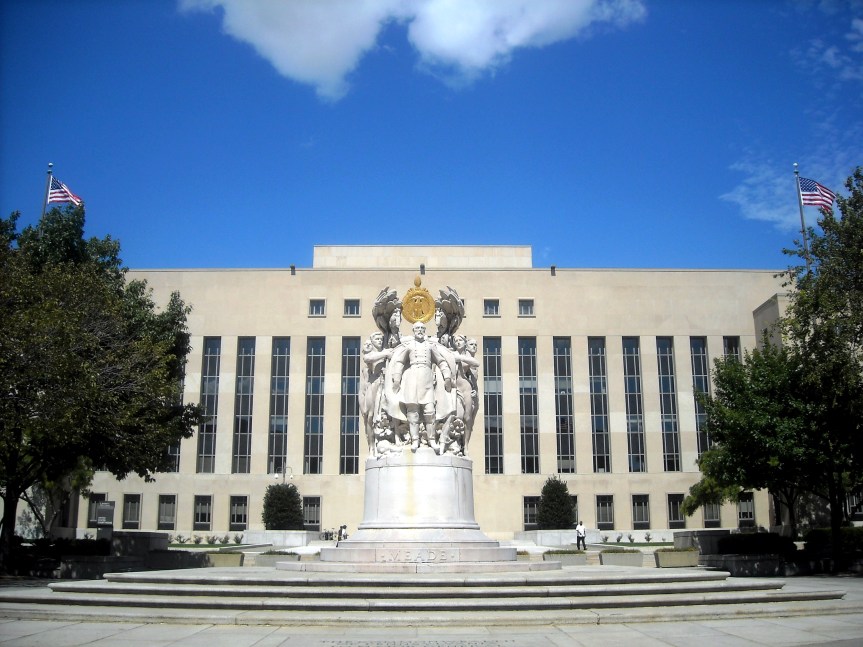
Meade_and_Prettyman_Courthouse


Sri Srinivasan, Stephen F. Williams and David S. Tatel are the three Judges of the U. S. Court of Appeals for the D. C. Circuit who will hear the challenge to the F.C.C.’s Network Neutrality Order on December 4th, 2015.

For a brief profile of the three Judges by Brian Fung of The Washington Post, Click here.

Also, see here the Hindustan Times coverage of Sri Srnivasan (Any surprise considering the obsession of India with famous PIO’s who may or may not even relate to our Country ?!?! 😀 )

The Network Neutrality – DoT Committee Report : A Document Positively Ambiguous.

download

This is an old Article and should have been published a long time ago. Nevertheless, better late than never.:-

As a follow up to my previous article on the T.R.A.I. Consultation Paper on the Regulatory Framework for O.T.T. Services, (hereinafter referred to as the Consultation Paper), I decided to do a similar piece on the recently released Department of Telecommunications (DoT) Committee Report on Network Neutrality (hereinafter referred to as the Committee Report) and also at the same time conduct a comparison between the two documents to present a picture of where the bureaucracy (to put it bluntly) of our Country stands today.

If the Committee Report is to be described in a few words, it would be positive but ambiguous. While one may not go so far as to say that choosing between the Committee Report and the Consultation paper is like choosing the bad from the worse, the Committee Report gives its own share of jittery mistrust to anyone in favour of Network Neutrality. This is the biggest canyon which has emerged between the pro and anti neutrality sides in every jurisdiction where it has been debated – a deep distrust of any proposal of bridging the gap between the extreme points of view. As is highlighted from the comments below, any such middle path generally fails to appease either side for two reasons.  Firstly, it leaves any such centrist proposal wanting in safeguards. Secondly, the solution to Network Neutrality in the Indian context cannot lie solely with drafting a set of rules or regulations to ensure that the principles of network neutrality are observed. One will be required to delve deep into the economics of the Telecom Sector, the past, the present and the future to draft not just a regulation, but also prepare an adequate roadmap to create an economic atmosphere in favour of Network Neutrality. (The same is not the scope of this article and therefore shall not be elaborated upon further, but suffice to say, the path taken to ensure growth in the sector was one destined to lead to the present controversy.)

  1. WHAT ARE THE “CORE PRINCIPLES OF NETWORK NEUTRALITY”??

The most novel brainwave in the entire Report, and yet sadly the one to definitely receive the most criticism can be summarised by quoting two paragraphs from the Report verbatim below:

“2.8 The crux of the matter is that we need not hard code the definition of Net Neutrality but assimilate the core principles of Net Neutrality and shape the actions around them. The Committee unhesitatingly recommends that “the core principles of Net Neutrality must be adhered to.”


“13.6 The Committee, therefore, recommends the incorporation of a clause in the license conditions of TSP/ISPs that will require the licensee to adhere to the principles and conditions of Net Neutrality specified by guidelines issued by the licensor from time to time. The guidelines can describe the principles and conditions of Net Neutrality in detail and provide applicable criteria to test any violation of the principles of Net Neutrality. Suggested guidelines are given in Annexure IV”


At first glance, this looks like a brilliant solution to one of the biggest problems concerning Network Neutrality – Defining it. Annexure IV to the Report lists out various guidelines/criteria which can be used to determine whether a license holder is violating any “perceived” conditions of Network Neutrality. However, the predicament soon becomes evident. Any violation of Network Neutrality will require a case by case adjudication of the alleged individual violation. In fact, the Report itself contemplates an adjudication based approach wherein any policy would be deemed to be in compliance and that the DoT would be the original side adjudicator of any complaint of violation with a specialised expertise cell to be set up to deal with all such cases. The only natural outcome of such a policy can be endless litigation (definitely right up to the Supreme Court, considering the stakes involved), and the development of a considerable number of precedents, all of which will be argued as being differentiable as they would have been based on the individual facts and circumstances of each case! Also, It will always be the deepest pockets who will be able to afford the best lawyers, and naturally, since the private sector will be more than happy to shell out the currency, it is not Orwellian to hypothesise that in the future, we could actually see the law on Network Neutrality “bent away” from the principles of Network Neutrality as we accept them today. Another potential issue which may arise is early on is a jurisdictional conflict between T.R.A.I. and any such specialised cell of D.o.T.

2. THE GOVERNMENT’S AGENDA IS A TOP PRIORITY.

Annexure – I to the Report is the Notification constituting the Committee and Terms of Reference for it. The very first Term of Reference for the Committee was as follows:

“1. To examine the pursuit of Net Neutrality from a public policy objective, its advantages and limitations.”

This itself is enough indication that the primary intent behind the formulation of the Committee was single fold – examine how to satisfy the proponents of network neutrality and the protesting public (a major chunk of the present governments electorate) and ensure that it does not result in the dilution of the aims and objectives of the government, primarily “Digital India”. Since such schemes heavily depend upon private sector investment, it was natural that the Report would draw a line somewhere towards protecting the most important objectives of telecom operators: grow revenue to reduce debt and invest in the development of infrastructure (both as a natural corollary, important dispensations for the present government as well.)

The summary to the Report gives a frank opinion of the rationale it would like to follow to protect the “core principles of network neutrality”:

“1. The primary goals of public policy in the context of Net Neutrality should be directed towards achievement of developmental aims of the country by facilitating “Affordable Broadband”, “Quality Broadband” and “Universal Broadband” for its citizens.”

3. A FLAWED AND ARBITRARY CLASSIFICATION OF O.T.T. SERVICES.

The contentious issue regarding O.T.T. applications which directly compete with the primary sources of revenue of telecom operators still remains, and the Report has done absolutely nothing to help improve matters in any manner whatsoever. It has only churned to water to create more froth on the issue by attempting to create a classification among the various services by recommending as follows:

  • OTT application services have been traditionally available in the market for some time and such services enhance consumer welfare and increase productivity. Therefore, such services should be actively encouraged and any impediments in expansion and growth of OTT application services should be removed.

  • Specific OTT communication services dealing with messaging should not be interfered with through regulatory instruments.

  • In case of VoIP OTT communication services, there exists a regulatory arbitrage wherein such services also bypass the existing licensing and regulatory regime creating a non-level playing field between TSPs and OTT providers both competing for the same service provision. Public policy response requires that regulatory arbitrage does not dictate winners and losers in a competitive market for service provision.

  • The existence of a pricing arbitrage in VoIP OTT communication services requires a graduated and calibrated public policy response. In case of OTT VoIP international calling services, a liberal approach may be adopted. However, in case of domestic calls (local and national), communication services by TSPs and OTT communication services may be treated similarly from a regulatory angle for the present. The nature of regulatory similarity, the calibration of regulatory response and its phasing can be appropriately determined after public consultations and TRAI’s recommendations to this effect.

In simple terms, O.T.T. applications are fine, as long as they don’t interfere with the lucrative (and maximal earning) voice revenue stream of the telecom operators.  The previous sentence may be cynical, but the so called “public policy” only begs for the same. There is simply no sound basis for the classification proposed by the DoT in its Report. One need not bother to interfere with O.T.T. messaging services (which, coincidently, are today of little relevance to Telecom Operators since messaging constitutes less than ten percent of their revenue and as O.T.T. messaging services consume relatively little internet Bandwidth), but one needs to specifically regulate O.T.T. “verbal communication” services (which give them serious competition in revenue). Despite the fact that all these services have one major base as common – they all use the same internet/data connection to operate. Even among VoIP services, there is a differentiation which needs to be created between international and domestic services, which begs for the display of reason. The above recommendations are strong potential Article 14 and Article 19 violations in the making, not to mention that they will require many O.T.T. applications to bifurcate their services in order to comply. For example, Skype within India would be the subject of strict regulation, whereas for an international call, it may be a liberal or no regulation. Also, WhatsApp messaging services may be subject to no regulation, but WhatsApp (since it has now also begun VoIP services) domestic calls are subject to strict regulation while WhatsApp international calls may be subject to a liberal regime. Confusion and unnecessary complication, to say the least!!

4. ZERO RATING – PROPOSAL INVITES MISUSE

As a follow up the above mentioned point on Government Agenda, when it comes to Zero – Rating, while the DoT Committee has come down hard on the likes of Internet.Org, stating that “content and application providers cannot be permitted to act as gatekeepers and use network operations to extract value, even if it is for an ostensible public purpose. Collaborations between TSPs and content providers that enable such gatekeeping role to be played by any entity should be actively discouraged”, it has at the same time approved the carving out of exceptions for “desirable” public services and government services on a case by case basis. The phraseology invites arbitrary decision making and misuse, and it would be desirable to take a concrete stand on zero – rating (preferably against it) rather than try to carve out exceptions in “public interest”.

This is still not the final word, and at the time of writing, the T.R.A.I. is yet to release its final list of recommendations pursuant to its Consultation Paper. Also, Shri Ravi Shankar Prasad, the Minister of Communications & Information Technology (and Law & Justice as well) has made a categorical statement in Parliament this week that a final call shall be taken only after the release of the T.R.A.I. Report. But the way things are looking; Network Neutrality advocates may have to start preparing for an aggressive legal battle ahead.

Can Digital India Be Used To Encourage Network Neutrality ?

AAEAAQAAAAAAAAOhAAAAJGZmNTdjMTJhLWU0OGItNDhlMS1hNGQ3LWMyZGFkMWE1YjMxOQ

The Government’s latest initiative of “Digital India” has been heavily propaganded throughout the country as a game changer initiative to modernise bureaucratic services and enable the growth and development of the Country through universal digital access to every corner of every state. The programme has received its share of praise and dismissive snorts of derision alike, with the opposition considering it another overhyped un-implementable scheme of the present political dispensation.

Parallel to the debate on Digital India is another debate presently in progress on Network Neutrality. The Government has on multiple occasions emphasised its support for Network Neutrality and Shri. Ravi Shanker Prasad, Minister for Communications and Information Technology, has on a number of occasions stated both inside and outside Parliament that under no circumstances will the government allow the violation of the principles of Network Neutrality. To this end, the Ministry constituted a Committee under its supervision (commonly referred to as the DoT Committee) to look into the issue and come out with recommendations to implement the same. The merits of the recommendations notwithstanding, what became evident on a perusal of the Report was that the one of the foremost concerns of the government was to ensure that any enforcement mechanism for Network Neutrality did not compromise on “Digital India”, and it is perhaps safe to assume that if the executive was forced to choose between ensuring Network Neutrality and Digital India a success, it would in all probability choose to encourage the latter at the cost of the former.

Which brings us to certain significant questions: Does Network Neutrality need to be sacrificed as the cost for Digital India? Is it possible for both to not only be enforced and developed together, but also complement each other?

Some of the major pillars of the Digital India Programme are creating broadband highways, public internet access programmes and universal access to mobile connectivity. To this extent, Digital India is merely a merger (with an expanded outlook and ambition) of previous government initiatives of National Optical Fibre Network (N.O.F.N.) and the National Knowledge Network (N.K.N.). The major (and the most obvious) problem with achieving these goals is the lack of infrastructure prevalent not only in rural areas but also in the metropolitan cities of the Country. This glaring weakness is openly expressed by many for what will be the programme’s ultimate downfall.

At the same time, coming to Network Neutrality, one of the primary arguments against Network Neutrality has been that Telecom Service Providers have had to spend a financial bomb on developing infrastructure, and will have to continue to do so in the future, and disruptive OTT services significantly eat into their revenue, thus making the business and investment unviable.

Both concerns raised by their respective parties can together provide the perfect complementary solution to each other, provided the Digital India Programme is tweaked a bit. Digital India can in fact become the perfect platform for developing broadband and mobile connectivity infrastructure, while at the same time be used to lower the cost of development of the said infrastructure by providing various incentives under the Digital India Programme to develop the same. Reducing cost, thus consequently reducing the return on investment required, can burn a gaping hole in the shroud that has been developed against Network Neutrality.

Take for example the erstwhile NOFN scheme. It was and still is far behind its schedule and in its present format there is very little chance of this changing. A report has even gone so far as to state that sixty seven percent of the NOFN points are not functional. One of the main reasons for this has been the over reliance on the recurring loss making and inept public sector enterprise B.S.N.L., which has allowed a lot of fibre laid at excessive cost to go waste and render them unusable today. But by allowing the private sector to invest, the government can aid in boosting the speed of laying down of fibre by providing long term tax exemptions to these companies, and also exempt Right of Way (RoW) charges raised by Municipal bodies, which are excessive, while at the same time also fast track clearances and set aside encumbrances which have been seriously detrimental to telecom growth by bringing the same under the umbrella of the Digital India programme. According to some estimates, RoW charges are five to twenty times of the cost of the fibre being laid!

True, there would still be a lot of work to be done. For starters, the spectrum issue is the metaphorical white elephant in the room and needs to be addressed on an immediate basis. It is well documented that Indian telecom service providers need to provide their ever growing and ever in demand services with only forty percent of the spectrum available to foreign telecom service providers, and spectrum sharing has been universally panned as being too insignificant and too economically unattractive. At the same time, the private sector will have to bite the bullet on its presently substantial debt and be willing to invest at the above mentioned favourable terms and conditions.  But allowing the private sector to do what it is willing to do at a reasonable cost would be a major long lasting solution to ensure network neutrality for the consumer and financial benefit to the service provider to the consumer.

(First published here)

A few Thoughts on the T.R.A.I. Consultation Paper on regulatory Framework for OTT Services

IMG_20150428_110920_0Bar & Bench recently published an Article of mine expressing my views on the T.R.A.I. “Consultation Paper On Regulatory Framework for Over-the-top (OTT) services” which was released on 27th March, 2015 for comments from the general public.

You can read the full article here.

Also, in other news, while Telecom Operators have had to back off on their demands in India, they may finally get their way in Europe.

The Law On Network Neutrality.

loading

This was one of my earliest blog posts (and also my first post on the India Law and Technology Blog). Unfortunately, the ILTB recently encountered a problem because of which the posts are not accessible, which is why am once again posting it verbatim here. At the time when this was first written, most people did not even know about Network Neutrality, let alone care for it, and it is heartening to see the debate finally reach Indian shores:


“I recently participated in a well known moot court competition on cyber and technology law, the problem for which this year was based on issues pertaining to network neutrality. To summarise the problem in a few words, a domestic Internet Service provider, in collusion with an international Internet service provider, had started providing services in the developing country (the economic condition of the country, especially the status of the telecommunication sector, similar to that of India) which over time was alleged to be derogatory in quality and in contravention to the principles of network neutrality. The service provider also later released a fair usage policy plan which severely limited free unlimited internet access (only 10 GB) despite consumers paying for an unlimited broadband internet access service.

As petitioners, we were not facing any difficulty in conclusively proving that the policies of the service provider were, without a doubt, in violation of the “agreed” principles of network neutrality. A bigger challenge we faced was trying to prove how this was legally wrong and why exactly was the service provider liable in the first place!! After all, even if assuming they had violated the principles of network neutrality, it is a fact (and a very irritating one at that for a lawyer/mooter) that there presently exists no specific legislation, rule, bye-law, etc. which governs the principles of network neutrality and their violation. (If one wishes to site the recent 2010 FCC order on network neutrality, it should be pointed out that the validity of the order is itself questionable in light of Comcast v. FCC. The rules shall be discussed in detail in a separate post). At any rate, there is no law in India to prevent the violation of the principles of network neutrality.

Now in situation such as the above, there is only one sensible path which any decent lawyer shall take in order to substantiate his case with law. And we, believing ourselves to be decent mooters, also decided to do the same. We decided to show the violation of the principles of network neutrality also led to a violation of the fundamental rights of various stakeholders in the internet broadband service.

What is however, surprising is that, as far as we are aware, no other team raised this issue before any bench at any point of time during the duration of the competition, including the teams who made it to the finals (one of the teams came close, but on a careful review one realised that they were taking a different approach to the issue and not one pertaining specifically to the violation of fundamental rights.)

When one realises that one has raised such a unique issue, one feels proud at having taken a path so different from those trodden by others. Or, atleast in my case also starts feeling apprehensive as to whether we raised a flawed contention before the court. Therefore, my intention in typing this post is not only to express by views regarding the law on network neutrality, but to also initiate a discussion on them and more specifically, on how a violation of the principles of network neutrality may result in a violation of the fundamental rights of citizens.

To post specifically, we contended that the violation of the principles of network neutrality resulting from the impugned acts of the respondents resulted in the violation of the fundamental right of websites, viz. the right to trade and occupation of all domestic websites and other start-ups [A], the right of the consumers to choose [B], and the citizens right to impart and receive information [C]. Below is a detailed description of our argument on the above issues, appropriately altered for this blog from the brief.  However, the arguments being intrinsically linked to the statement of facts itself, it is admitted that certain portions have been taken verbatim from the brief, and a copy of the problem has also been attached for reference.

A. Violation of right to trade and occupation of the petitioners, other websites and applications on the Internet.

‘Trade’ has been defined by the Supreme Court of India in the case of Sodan Singh v. New Delhi Municipal Corporation[1] as including “any bargain or sale, any occupation or business carried on for subsistence or profit, it is an act of buying and selling goods and services”[2]. Occupation has also been defined as “that which principally takes up ones time, thought and energies, especially ones regular business or employment[3]. It is well known that a website provides services to its consumers in the form of the content or applications available on it. A website depends upon its ISP to enable its consumers to get access to itself. Thus, it logically follows that if the ISP indulges in practices that tend to favour one particular website over another, the website discriminated against loses its interaction with its consumers.  Furthermore, due to the violation of the principles of network neutrality, in the long run, such impugned actions shall have the consequence of reducing the amount of innovation in the markets for applications, content and portals at competitive costs to the society[4].

Taking into account the absence of sophisticated technical knowledge about the working of the Internet and the technical intricacies involved in its functioning, consumers are more than likely to put the onus of non-access to a particular application upon the website itself, rather than on the ISP. The ISP may also encourage this as was the case in Comcast v. FCC[5]. This results in a substantial loss of goodwill for the specific application or website among the consumers and individual subscribers.

The above described consequences shall ultimately result in an infringement of the right to trade and occupation of websites and Internet applications.

Furthermore, such practices if allowed shall result in the monopolisation of the network by ISP’s under the garb of claiming a right to practice their trade by blocking certain websites and applications in order to promote either their own Internet applications or other Internet applications favourable to the ISP, further resulting in an infringement of the rights to occupation and trade. Any arguments claiming to rebuff this conclusion as exaggerated shall fail as history has shown a poor track record for last – mile facilities based competition.[6]

B. Infringement of the consumer’s right to choose.

“Article 21 is the heart of the Constitution. It confers right to life as well as the right to choose[7]”. Furthermore, the foremost right of a consumer is to choose from amongst a range of products and services.  The consumer’s right to choose is also enshrined under Sec. 6 of the Consumer Protection Act, 1986[8], which states that the consumer has the “the right to be assured, wherever possible, access to a variety of goods and services at competitive prices[9].

In the present case, the impugned actions of the respondents resulted in the denial of the said right to the individual consumer or subscriber of the broadband service as individual subscribers were unable to freely access Internet applications and websites of their choice. Websites like musicforum.com, movieforum.com, et al (members of the group of petitioners) were free and consumers would not have had to bear any costs to view the content of these websites. The content on both websites being similar, it is safe to assume that consumers would prefer the free websites to the paid ones. By disabling its users from accessing the free sites and applications, the respondents infringed upon the individual’s right to choose and to access competitive services of their choice.

C. Infringement of citizen’s right to receive and impart information.

It has been observed by the Supreme Court of India in the case of Secretary, Ministry of Information and Broadcasting v. Cricket Association of Bengal[10] that “the freedom of speech and expression includes right to acquire information and to disseminate it…it is the best way to find a truest model of anything, since it is only through it, that the widest possible range of ideas can circulate…The right to communicate includes right to communicate in any media that is available whether print or electronic or audio-visual.”[11] Further, it has also been observed that free speech is the foundation of democratic society.[12] A free exchange of ideas and dissemination of information without restraints are the basic ideas of free society.[13] A citizen has a fundamental right to use the best means of imparting and receiving information.[14] Network neutrality essentially protects this free speech right.[15]

It has also been recognised by the Supreme Court of the United States that the potential for abuse of this private power over a central avenue of communication such as the Internet cannot be overlooked.[16] The application of the right of the freedom of speech has also been recognised as applicable to the Internet and cyberspace.[17] Any restriction on such expression on the Internet could result in the “beginning of the end of the Internet as we know it.”

In the present case, the respondents arbitrarily without any justifiable cause degraded the performance of certain websites, rendering it virtually impossible for individuals to communicate and interact via the medium of their Internet applications. The problems arising for individual subscribers regarding the popular social networking site Spacepage.com (similar to facebook.com) are particularly troubling in light of the importance of this site for its users as it has come to dominate human social life, with more than 500 million users across the globe. Furthermore, they actively prevented individual subscribers from downloading legally available movies and games, thus resulting in an obstruction to access legal media to further disseminate information and also preventing further interaction with their peers on the Internet through such sites. This denial and restriction of access results in an infringement of the individual’s right to information[18], thus resulting in a violation of freedom of speech and expression of the individual subscriber and consumers.


[1] (1989) 4 SCC 155

[2] ¶ 27, Also see State of Bihar v. Harihar Prasad Debuka, AIR 1989 SC 1119

[3] BLACK’S LAW DICTIONARY 1079 (7th ed. 1999)

[4] See Barbara Van Schewick, Towards an Economic Framework for Network Neutrality Regulation, 5 J. ON TELECOMM. & HIGH TECH. L. 329 (2007). Also see Timothy Woo, Network Neutrality and Broadband Discrimination, 2 J. ON TELECOMM. & HIGH TECH. L. 141(2003) and Jon N. Peha, The Benefits and Risks of Mandating Network Neutrality and the Quest for a Balanced Policy, 1 INT. J. COMM., 644 (2007)

[5] 600 F. 3d 642 (D.C. Cir. 2010)

[6] Trevor R. Roycroft, Economic Analysis and Network Neutrality: Separating Empirical Facts from Theoretical Fiction, available at http://net.educause.edu/ir/library/pdf/EPO0652.pdf (last visited 3rd Jan., 2011)

[7] Smt. Har Naraini Devi v. Union of India, WP(C) 2887/2008, available at http://courtnic.nic.in/dhcorder/dhc_case_status_list_new.asp (last visited  Feb. 3, 2011)

[8] CONSUMER PROTECTION ACT, 1986, No. 68 of 1986

[9] § 6(c), CONSUMER PROTECTION ACT, 1986,  No. 68 of 1986

[10] (1995) 2 SCC 161: AIR 1995 SC 1236

[11] Supra, ¶ 11

[12] Union of India v. Motion Picture Association, (1990) 6 SCC 150: AIR 1999 SC 2334

[13] Ibid

[14] Ministry of Information and Broadcasting v. Cricket Association of Bengal,(1995) 2 SCC 161, ¶ 24

[15] Moran Yemini, Mandated Network Neutrality and the First Amendment: Lessons from Turner and a New Approach, 13(1) VA. J. L. & TECH. 1 (2008)

[16] Turner Broadcasting System Inc. v. F.C.C., 512 U.S. 622, 657 (1994)

[17] Reno, Attorney General v. American Civil Liberties Union, 521 US 844 (1997)

[18] State of U.P. v. Raj Narain, AIR 1975 SC 865

What Goes Around, Comes Around.

5CC280BFA2B5C1C6FAA5BE52E8A8F016


VERIZON’S HUGE VICTORY IS ABOUT TO TURN INTO A HUMILIATING DEFEAT.

(Ya the Justin Timberlake image may not be the most appropriate. 🙂 )

The Speed Limit Debate

download


As the Network Neutrality debate rages in the U.S. over the Comcast – Time Warner Merger, here are two interesting pieces on the flak which Comcast is receiving. It goes without saying, Comcast isn’t happy and it seems to have started losing it’s cool over the issue.


The first is an article on how Network Neutrality is already being subverted through the indirect route of the broadband network. This is not surprising, as the potential for this abuse was already pointed out some time ago by Susan P. Crawford in the Yale Law and Policy Review.


The second is a novel solution (and one which I really liked) by BitTorrent, Inc. CEO Eric Klinker on reaching a middle ground on the Network neutrality debate and torrent websites: pay the torrent websites to slow down rather than the websites paying the network provider for equal treatment at par with other websites.  Interestingly, BitTorrent, according to the post, “has voluntarily remained in a “slow lane” of sorts for several years because of the uTorrent Transport Protocol (uTP), which reduces the speed of data transmissions when they might harm other applications. BitTorrent and its users don’t get paid for relying on this protocol, of course, but Klinker suggested they should.”