Dish TV India Limited v. Hathway Cable & Datacom Limited and Others, Case No. 78 of 2013

images


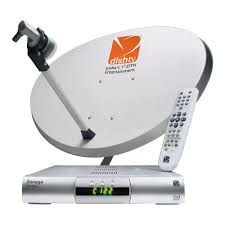
Here’s something which came up sooner than I had expected. A D.T.H. Service Provider filed an information against several M.S.O.’s (Multiple Service Operators) alleging a collective abuse of dominance by them. The issue raised is genuine as we’ve highlighted before herehere and here.


To be frank, am disappointed with the Information. The Informant seem to have pressed for “Collective Dominance”, which every Indian competition lawyer worth his salt knows is presently not addressed in the Act and their seems to have been no elaboration on the Relevant Market (Though not sure about this one. Only have access to the Order and not to the copy of the Information itself.) Furthermore, there seems to have been no attempt to build a case under Section 3. Needless to say, the Information was dismissed without a submission to the D.G. for an investigation. At the same time, it is surprising that the C.C.I. chose to dismiss this straightaway, since there already exists a T.R.A.I. Consultation Paper on this issue. In case it was worried about a regulatory conflict, it should have clearly stated so in the Order.


Interestingly, D.T.H. Service Providers are also facing scrutiny under the Competition Act. An Information against TATA Sky was dismissed in 2011, but the same as been appealed against and is presently pending before the Competition Appellate Tribunal.

Anonymous v. Bengal Greenfield Housing Dev. Co. Ltd And Others, Case No. 103/2013

durga-west-bengal


This is one case which has surprisingly been closed by the Commission, with the finding that that no case has been made out of the existence of an Anti-Competitive Agreement or of an Abuse of Dominant Position.  However, in my humble opinion, I am not so sure. While the conclusion of the D.G. in the end may have been that there was no Competition Law violation, it was definitely a case which merited a reference to the D.G. for further investigation.

The Informant in the present case claimed that the absorption of new supply of flats despite prices having gone up from Rs. 1,100/- to 4,800/- per square feet and the sale of Application Forms and allotment through lottery suggesting huge demand gave a clear impression of manipulation and restriction of supply and use of monopolistic and dominant status for monopolistic pricing as the the parcel of land for the township was being developed selectively despite the final allotment of land to the respective builders.

The reason the case is so important is because the Commission seems to have not given enough consideration, though it has been mentioned in the Order of the Commission, is that all the Respondents/Opposite Parties except for DLF Universal Ltd., are in fact joint ventures between the West Bengal Housing Board and various individual private entities. Therefore, all the entities have a common partner which definitely gives an impression of the various Respondents possessing the capability to effectively communicate with each other, or at the very least, coordinating with each other per force the directive of the W.B.H.B. Granted, it is a government body which claims as it’s objective to provide affordable housing to the people of West Bengal. But as we all already know, Government Bodies are not innocent when it comes to violation of Competition Law.


In my humble opinion, there exists a prima-facie case to be investigated on the violation of Section 3(3)(a) and Section 3(3)(b) of the Act and to be frank, it is unfortunate that the Commission chose to close the case.

National Level Essay Competition 2014

CIRC-logo

The Annual National Essay Competition on Competition Law organised by the C.I.R.C. is back.

The last date for submission of entries is 15th March, 2014.

For further details, click here. Happy writing and all the best !!

Filling Up of Posts in Competition Commission of India on Deputation Basis.

download


The Competition Commission of India has invited applications for filling up of various posts on deputation on foreign service basis. The details of the posts along with eligibility criteria, educational qualification/experience etc. required for each category of the posts can be found here. 


The C.C.I.’s Jet-Etihad Combination Order: Ambiguous and Incomplete

3wwxcqdu

I recently wrote a critique for Legally India on the Jet – Etihad Combination Order (Main Order/Dissenting Order/Section 38 Order/Section 43A Main Order/ Section 43A Partially Dissenting Order.)

Please feel free to provide feedback and comments, especially if your opinions are contrary to mine.

Click here to read the Article.

T.R.A.I. Releases Recommendations On “Monopoly/Market dominance in Cable T.V. services”

SET-TOP_BOX__TV_1666785f

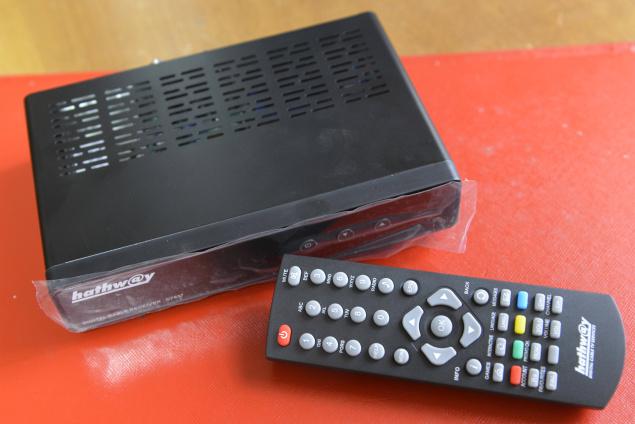
The Telecom Regulatory Authority of India (T.R.A.I.), as per a newspaper report, has released  it’s recommendations on the Monopoly and Market Dominance in the cable T.V. Sector. The document has not as yet been uploaded on the T.R.A.I. Website, so will post a link whenever it’s available, and if required, may even comment upon it.

In the meantime, you can read our comments on the issue here and here. (Long story on the why they are on different blogs.)

Update: Click here for the recommendations.

A quick reading gives the following impression:

1. Overall, it is a well drafted and well researched Recommendation Paper.

2. It agrees with our reasoning that the particular state should be considered as the relevant market.

3. The Authority recommends that market dominance should be determined based on market share in terms of the number of active subscribers of M.S.O.’s in the relevant market and that for measuring the level of competition or market concentration in a relevant market, the Herfindahl–Hirschman Index (H.H.I.) should be used. I have already outlined by disagreements with this method in the previous posts.

4. The Paper has favoured the T.R.A.I. to look into mergers and acquisitions in the sector. This is obviously debatable, as has been noted in the Paper itself, and will most likely lead to some initial conflict and requiring clarification. And what doesn’t  help is the fact that the Recommendations are based on definitions given under the Competition Act, 2002.

Brief Notes – II

images (1)

Continuing with my comments on contemporary competition case law, on the agenda today is the decision of the Competition Appellate Tribunal in M/s. United Phosphorous Limited and Others v. Competition Commission of India & Others. The decision is well known and has been already debated upon a lot and frankly, I have nothing new to contribute. The C.C.I. will probably file an Appeal in the Supreme Court against the decision. It is an open debate as of today. However, if a wager was in order, the odds are that the concept of “Relevant Turnover” for the calculation of penalty is probably here to stay under Indian Competition Law. But what is frustrating is that the Competition Act just does not help to reach a solution. In fact, truth be told, the C.O.M.P.A.T. has reached it’s conclusion more on the basis of international precedents rather than actual application and interpretation of Indian law. This is not surprising. To quote Section 2(y) of the Act:

“turnover” includes value of sale of goods or services;

Ambiguous and exceedingly broad, to say the least. Furthermore, since Section 2(z) of the Act allows for borrowing definitions from the Companies Act, 1956, then one may try to derive an interpretation through the definition of “Turnover” as given under Section 43A of the same:

“turnover” of a company, means the aggregate value of the realisation made from the sale, supply or distribution of goods or on account of services rendered, or both, by the company during a financial year;

But not only can this definition not be taken in light of Section 2(y), but also, Section 43A lends the definition on a different context to that of the issue in the case.

Two observations of the Tribunal do deserve a mention. Firstly, the C.O.M.P.A.T. has affirmed and now firmly established that mere price parallelism alone cannot be enough for drawing an inference of cartelisation. Secondly, it has differentiated between the terms of “Restricted Turnover” (as used by it in MDD Medical Systems India Pvt. Ltd. v. Foundation for Common Cause & Ors.; Appeal No. 93 of 2012) and “Relevant Turnover” as delivered in this Order – the discussion can be found on page 48 of the Order.

Brief Notes

I have been falling behind in case law readings in recent weeks, which is why a number of posts are presently saved as half finished drafts on the Dashboard of the Blog. Nevertheless, while trying to finish the backlog, I recently had the opportunity to sift through the recent Orders of the Commission. Two of them stand out and thus deserve a special mention.:

The first is that of Mr. Larry Lee Mccallister v. M/s Pangea3 Legal Database Systems Pvt. Ltd., mostly for the reason that as far as can be recalled, this is the first time the Commission has dealt with Non-Compete clauses under the Competition Act. The reasoning seems to be sound on the facts and circumstances of the case as the matter was more about the personal grievances of a particular individual rather than that of anti-competitive or consumer harm. Personally, am waiting for the day when the C.C.I. has to deal with a Telefonica like situation in the context of cooperative joint ventures or M & A transactions.

For those who are not aware about the above mentioned case, in 2010, Telefonica acquired sole control of the Brazilian mobile operator, Vivo, which was previously jointly owned by Telefonica and Portugal Telecom. In the context of this transaction, the parties inserted a clause in the purchase agreement indicating that Telefonica and Portugal Telecom would not compete with each other in Spain and Portugal as between the end of September 2010 and the end of 2011. The European Commission opened an investigation in January 2011, and the parties terminated the non-compete agreement in early February 2011. The European Commission held that, by virtue of the non-compete agreement, Telefonica and Portugal Telecom had deliberately agreed to stay out of each other’s home market. The European Commission considered that this preserved the status quo in Spain and Portugal, which hindered the integration process of the E.U. telecom sector and prevented the parties from competing with each other for offering clients the most advantageous conditions. Despite the short duration of the infringement, which was only 4 months, the European Commission fined Telefonica €66,894,000 and Portugal Telecom €12,290,000.

The second one is Shubham Srivastava v. Department of Industrial Policy & Promotion (D.I.P.P.)/Supplementary Order , which deserves to be added in the growing list of Orders of the Commission on determining the scope of the definition of the term “Enterprise” under Section 2(h) of the Act. In the Order, while dismissing the Information, the C.C.I. has held that D.I.P.P., under the Ministry of Commerce and Industry, would fall under the definition of “Enterprise” under the Act.

Hope this satisfies readers for now. More (finally) finished posts to follow in the next few days. 🙂