
Société Coopérative de Production SeaFrance SA v The Competition and Markets Authority and Another, [2015] UKSC 75

Supreme-Court-of-UK-001


I just came across an interesting Judgement by the Supreme Court of United Kingdom on mergers delivered recently on 16.12.2015 titled Société Coopérative de Production SeaFrance SA v The Competition and Markets Authority and Another, [2015] UKSC 75 (Hat tip to SCC Online) wherein it has been observed that the merger control provisions of the Enterprise Act, 2002 are not limited to the acquisition of a business that is a “going concern” but would include even the acquisition of the assets of a defunct business. According to the Court, An enterprise is subject to merger control if the capacity to perform those activities as part of the same business subsists.”


BACKGROUND TO THE APPEAL

SeaFrance SA, a French company, operated a ferry service between Dover and Calais until it ceased operations on 16 November 2011. It was formally liquidated on 9 January 2012, and most of its employees were dismissed. Groupe Eurotunnel SA (“GET”), the parent company of the Group operating the Channel Tunnel, and Société Coopérative De Production SeaFrance SA (“SCOP”), a workers’ co-operative incorporated by a number of former SeaFrance employees to secure the continuance of the ferry service, acquired substantially all of SeaFrance’s assets on 2 July 2012. This included three of the four SeaFrance vessels, trademarks, IT systems, goodwill and customer lists. GET and SCOP resumed ferry services on 20 August 2012 through GET’s subsidiary company, MyFerryLink SAS. The vessels were operated by employees who had almost all worked for SeaFrance. The reemployment of those employees had been incentivised by a statutory Plan de Sauvegarde de l’Emploi (known as the PSE3), by which SeaFrance’s parent company SNCF would provide payments to employers for employing ex-SeaFrance employees.

The acquisition was referred to the Competition Commission, the regulator at the time. It concluded that there was a “relevant merger situation” for the purpose of the merger control provisions of the Enterprise Act 2002, which could be expected to result in a substantial lessening of competition in the cross-Channel market. The “enterprise” of SeaFrance continued since its “activities” continued, even though there had been a hiatus of over seven months in its operations. The Commission imposed restrictions on the operation of the service by GET and SCOP, including a ban on using the exSeaFrance vessels for ferry services from Dover for 10 years. On appeal to the Competition Appeal Tribunal, the Tribunal gave guidance on the meaning of “enterprise” in the Eurotunnel I judgment, and remitted the question of jurisdiction back to the new regulator, the Competition and Markets Authority.

Upon the remission, the Competition and Markets Authority (which had assumed the functions of the Commission) considered that what had been acquired was an “enterprise”, and therefore that a “relevant merger situation” existed. Accordingly they confirmed the restrictions previously imposed by the Commission. That decision was upheld by the Competition Appeal Tribunal in the Eurotunnel II judgment.

The Court of Appeal allowed an appeal by a majority, holding that GET and SCOP had not acquired an “enterprise”, but only the means of constructing a new (but similar) one. In particular, this was because they had not acquired SeaFrance’s crews. They concluded that it was irrational for the Competition and Markets Authority to reach any other conclusion on the facts.


REASONS FOR THE JUDGMENT

The merger control provisions of the Enterprise Act 2002 are not limited to the acquisition of a business that is a “going concern”. The possession of “activities” is a descriptive characteristic of an enterprise under the Act. An enterprise is subject to merger control if the capacity to perform those activities as part of the same business subsists. [32-35]

The test is one of economic continuity. An Acquirer acquiring assets acquires an “enterprise” where (i) those assets give the Acquirer more than might have otherwise been acquired by going into the market and buying factors of production and (ii) the extra is attributable to the fact that the assets were previously employed in combination in the “activities” of the target enterprise. The period of time between cessation of trading and acquisition of control of the assets may be a relevant factor, but is not necessarily decisive. [36-40]

This was substantially the same principle set out by the Competition Appeal Tribunal in Eurotunnel I, which the Competition and Markets Authority applied in this case. [40-41]

The Court of Appeal’s finding that the Authority’s evaluation was irrational was unjustified. GET and SCOP acquired substantially all the assets of SeaFrance, including trademarks, goodwill, specialist vessels maintained in a serviceable condition, and substantially the same personnel. The Authority’s conclusion that this demonstrated “considerable continuity and momentum” and “the embers of an enterprise”, which could be passed to GET and SCOP, was unimpeachable. The order of the French Court of 9 January 2012 to dismiss the employees did not disrupt that continuity and momentum because the order was made on terms that the PS3 preserved the prospect of employment on the ships for the dismissed crew members. [41-43]

The majority of the Court of Appeal was wrong to narrow the question of economic continuity to the legal effect of the decision of the French Court in January 2012 and whether this terminated the employment relationship between SeaFrance and its employees. The Competition and Markets Authority is not entitled to any special level of deference: the test for determining whether there is a “relevant merger situation” and relevant “activities” is a legal question. [31] But the Authority undertook a broader economic analysis, concluding that there was economic continuity. That evaluation was complex and sensitive to a whole range of factors. It was not a purely legal enquiry. Its economic analysis should be respected. [44-45]

References in square brackets are to paragraphs in the judgment


When one goes through Section 5 of our own Competition Act, 2002 as well as the definition of the term “Enterprise” under Section 2(h) of the Act, there appears scope for a similar dispute to arise in our own jurisdiction in the future. The definition of the term “Enterprise” under Section 2(h) also does not contemplate any such merger or acquisition of a defunct organisation. Yet, this happens on a frequent basis in the Indian corporate sector, albeit since individual transactions are on scales relatively small, they avoid triggering the C.C.I. combination process.


M/s. Crown Theatre v. Kerala Film Exhibitors Federation (KFEF), Case No. 16 of 2014 (Decided on 08.09.2015)

images


The case of M/s. Crown Theatre v. Kerala Film Exhibitors Federation (KFEF), Case No. 16 of 2014 (Decided on 08.09.2015) is another case of the C.C.I. which is probably going to get added to the list of cases which is receiving criticism from the COMPAT in Appeal. Not necessarily on the merits of the case but more so on procedure. After all, the K.F.E.F. is a serial competition law violator and has been found to be guilty of the violation of competition law and fined multiple times before (In fact, even the individuals penalised are the same). The problem is with the way fines are being calculated in this particular case.

Shockingly, the fine, which was supposed to be ten percent of the average turnover of the past three years (Financial years 2011 – 2012, 2012 – 2013, 2013 – 2014) has been calculated only on the basis of the turnover of 2011 – 2012. Section 27 clearly mandates that it must be calculated on the turnover of the last three years. It is not optional for the C.C.I. to calculate it without taking into account one or more financial years. Also, the only explanation which has been provided in the table is “not submitted”, which, while understandable, is not a good enough excuse for the non calculation of any statutory penalty as per the law for which a clear formula has been provided under the Act.

Now as per procedure, the C.C.I. always calls for the financial statements of the past three years without prejudice to the merits of the case of the Respondents, so that in the event they are found guilty, the fine, if any, can be calculated. It is possible that the Respondents herein did not comply with the Order of the Commission and intentionally avoided the submission of the statements before the Commission. Thus, a perfect case for the Commission to exercise powers under Section 43 (or Section 45, as the case may be) under the Act. If there is a genuine and reasonable reason for this omission, then the Commission should have clearly stated the same in the Order.

Either way, it gives the COMPAT a clear cut reason to remand he matter back for reconsideration on the issue of penalty, just like it did in the Gas Cylinder Bid Rigging Case. 


The E – Commerce Debate: A Different Perspective.

images


The business and commercial class of the Country has for quite some time now been debating about the predatory effects of e-commerce websites in India, with Flipkart in India and Amazon abroad (see our previous posts here and here) being predominant recipients of the flak. And publishing houses are now the latest to enter the fray.


Many of our opinions would be repetitive to those already cited innumerable number of times in the media, so we’ll keep them out of this post. Rather, I want to discuss a perspective which is being discussed less on public fora.


Firstly, a Times of India Article has claimed to cite sources in the C.C.I. stating that the practice will not be predatory pricing as the relevant market would be the entire retail market of India, wherein e-commerce websites possess a meager one to two percent share. I am not aware about the authority of the papers “sources”, but I would respectfully beg to differ with the quotes in the piece. The relevant market can easily be differentiated to be the “E-Commerce Retail Market” and not the entire Retail Market as a whole. The most important reasoning for the definition is the presently low internet penetration in the Country. People without access to the internet (which comprises a large majority of the population, am sure everyone would agree) cannot possibly buy any items from these websites (or even choose to) and therefore would have  to compulsorily rely on Brick and Mortar stores. Furthermore, internet users buying from these sites can be considered a different “Class” unto themselves, especially for certain category of items, which may result in a drastic fall in Brick and Mortar retail sales of certain category of items, for example, especially books, which these internet users may not buy anymore (evidence for this is quite significant).


I do however, concede that the case becomes a bit complicated in light of recent developments, i.e., Amazon deciding to open it’s first “Brick and Mortar” store in New York. Indian E-Commerce start-ups are also not far behind., which will require an analysis as to how much business would be sourced from these stores to the E-stores, and what will have to be taken into consideration is that these Brick and Mortar stores are being/would be set up in metropolitan cities or large towns and would have a relatively small “influential radius”. Add to this the trend in India where a number of individuals, especially individuals below the age of thirty, prefer to browse through the Brick and Mortar Store, check and choose what they like, and then go online to find the best deal among these e-commerce websites.


Secondly, the factual question which needs to be clarified, (as aptly stated here), is the contours of the agreements which are being entered into between the websites and the sellers/retailers. There have been too many contradictory statements in the media, with retailers often claiming they lack bargaining power against the likes of Flipkart and Amazon, whereas one reads counter accusations from the websites that the sellers themselves set the price and they as mere intermediaries. What also needs to be clarified  factually is which party decides on the discounts, including how much to give and in what proportion are the burden of the discounts borne between the parties. In case evidence is found that it is the websites who bare the burden  of the discount, it may bring about a case of atleast Margin Squeezing, if not Predatory Pricing. Granted, the concept of Margin Squeezing would be an absolutely new concept to be introduced into Indian competition law jurisprudence, but it is certainly recognised under Section 4(2) of the Act.


In conclusion, this is definitely not the last post on this Blog on the issue, but facts do go to show that E-Commerce websites may not be as “destructive” as many (including the author) had predicted. What we see is that a successful company like Flipkart or Amazon cannot absolutely divest itself from the hard and competitive world of Brick and Mortar Retail, but rather is required to augment it with arguably questionable tactic to justify the absurd valuations to which the companies have been raised.

Director’s Brought Under The C.C.I. Scanner

The post below is by Kritika Sethi, a 4th year B.A. LLB. (Hons.) Student at NALSAR, Hyderabad. In it, she examines the Director’s Fiduciary competition law liability in light of the recent C.O.M.P.A.T. Order in National Stock Exchange v C.C.I., Appeal No. 15 of 2011.


download (1)


The Competition Appellate Tribunal (C.O.M.P.A.T.) in its recent Order dated 05.08.2014 in the case of National Stock Exchange v C.C.I., Appeal No. 15 of 2011 has upheld the Order of the C.C.I. in MCX Stock Exchange Limited v. National Stock Exchange of India Ltd., Case No. 13 of 2009 [Majority Order, Dissenting Order, Section 38 Order] in holding the Company liable for abuse of its dominant position in the currency derivative business segment.

The  case arose out of an information which was filed by the MCX Stock Exchange (“MCX”) against National Stock Exchange of India Ltd.(“NSE”) wherein it was alleged by the former that the latter has abused its dominant position in the Currency Derivatives (“CD”) segment. CD was introduced in accordance with the recommendations of R.B.I. and S.E.B.I. in August 2008. NSE had started its operation in the CD segment from that month itself. Further, vide its circular dated 26.08.2008, it had announced a waiver of transaction fee in all the currency future trade which included the CD segment. This waiver was extended from time to time. This extension was in operation when Section 4 of the Competition Act, 2002 was notified in 2009. MCX and NSE were the only active players that dealt in the currency derivatives market. The former operated in the CD segment only. It was not given the license to operate in any other segment like Stock Futures and Options, etc. On account of the waiver of the transaction fees and other associated charges in the CD segment by NSE, MCX was forced to waive various charges as well. It could not levy any other charge for income generation such as, inter alia, annuals subscription fees, and advance minimum transaction fees. By virtue of this waiver, it suffered huge losses. Further, NSE was charging annual subscription fees in the other segments, where MCX didn’t have a license to operate. Therefore, it was alleged by the MCX that this had a potential of removal of the only competitor and any potential competitor in the CD market due to its non-profitability.

NSE was held to be a dominant player in the market on account of its resources, size, higher degree of vertical integration, power in the market, absolute dependence of consumers etc. NSE had a higher market share than MCX and was financially stable and sufficiently resourceful to survive in the market despite waiver of any transaction charges, which was not the case with MCX.

The point to be appreciated is that the additional fiduciary duty which has been imposed on the director’s of the Company to be cautious in not violating the Competition Act, 2002. The Companies Act, 1956 did not codify the myriad of duties of the director’s of a Company and so the Courts had to rely upon common law in order to cast any duty on the directors. The Companies Act, 2013, on the other hand, recently codified various duties of a director of a Company under Section 166 of the Act. It provides for two kinds of duties i.e. duty of care, skill and diligence and fiduciary duties. One recent addition is the ‘fiduciary antitrust duty’ pursuant to which, if the company is in a dominant position in the market, the directors have a duty to take precautions so as to not to abuse the same. The Competition Act, under Section 4, does not proscribe enjoyment of a dominant position by an enterprise in the market. It is its abuse which is penalised under the Act.

The Tribunal opined that NSE must have known about the “activation” of Section 4. The Tribunal was “perplexed” when, after going through the minutes of the Pricing Meeting of the company, there was no mention of Section 4 being taken into consideration while deliberating on whether to extend the fee waiver on March 30, 2009 till June 2009; whereas the section was notified on 20 May 2009. The tribunal had expected NSE to take note of the activation of Section 4 of the Act as and when it was notified.

This ruling can have an immense impact on other companies which are assumed to be aware of their dominant position in the market. Its impact on cases brought up in the future will have to be analysed to fathom the scope of such a duty.

The penalty imposed on NSE by the CCI (and as upheld by the COMPAT), has been stayed by the Supreme Court by its Order on Sept 23, 2014.


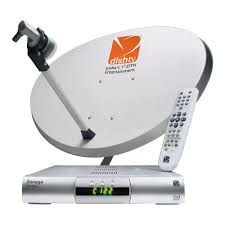
Dish TV India Limited v. Hathway Cable & Datacom Limited and Others, Case No. 78 of 2013

images


Here’s something which came up sooner than I had expected. A D.T.H. Service Provider filed an information against several M.S.O.’s (Multiple Service Operators) alleging a collective abuse of dominance by them. The issue raised is genuine as we’ve highlighted before herehere and here.


To be frank, am disappointed with the Information. The Informant seem to have pressed for “Collective Dominance”, which every Indian competition lawyer worth his salt knows is presently not addressed in the Act and their seems to have been no elaboration on the Relevant Market (Though not sure about this one. Only have access to the Order and not to the copy of the Information itself.) Furthermore, there seems to have been no attempt to build a case under Section 3. Needless to say, the Information was dismissed without a submission to the D.G. for an investigation. At the same time, it is surprising that the C.C.I. chose to dismiss this straightaway, since there already exists a T.R.A.I. Consultation Paper on this issue. In case it was worried about a regulatory conflict, it should have clearly stated so in the Order.


Interestingly, D.T.H. Service Providers are also facing scrutiny under the Competition Act. An Information against TATA Sky was dismissed in 2011, but the same as been appealed against and is presently pending before the Competition Appellate Tribunal.

Anonymous v. Bengal Greenfield Housing Dev. Co. Ltd And Others, Case No. 103/2013

durga-west-bengal


This is one case which has surprisingly been closed by the Commission, with the finding that that no case has been made out of the existence of an Anti-Competitive Agreement or of an Abuse of Dominant Position.  However, in my humble opinion, I am not so sure. While the conclusion of the D.G. in the end may have been that there was no Competition Law violation, it was definitely a case which merited a reference to the D.G. for further investigation.

The Informant in the present case claimed that the absorption of new supply of flats despite prices having gone up from Rs. 1,100/- to 4,800/- per square feet and the sale of Application Forms and allotment through lottery suggesting huge demand gave a clear impression of manipulation and restriction of supply and use of monopolistic and dominant status for monopolistic pricing as the the parcel of land for the township was being developed selectively despite the final allotment of land to the respective builders.

The reason the case is so important is because the Commission seems to have not given enough consideration, though it has been mentioned in the Order of the Commission, is that all the Respondents/Opposite Parties except for DLF Universal Ltd., are in fact joint ventures between the West Bengal Housing Board and various individual private entities. Therefore, all the entities have a common partner which definitely gives an impression of the various Respondents possessing the capability to effectively communicate with each other, or at the very least, coordinating with each other per force the directive of the W.B.H.B. Granted, it is a government body which claims as it’s objective to provide affordable housing to the people of West Bengal. But as we all already know, Government Bodies are not innocent when it comes to violation of Competition Law.


In my humble opinion, there exists a prima-facie case to be investigated on the violation of Section 3(3)(a) and Section 3(3)(b) of the Act and to be frank, it is unfortunate that the Commission chose to close the case.

Brief Notes

I have been falling behind in case law readings in recent weeks, which is why a number of posts are presently saved as half finished drafts on the Dashboard of the Blog. Nevertheless, while trying to finish the backlog, I recently had the opportunity to sift through the recent Orders of the Commission. Two of them stand out and thus deserve a special mention.:

The first is that of Mr. Larry Lee Mccallister v. M/s Pangea3 Legal Database Systems Pvt. Ltd., mostly for the reason that as far as can be recalled, this is the first time the Commission has dealt with Non-Compete clauses under the Competition Act. The reasoning seems to be sound on the facts and circumstances of the case as the matter was more about the personal grievances of a particular individual rather than that of anti-competitive or consumer harm. Personally, am waiting for the day when the C.C.I. has to deal with a Telefonica like situation in the context of cooperative joint ventures or M & A transactions.

For those who are not aware about the above mentioned case, in 2010, Telefonica acquired sole control of the Brazilian mobile operator, Vivo, which was previously jointly owned by Telefonica and Portugal Telecom. In the context of this transaction, the parties inserted a clause in the purchase agreement indicating that Telefonica and Portugal Telecom would not compete with each other in Spain and Portugal as between the end of September 2010 and the end of 2011. The European Commission opened an investigation in January 2011, and the parties terminated the non-compete agreement in early February 2011. The European Commission held that, by virtue of the non-compete agreement, Telefonica and Portugal Telecom had deliberately agreed to stay out of each other’s home market. The European Commission considered that this preserved the status quo in Spain and Portugal, which hindered the integration process of the E.U. telecom sector and prevented the parties from competing with each other for offering clients the most advantageous conditions. Despite the short duration of the infringement, which was only 4 months, the European Commission fined Telefonica €66,894,000 and Portugal Telecom €12,290,000.

The second one is Shubham Srivastava v. Department of Industrial Policy & Promotion (D.I.P.P.)/Supplementary Order , which deserves to be added in the growing list of Orders of the Commission on determining the scope of the definition of the term “Enterprise” under Section 2(h) of the Act. In the Order, while dismissing the Information, the C.C.I. has held that D.I.P.P., under the Ministry of Commerce and Industry, would fall under the definition of “Enterprise” under the Act.

Hope this satisfies readers for now. More (finally) finished posts to follow in the next few days. 🙂

EC Dawn Raids: A human Rights Violation ?

I recently read an old 2008 article titled “EC Dawn Raids: A Human Rights Violation?” by Imran Aslam and Michael Ramsden.

The Paper examines whether the ‘Dawn Raid’ procedure provided in E.C. Regulation 1/2003 is consistent with two rights protected by the European Convention on Human Rights and Fundamental Freedoms: the privilege against self-incrimination (Article 6 E.C.H.R.) and the right to privacy (Article 8 E.C.H.R.). The paper argues that the protection provided by the European Court of Justice falls far short of protection necessary to undertakings. On this basis, it analyses what available source(s) of judicial remedy an undertaking has in order to avail itself of E.C.H.R. rights.

While the article is old, it does hold special relevance for India in light of the expansive powers which are proposed to be given to the C.C.I. in the still pending Competition Amendment Bill which proposes to amend Section 41 of the Act, conferring the authority on the Commission to grant powers of search and seizure to the Director General’s office as and when required.