G.C.R.: Immunity, Sanctions & Settlements.

xmsImg.php_


This is admittedly super cool and super useful !! The Global Competition Review (G.C.R.) has an amazing “Know-How” Compilation on “Immunity, Sanctions & Settlements” across all major competition jurisdictions. So if you want an answer to a query related to sanctions and immunity’s across various jurisdictions or even for a particular jurisdiction, simply tick mark the relevant boxes and the answers come right on. 🙂 Even important F.A.Q.’s have  been compiled for ease of access and the answers have also been compiled by authoritative practitioners in he field in the relevant jurisdictions. On a cursory glance, I’ve found almost all basic questions covered within them and in some even more.


There are similar compilations for “Private Litigation” and “I.P. & Antitrust”.

By far one of the coolest initiatives in competition law jurisprudence. (Ya I know I sound like a total nerd. :D)

The E – Commerce Debate: A Different Perspective.

images


The business and commercial class of the Country has for quite some time now been debating about the predatory effects of e-commerce websites in India, with Flipkart in India and Amazon abroad (see our previous posts here and here) being predominant recipients of the flak. And publishing houses are now the latest to enter the fray.


Many of our opinions would be repetitive to those already cited innumerable number of times in the media, so we’ll keep them out of this post. Rather, I want to discuss a perspective which is being discussed less on public fora.


Firstly, a Times of India Article has claimed to cite sources in the C.C.I. stating that the practice will not be predatory pricing as the relevant market would be the entire retail market of India, wherein e-commerce websites possess a meager one to two percent share. I am not aware about the authority of the papers “sources”, but I would respectfully beg to differ with the quotes in the piece. The relevant market can easily be differentiated to be the “E-Commerce Retail Market” and not the entire Retail Market as a whole. The most important reasoning for the definition is the presently low internet penetration in the Country. People without access to the internet (which comprises a large majority of the population, am sure everyone would agree) cannot possibly buy any items from these websites (or even choose to) and therefore would have  to compulsorily rely on Brick and Mortar stores. Furthermore, internet users buying from these sites can be considered a different “Class” unto themselves, especially for certain category of items, which may result in a drastic fall in Brick and Mortar retail sales of certain category of items, for example, especially books, which these internet users may not buy anymore (evidence for this is quite significant).


I do however, concede that the case becomes a bit complicated in light of recent developments, i.e., Amazon deciding to open it’s first “Brick and Mortar” store in New York. Indian E-Commerce start-ups are also not far behind., which will require an analysis as to how much business would be sourced from these stores to the E-stores, and what will have to be taken into consideration is that these Brick and Mortar stores are being/would be set up in metropolitan cities or large towns and would have a relatively small “influential radius”. Add to this the trend in India where a number of individuals, especially individuals below the age of thirty, prefer to browse through the Brick and Mortar Store, check and choose what they like, and then go online to find the best deal among these e-commerce websites.


Secondly, the factual question which needs to be clarified, (as aptly stated here), is the contours of the agreements which are being entered into between the websites and the sellers/retailers. There have been too many contradictory statements in the media, with retailers often claiming they lack bargaining power against the likes of Flipkart and Amazon, whereas one reads counter accusations from the websites that the sellers themselves set the price and they as mere intermediaries. What also needs to be clarified  factually is which party decides on the discounts, including how much to give and in what proportion are the burden of the discounts borne between the parties. In case evidence is found that it is the websites who bare the burden  of the discount, it may bring about a case of atleast Margin Squeezing, if not Predatory Pricing. Granted, the concept of Margin Squeezing would be an absolutely new concept to be introduced into Indian competition law jurisprudence, but it is certainly recognised under Section 4(2) of the Act.


In conclusion, this is definitely not the last post on this Blog on the issue, but facts do go to show that E-Commerce websites may not be as “destructive” as many (including the author) had predicted. What we see is that a successful company like Flipkart or Amazon cannot absolutely divest itself from the hard and competitive world of Brick and Mortar Retail, but rather is required to augment it with arguably questionable tactic to justify the absurd valuations to which the companies have been raised.

Director’s Brought Under The C.C.I. Scanner

The post below is by Kritika Sethi, a 4th year B.A. LLB. (Hons.) Student at NALSAR, Hyderabad. In it, she examines the Director’s Fiduciary competition law liability in light of the recent C.O.M.P.A.T. Order in National Stock Exchange v C.C.I., Appeal No. 15 of 2011.


download (1)


The Competition Appellate Tribunal (C.O.M.P.A.T.) in its recent Order dated 05.08.2014 in the case of National Stock Exchange v C.C.I., Appeal No. 15 of 2011 has upheld the Order of the C.C.I. in MCX Stock Exchange Limited v. National Stock Exchange of India Ltd., Case No. 13 of 2009 [Majority Order, Dissenting Order, Section 38 Order] in holding the Company liable for abuse of its dominant position in the currency derivative business segment.

The  case arose out of an information which was filed by the MCX Stock Exchange (“MCX”) against National Stock Exchange of India Ltd.(“NSE”) wherein it was alleged by the former that the latter has abused its dominant position in the Currency Derivatives (“CD”) segment. CD was introduced in accordance with the recommendations of R.B.I. and S.E.B.I. in August 2008. NSE had started its operation in the CD segment from that month itself. Further, vide its circular dated 26.08.2008, it had announced a waiver of transaction fee in all the currency future trade which included the CD segment. This waiver was extended from time to time. This extension was in operation when Section 4 of the Competition Act, 2002 was notified in 2009. MCX and NSE were the only active players that dealt in the currency derivatives market. The former operated in the CD segment only. It was not given the license to operate in any other segment like Stock Futures and Options, etc. On account of the waiver of the transaction fees and other associated charges in the CD segment by NSE, MCX was forced to waive various charges as well. It could not levy any other charge for income generation such as, inter alia, annuals subscription fees, and advance minimum transaction fees. By virtue of this waiver, it suffered huge losses. Further, NSE was charging annual subscription fees in the other segments, where MCX didn’t have a license to operate. Therefore, it was alleged by the MCX that this had a potential of removal of the only competitor and any potential competitor in the CD market due to its non-profitability.

NSE was held to be a dominant player in the market on account of its resources, size, higher degree of vertical integration, power in the market, absolute dependence of consumers etc. NSE had a higher market share than MCX and was financially stable and sufficiently resourceful to survive in the market despite waiver of any transaction charges, which was not the case with MCX.

The point to be appreciated is that the additional fiduciary duty which has been imposed on the director’s of the Company to be cautious in not violating the Competition Act, 2002. The Companies Act, 1956 did not codify the myriad of duties of the director’s of a Company and so the Courts had to rely upon common law in order to cast any duty on the directors. The Companies Act, 2013, on the other hand, recently codified various duties of a director of a Company under Section 166 of the Act. It provides for two kinds of duties i.e. duty of care, skill and diligence and fiduciary duties. One recent addition is the ‘fiduciary antitrust duty’ pursuant to which, if the company is in a dominant position in the market, the directors have a duty to take precautions so as to not to abuse the same. The Competition Act, under Section 4, does not proscribe enjoyment of a dominant position by an enterprise in the market. It is its abuse which is penalised under the Act.

The Tribunal opined that NSE must have known about the “activation” of Section 4. The Tribunal was “perplexed” when, after going through the minutes of the Pricing Meeting of the company, there was no mention of Section 4 being taken into consideration while deliberating on whether to extend the fee waiver on March 30, 2009 till June 2009; whereas the section was notified on 20 May 2009. The tribunal had expected NSE to take note of the activation of Section 4 of the Act as and when it was notified.

This ruling can have an immense impact on other companies which are assumed to be aware of their dominant position in the market. Its impact on cases brought up in the future will have to be analysed to fathom the scope of such a duty.

The penalty imposed on NSE by the CCI (and as upheld by the COMPAT), has been stayed by the Supreme Court by its Order on Sept 23, 2014.


C.C.I. Double Standards Or Bad Reporting ??

Person_Puzzled


The recent reports on the alleged demand of the C.C.I. against a number of builders and C.R.E.D.A.I. “to respond to findings by its investigation arm that they engaged in unfair trade practices such as one-sided contracts with inadequate disclosure” have generated a substantial amount of hype and glee and grimace alike. But to be honest, the news report has (at he risk of sounding stupid) left me confused more than anything else. Listed below are the reasons for my confusion:


1. The report states that the Commission began investigations based on a complaint by an individual, Jyoti Swarup Arora, against Gurgaon-based builder Tulip Infratech, the director of town and country planning, Haryana, and the Haryana Urban Development Authority. However, memory served me correct, as I clearly remember the Case being dismissed at the threshold itself. (It is Case No. 7/2011. Order dated 06.04.2011). There is also no supplementary Order of a later date available on the Commissions website therefore it is difficult to believe that the matter was appealed before the Competition Appellate Tribunal and was referred back from there.


2. As per the report, the “CCI has sought responses from Unitech, Oberoi Realty, BPTP Ltd, Gaursons India, K Raheja Corp, Amrapali Group, Supertech Ltd, Tata Housing Development Company, Ansal Properties & Infrastructure, Purvankara Projects, Prestige Estates Projects and Ambuja Neotia Group.The competition watchdog has also sought responses from Avalon Group, Aparna Construction and Estate, Amit Enterprises Housing, Omaxe, Parsvnath Developers, PS Groups Salarpuria Group and Purohit Construction. The Confederation of Real Estate Developers’ Associations of India (C.R.E.D.A.I.) lobby group has also been asked to comment.”

Notwithstanding what has been stated in point one above, there are already cases which have been filed against some of the above mentioned developers which have raised the exact same issues as given the article, and all of them have been dismissed. Assuming the article is not a case of bad news reporting, surely it is nothing less than double standard on the part of the C.C.I., not to mention that those Orders are Orders In Rem, and thus create a clear balance of convenience against these companies which have been showcaused. The Orders are as follows:

Omaxe (Case No. 77/2013 and Case No. 83/2011)

BPTP (Case No. 25 of 2014 and Case No. 33 of 2013 and Case No. 42/2010)

Raheja Group (Case No. 62/2011)

Supertech (Case No. 86/2013 and Case No. 3/2013 and Case No. 28/2012)

Unitech (Case No. 27/2011 and Case No. 21/2011)

Note: Since many of these developers are also involved in commercial construction market, I have chosen to exclude the Informations/Complaints filed against their commercial/office spaces but rather have limited the Orders on the subject matter at hand, i.e., residential apartments/spaces. But just for the record, all the Orders related to commercial spaces have also been held in favour of the above mentioned developers.


3. To quote directly from the article:

“The complainant alleged an understanding among all real estate players in the market to the detriment of consumers, saying that the code of conduct adopted by Credai indicated collusion among its members. The commission directed the investigation officer to probe the matter after observing that the conduct of Tulip and other members of Credai indicated prima facie violation of the provisions of the Companies Act.”

Not only is the second half of the above quoted stanza factually wrong due to the reasons mentioned in point one, but the very basis of the Complaint/Information as stated in the first half of the stanza is questionable. After all, as per the numerous decisions of the Commission itself, Collective Dominance is presently not recognised under the Competition Act. Furthermore, as the Article creates an impression that these developers are involved in a Cartel through C.R.E.D.A.I., to address this argument, it cannot succeed as the requisites of Section 3(3) of the Act can’t arise and be met in the present case. (There is a reason why all Information’s have been filed under Section 4 of the act.)


I look forward to any form of of clarification or even a correction against me to any and all my doubts. After all, I am purely going by the newspaper report and there is always the possibility that I may have missed something during my analysis.


 

Is The Noose Tightening ??

download


Is the C.C.I. noose slowly tightening around Google ?? It sure does seem that way. The C.C.I. recently admitted another case against Google, and will probably club the Information with the ongoing investigation in the BharatMatrimony Case and the C.U.T.S Information Case. Speaking of BharatMatrimony and C.U.T.S., Google’s woes have risen with it being fined one crore for non-cooperation in the ongoing D.G. investigation.


So why is it facing so much difficulty in India ?? Probably because it may not be innocent after all. Not to express opinion on the merits of the case, but it is a fact that Google hasn’t exactly won any of the competition law cases filed against it across the world. Both the E.U. investigation and F.T.C. investigations were closed with settlements, which one can’t exactly count as a victory. All Google did was make certain commitments to the two bodies and consequently changed their programming to suit the settlement. It can’t do that in India, there being no provision for settlement/compromise of cases in the Competition Act, 2002. In fact, Google has lost a case against it’s Adwords programme in Australia, which has probably bolstered the hopes of those who feel discriminated by Google Adwords.


People may believe that I am against Google, considering how much I write about it (and according to many, against it). Rest assured, one could not be farther from the truth. In fact, I am one of Google’s biggest fans, but more on this later in another post which I have planned.


Dish TV India Limited v. Hathway Cable & Datacom Limited and Others, Case No. 78 of 2013

images


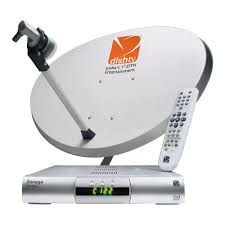
Here’s something which came up sooner than I had expected. A D.T.H. Service Provider filed an information against several M.S.O.’s (Multiple Service Operators) alleging a collective abuse of dominance by them. The issue raised is genuine as we’ve highlighted before herehere and here.


To be frank, am disappointed with the Information. The Informant seem to have pressed for “Collective Dominance”, which every Indian competition lawyer worth his salt knows is presently not addressed in the Act and their seems to have been no elaboration on the Relevant Market (Though not sure about this one. Only have access to the Order and not to the copy of the Information itself.) Furthermore, there seems to have been no attempt to build a case under Section 3. Needless to say, the Information was dismissed without a submission to the D.G. for an investigation. At the same time, it is surprising that the C.C.I. chose to dismiss this straightaway, since there already exists a T.R.A.I. Consultation Paper on this issue. In case it was worried about a regulatory conflict, it should have clearly stated so in the Order.


Interestingly, D.T.H. Service Providers are also facing scrutiny under the Competition Act. An Information against TATA Sky was dismissed in 2011, but the same as been appealed against and is presently pending before the Competition Appellate Tribunal.

T.R.A.I. Releases Recommendations On “Monopoly/Market dominance in Cable T.V. services”

SET-TOP_BOX__TV_1666785f

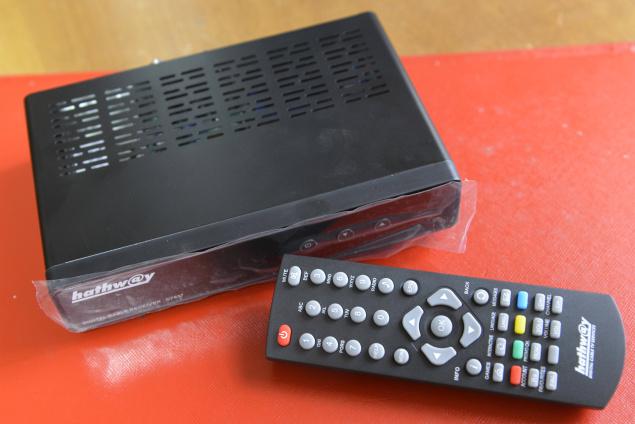
The Telecom Regulatory Authority of India (T.R.A.I.), as per a newspaper report, has released  it’s recommendations on the Monopoly and Market Dominance in the cable T.V. Sector. The document has not as yet been uploaded on the T.R.A.I. Website, so will post a link whenever it’s available, and if required, may even comment upon it.

In the meantime, you can read our comments on the issue here and here. (Long story on the why they are on different blogs.)

Update: Click here for the recommendations.

A quick reading gives the following impression:

1. Overall, it is a well drafted and well researched Recommendation Paper.

2. It agrees with our reasoning that the particular state should be considered as the relevant market.

3. The Authority recommends that market dominance should be determined based on market share in terms of the number of active subscribers of M.S.O.’s in the relevant market and that for measuring the level of competition or market concentration in a relevant market, the Herfindahl–Hirschman Index (H.H.I.) should be used. I have already outlined by disagreements with this method in the previous posts.

4. The Paper has favoured the T.R.A.I. to look into mergers and acquisitions in the sector. This is obviously debatable, as has been noted in the Paper itself, and will most likely lead to some initial conflict and requiring clarification. And what doesn’t  help is the fact that the Recommendations are based on definitions given under the Competition Act, 2002.

Brief Notes

I have been falling behind in case law readings in recent weeks, which is why a number of posts are presently saved as half finished drafts on the Dashboard of the Blog. Nevertheless, while trying to finish the backlog, I recently had the opportunity to sift through the recent Orders of the Commission. Two of them stand out and thus deserve a special mention.:

The first is that of Mr. Larry Lee Mccallister v. M/s Pangea3 Legal Database Systems Pvt. Ltd., mostly for the reason that as far as can be recalled, this is the first time the Commission has dealt with Non-Compete clauses under the Competition Act. The reasoning seems to be sound on the facts and circumstances of the case as the matter was more about the personal grievances of a particular individual rather than that of anti-competitive or consumer harm. Personally, am waiting for the day when the C.C.I. has to deal with a Telefonica like situation in the context of cooperative joint ventures or M & A transactions.

For those who are not aware about the above mentioned case, in 2010, Telefonica acquired sole control of the Brazilian mobile operator, Vivo, which was previously jointly owned by Telefonica and Portugal Telecom. In the context of this transaction, the parties inserted a clause in the purchase agreement indicating that Telefonica and Portugal Telecom would not compete with each other in Spain and Portugal as between the end of September 2010 and the end of 2011. The European Commission opened an investigation in January 2011, and the parties terminated the non-compete agreement in early February 2011. The European Commission held that, by virtue of the non-compete agreement, Telefonica and Portugal Telecom had deliberately agreed to stay out of each other’s home market. The European Commission considered that this preserved the status quo in Spain and Portugal, which hindered the integration process of the E.U. telecom sector and prevented the parties from competing with each other for offering clients the most advantageous conditions. Despite the short duration of the infringement, which was only 4 months, the European Commission fined Telefonica €66,894,000 and Portugal Telecom €12,290,000.

The second one is Shubham Srivastava v. Department of Industrial Policy & Promotion (D.I.P.P.)/Supplementary Order , which deserves to be added in the growing list of Orders of the Commission on determining the scope of the definition of the term “Enterprise” under Section 2(h) of the Act. In the Order, while dismissing the Information, the C.C.I. has held that D.I.P.P., under the Ministry of Commerce and Industry, would fall under the definition of “Enterprise” under the Act.

Hope this satisfies readers for now. More (finally) finished posts to follow in the next few days. 🙂