
I recently wrote a post titled “A Few Thoughts on Competition Law in the Technology and Media Sector” for the India Law and technology Blog. To read the article, please click here.

I recently wrote a post titled “A Few Thoughts on Competition Law in the Technology and Media Sector” for the India Law and technology Blog. To read the article, please click here.
The Commission is busy building Indian competition jurisprudence. 🙂
Some trivia for all those interested. As on the date of this post the total number of orders passed by the Commission were as follows:
1. Orders under Section 3 and Section4 = 171
2. Combinations orders (FormI/II) = 56
3. Combination orders (Form III) = 3
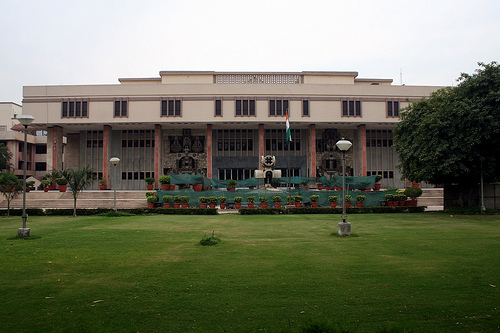
A commentator on a previous post recently brought to my attention a recent judgement of the Delhi High Court in which the hon’ble Court chose to deal with the concept of what would constitute “a sovereign function”. (W.P.(C) 993/2012 & C.M. Nos. 2178-79/2012, Union of India v. Competition Commission of India)
The Court in this case discussed the Supreme Court judgement’s of Common Cause v. Union of India, (1999) 6 SCC 667 and Agricultural Produce Market Committee Vs. Ashok Harikuni & Another, (2000) 8 SCC 61 where the Supreme Court held that sovereign functions in the new sense may have very wide ramifications, but essentially sovereign functions are primarily inalienable functions which only the State could exercise. It was also observed by the Court, quoting from the petitioners brief that:
“….it appears that the courts have taken a very narrow view of the term “sovereign function” by confining the same to strict constitutional functions of the three wings of the State. Welfare activities, commercial activities and economic adventures have been kept outside the purview of the term “sovereign functions”.”
While the judgement’s of the Supreme Court and the Delhi High Court may serve as effective guidelines for the government to help determine what sovereign functions should be exempted under the Act, I strongly feel that it is in the end the sole prerogative of the Central Government to determine what enterprises and their sovereign functions, if any, should be exempted under the Act. In fact, even a non – sovereign function of an enterprise may be exempted from the CCI’s jurisdiction by the government under Section 54(a) of the Act.
It should be noted that the Court was in fact in a way, forced to discuss this issue due to the contentions advanced by the Petitioner and that the actual issue was whether the function being performed by the governent could be classified as an “enterprise” under Section 2(h) of the Competition Act.
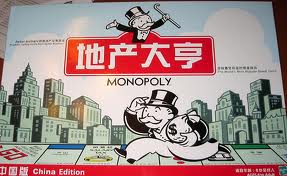
In this edition of “Competition Surfing”, I found the pdf. document of China’s Anti – Monopoly Law, 2008. To be honest, have never really bothered to focus on China before this post. May research more on this area in the future.
In the meantime, in case you wish to read more on the above, I recommend the two articles below:
1. Dan Wei, China’s Anti-Monopoly Law and its Merger Enforcement: Convergence and Flexibility, 14 J. Int’l Econ. L. 807 (unfortunately, you may not be able to access this one since its a paid access, but if you have access to Westlaw then no problem.)
2. Dina Kallay, China’s New Anti – Monopoly Law: An International Antitrust Convergence Perspective

And others shall bite the dust !! What with the CCI initiating suo moto investigation against milk retailers, not to mention, to quote Mr. Chawla, Chairman of CCI
“Real estate, pharmaceuticals, aviation, telecom and tyre industries are on our radar. The inquiry against tyre companies is in an advanced stage and a decision can be expected soon”
The CCI has a busy monsoon ahead !! However, the intention of this post is to specifically focus on the investigation by the DG against automobile companies. Assuming the facts in the article are true, and please note, the opinion is based strictly on the article’s contents, the odds seem to be heavily stacked against the respondents. Such agreements are unanimously considered as anti-competitive throughout all jurisdictions (See Eastman Kodak Co. v. Image Tech. Svcs., 504 US 451 (1992) and Standard Oil Co. of California v. United States337 US 293 (1949) ). Also, see COMMISSION REGULATION (EU) No 461/2010 of 27 May 2010 on the application of Article 101(3) of the Treaty on the Functioning of the European Union to categories of vertical agreements and concerted practices in the motor vehicle sector.
Closer to home, Both the cases of Tata Engineering & Locomotive Co. Ltd. v. Registrar of Restrictive Trade Practices, [1977] 2 SCR 685 and Mahindra & Mahindra Ltd vs Union Of India & Anr, 1979 SCR (2)1038 dealt with a similar issue.
Just two queries to be asked in this post script to the previous post:
1. A valid contention was raised by one of the respondents on page 78 of the Order that the prices of Cement Corporation of India, a PSU, also rose along with the other respondent manufacturers. However, the DG did not take notice of this fact. A fair question. Why ??
2. Exactly why have large portions of the data published in the Order been hidden (crossed out to be specific) ?!
Any suggestions ??

The analogy might seem stupid or funny to many, but I just couldn’t help but remember the movie Batman Begins while reading the news about the CCI’s Cement Cartel Decision. Think about it, just like the Batman, there are now those who love the CCI, proud that someone decided to teach the big corporations a lesson, and there are those who hate the CCI, who are not only crying themselves hoarse on the injustice meted out to the Cement Manufacturers’ Association (CMA) and its affiliated companies and who will surely appeal to the COMPAT, and if required, even the Supreme Court.
While I do support the decision (a day may come when I shall become Anti- CCI, but it is not today and shall probably not come for quite some time), there are a few questions or points which do merit consideration, just for the sake of clarification, if nothing else. They are as follows:
1. Almost all the companies as respondents have contended that there profits actually fell for the period in consideration, and hence, no benefit actually accrued to the companies who were allegedly members of the cartel. Even assuming that this is true, the argument is irrelevant under competition law. The U.S. Supreme Court held as far back as 1927 in United States v. Trenton Potteries Co. et. al., 273 US 392 (1927) that
“the aim and he aim and result of every price-fixing agreement, if effective, is the elimination of one form of competition. The power to fix prices, whether reasonably exercised or not, involves power to control the market and to fix arbitrary and unreasonable prices….Once established, it may be maintained unchanged because of the absence of competition secured by the agreement for a price reasonable when fixed. Agreements which create such potential power may well be held to be, in themselves, unreasonable or unlawful restraints without the necessity of minute inquiry whether a particular price is reasonable or unreasonable as fixed and without placing on the government”
The decision was further affirmed in United States v. Socony-Vacuum Oil Co., 310 US 150 (1940) wherein it was observed
“Any combination which tampers with price structures is engaged in an unlawful activity. Even though the members of the price-fixing group were in no position to control the market, to the extent that they raised, lowered, or stabilized prices, they would be directly interfering with the free play of market forces.”
2. Circumstantial Evidence also seems to have become a bone of contention with every respondent contending that the circumstantial evidence is not good enough to prove a cartel. This IS a contentious issue since the use of circumstantial evidence in competition law is as of now debatable. I would prefer to let the OECD do the talking on this subject, through their excellent policy roundtable paper on the same. The key point to note is that their primarily two forms of circumstantial evidence, communication evidence and economic evidence. Of the two, communication evidence is considered to be the more important as economic evidence is often ambiguous due to the multiple interpretations available for the same. This is more than evident in the Order itself, wherein a number of respondents have relied on the affidavits and expert opinion of economic experts to substantiate their case. ( One sees to get the impression that all of them have their own opinion regarding the same !! 😀 Also, pages 156 and 157 of the Order speak on the Commissions decision of circumstantial evidence).
3. There is a prickly issue in the claim that the collection of the information was asked by the government itself, and that after the closure of the Office of Development Commissioner of Cement Industry (DCCI) in 1989, the CMA was directed by the Department of Industrial policy and Promotion to collect and submit data which was earlier collected by the DCCI. Now Section 54 clearly allows the Central Government, by notification to exempt any enterprise or class of enterprises from the provisions of the Act where that enterprise performs a sovereign function on behalf of the Central Government. Also, in case an enterprise is engaged in any activity including the activity relatable to the sovereign functions of the Government, the Central Government may grant exemption only in respect of activity relatable to the sovereign functions. The collection of such information by the CMA for the Ministry of Commerce can be interpreted as the performance of the sovereign function for the Central Government. The catch: I could not find any notification issued by the Central Government published in the Gazette which grants such an exemption to the CMA. If the respondents possess one, then good for them. It will be a very strong argument before the COMPAT.
4. I don’t see the relevant market issue ( See pages 184 and 233 of the Order) as a serious problem as long the evidence points to a general collusion. However, only further proceedings before the COMPAT help us understand this issue better.


Joaquín Almunia, Vice President of the European Commission responsible for Competition Policy on 21st May released a statement on the Google investigation. (Agree this is a rather late update. Unfortunately, missed it due to examinations).
In it, he has highlighted four concerns against Google which are as follows
First, in its general search results on the web, Google displays links to its own vertical search services. Also, Google displays links to its own vertical search services differently than it does for links to competitors.The Concerns of the EC are that this may result in preferential treatment compared to those of competing services, which may be hurt as a consequence.
Second, concerns related to the way Google copies content from competing vertical search services and uses it in its own offerings. Google may be copying original material from the websites of its competitors such as user reviews and using that material on its own sites without their prior authorisation. In this way they are appropriating the benefits of the investments of competitors.
Third concern relates to agreements between Google and partners on the websites of which Google delivers search advertisements.
The fourth concern relates to restrictions that Google puts to the portability of online search advertising campaigns from its platform AdWords to the platforms of competitors. The concern is that Google imposes contractual restrictions on software developers which prevent them from offering tools that allow the seamless transfer of search advertising campaigns across AdWords and other platforms for search advertising.
On a related note, notice that the statement is conciliatory in nature, which Joaquín Almunia himself stating, and to quote
“I offer Google the possibility to come up in a matter of weeks with first proposals of remedies to address each of these points.”
This is not a new phenomenon in competition investigations and it it is one which the CCI itself should begin to adopt. It saves time and prevents unnecessary and lengthy litigation. The logic in this case (though it may differ on the circumstances of each case) is that despite their their potential anti-competitiveness, it must be universally accepted that Google products are in general extremely beneficial to its users, and thus any changes forced upon Google, while they may or may not ensure a competitive marlet, shall in all probability harm consumer welfare till a certain extent. (This is one of the issues underlined by Robert Bork in his competition law classic The Antitrust Paradox: A Policy at War with Itself. A must read for all those with a special focus of interest in competition law.)
 Indian Competition and Anti-Trust Blog