National Seminar on “Trade Associations and the Indian Competition Regime – Compliance Issues”

PHD House, August Kranti Marg, New Delhi, 9/6/2013 12:00:00 AM

The seminar will dwell on why is competition law compliance important for Trade Associations, what type of conduct does competition law regulate, what are restrictive agreements or concerted practices, abuse of a dominant position & How to comply with Competition Law.

Organized by PHD Chamber of Commerce and Industry jointly with Society of Indian Law Firms on Friday, 6th September 2013 at 03:45 P.M. at PHD House, 4/2 Siri Institutional Area, August Kranti Marg, New Delhi.

Details can be sought from shikha_s@phdcci.in / kirti@phdcci.in. Entry will be confirmed with prior registration only.


Source: S.I.L.F. Release

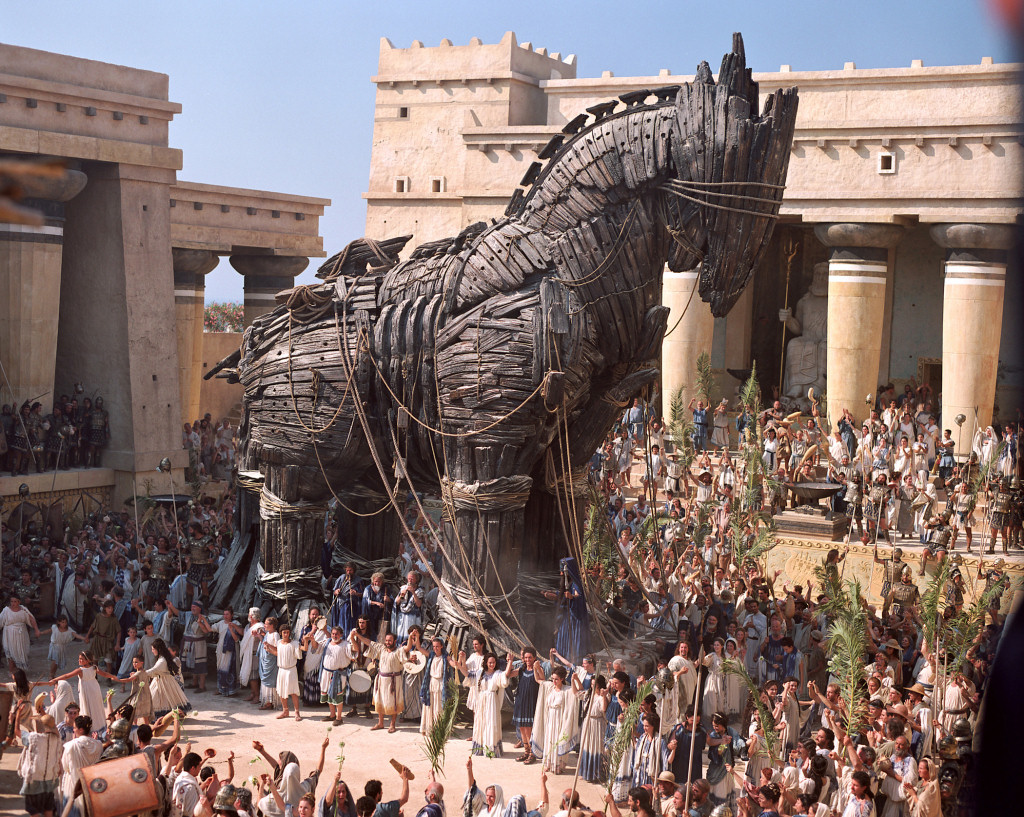
The Modern “Trojan Horse” Reworked For Capitalism

trojanhorse

This post is not strictly about Competition Law, but then, life is about more than Competition Law. And as it is, the just announced Microsoft-Nokia buyout deserves a post !!

Lets consider the facts. Stephen Elop, who was heading Microsoft’s business software division, left Microsoft in 2010 to join Nokia, allegedly  to lift Nokia out of the non-innovative rut which it had managed to get itself stuck in at the time, especially with Touchscreen phones and Smartphones. What did Nokia do under the leadership of its new C.E.O. ?? It tied up in a strategic partnership with Microsft to provide the software to its new line of “Lumia” smartphones. In addition to this, Nokia did not even try to pursue a growth startegy with the Android operating system on its phones. Correct me if am wrong, but not even a single Nokia Smartphone or Touchscreen phone is equipped with the Android operating system.

Furthermore, During the almost three years Stephen Elop was C.E.O. of Nokia, the Company fell from its position as the world’s largest smartphone vendor to assume the status of tenth largest. As a consequence, not only did Nokia obviously see its market share collapse, but more importantly, it’s share price literally shrivelled up to a pittance. Shares in Nokia may have surged around thirty percent to 4.01 Euros by late Tuesday, but while up from their decade-low of 1.33 Euros hit last year, they are still only a fraction of their year 2000 peak of 65 euros. It’s obvious that Microsoft is getting Nokia cheap.

I may sound like a conspiracy theorist here, but it almost seems Stephen Elop was SENT TO NOKIA WITH THE INTENTION FOR PREPARING IT’S MOBILE HANDSET BUSINESS FOR AN ACQUISITION BY MICROSOFT. What further lends credence to this theory is the fact that he will return to Microsoft to head the newly acquired Mobile Division.

In conclusion, unless Finnish and E.U. authorities wish to investigate, it does not seem as if the move was in any manner illegal. However, it does leave a bad taste in the mouth. Also, whether even this cut-throat strategy was worth it remains a question, considering Microsoft shareholders are less than impressed with the deal as of now. (Microsoft shares were down almost six percent at the time of publication fo this post.) And who can blame them ?? Windows phones haven’t been doing well in general, and the problem seems to be more with the acceptance of the software rather than there being anything wrong with the hardwware.

A Snacker

KFC_KFC_Snackeru_with_Crispy_Strip_Ultimate_Cheese_334132 (1)

An upcoming post on the recent Reference Case No. 01/2012, . M/s Puja Enterprises et al., has been slightly delayed, so here is a snacker till this Friday, by which I hope the post will be ready for upload.

1. Volume 5 of Fair Play is out. For the uninitiated, Fair Play is the Quaterly Newsletter of the C.C.I.

2. Typical of the workings of a Ministry, the Draft National Competition Policy has now been referred to a Committee of Secretaries for “further consideration”. [Press Release]

EC Dawn Raids: A human Rights Violation ?

I recently read an old 2008 article titled “EC Dawn Raids: A Human Rights Violation?” by Imran Aslam and Michael Ramsden.

The Paper examines whether the ‘Dawn Raid’ procedure provided in E.C. Regulation 1/2003 is consistent with two rights protected by the European Convention on Human Rights and Fundamental Freedoms: the privilege against self-incrimination (Article 6 E.C.H.R.) and the right to privacy (Article 8 E.C.H.R.). The paper argues that the protection provided by the European Court of Justice falls far short of protection necessary to undertakings. On this basis, it analyses what available source(s) of judicial remedy an undertaking has in order to avail itself of E.C.H.R. rights.

While the article is old, it does hold special relevance for India in light of the expansive powers which are proposed to be given to the C.C.I. in the still pending Competition Amendment Bill which proposes to amend Section 41 of the Act, conferring the authority on the Commission to grant powers of search and seizure to the Director General’s office as and when required.

Fire Sales in the Aviation Sector: Are they Really a Competition Law Abuse ??

ff1

Much has been said about the recent “Fire Sale” tactics adopted most recently by Jet Airways and also by SpiceJet in the past. While we debate on whether this is fit case to be considered by the C.C.I., I have to submit that in my  personal opinion, this incident can probably not be classified as an incident of predatory pricing, the reasons for which are as follows:

“Fire sales” or “pricing games” cannot per se be considered anti-comeptitive or a Predatory Pricing tactic. The Competition Act, 2002 clearly defines the phrase as when goods or the provision of services are sold BELOW COST. There is no proof that the sale of these tickets is actually below cost, as is further affirmed by the article itself which clarifies that the tickets are exclusive of taxes, effectively bringing the prices at par with other airline ticket prices.

As to the airline declaring losses in a particular quarter or the general lack of financial health in the aviation sector, such general economic scenarios cannot be used to determine Predatory Pricing or any evidence thereof. Predatory Pricing must be determined according to the specific incident which is alleged as Predatory Pricing, i.e., it would be required to show that the tickets that were sold in the fire sale itself were below cost. In the case where one can show them as having been sold above cost, the financial health of the airline would be irrelevant. Furthermore, if the airline could show that my selling large volumes, it was in fact able to make a profit, it would further render the case of he C.C.I. all the more weak.

One may counter this by submitting that my argument is inherently contradictory as a loss making airline would imply tickets having been sold at below cost. However, this is where the peculiarities of the aviation sector itself would need to be taken into consideration. The entire sector is suffering from severe financial strain due to many other factors other than the variable price of tickets. I am of the opinion one could successfully argue that it is these additional factors which play a significant role in the final balance sheet of the airline rather than one individual incident of fire sale.

Training Program on Competition Law by N.U.J.S.

nujs

N.U.J.S., Calcutta is organising a training Program on Competition Law from 14th August, 2013 to 17th August, 2013.

Seats are limited to thirty and applications shall be accepted on a first come, first serve basis.

Further details can be found here

Source: Lawctopus

A Comment on the T.R.A.I. Consultation Paper on “Monopoly/Market dominance in Cable TV services” Part – II

Part II of my comments on the T.R.A.I. Consultation paper on “Monopoly/Market dominance in Cable TV services” can be found on the India Law and Technology Blog


Both posts were infact, initially supposed to be on the I.L.T.B., but unfortunately, due to a communication gap between Apar (the founder of the Blog) and me, I ended up putting the first part here.


Click here to see the post.


A comment on the T.R.A.I. Consultation Paper on “Monopoly/Market dominance in Cable TV services” Part – I

trai-new-logo


The Telecom Regualatory Authority of India on 3rd June, 2013 released Consultation Paper No.: 5/2013 titled “Monopoly/Market dominance in Cable TV services”. The paper was in response to a reference received on 12th December, 2012 from the Ministry of Information and Broadcasting seeking TRAI’s recommendations under Section 11(1)(a) of T.R.A.I. Act.

With this post I aim to proffer answers to the questions raised by the Regulator and aim to provide suggestions as requested by them.

1. Do you agree that there is a need to address the issue of monopoly/market dominance in cable TV distribution? In case the answer is in the negative, please elaborate with justification as to how the ill effects of monopoly/market dominance can be addressed?

Absolutely yes. Ironically, it is T.R.A.I. itself which has caused the problem of dominance in the first place. Earlier, before the implementation of Digital Access Service (D.A.S.), i.e., what is commonly referred to as the “Set Top Box”, Cable TV could either be analogue or non-addressable viz. the cable TV signal is not digital. In the case of non-addressable platforms, Local Cable Operators (L.C.O.’s) had the option of downlinking Free to Air (F.T.A.) channels directly from broadcasters without the help from Multi System Operators (M.S.O.’s). Pay channels were ofcourse obtained by LCO’s through M.S.O.’s as these are transmitted by broadcasters in encrypted form as required. However, after the amendment of the Cable T.V. Act, 1995 in November 2011, it became obligatory for each cable operator to transmit or re-transmit programs of any channel in encrypted form through a digital addressable system. Consequently, only M.S.O.’s can receive signals from the broadcasters as per the Cable TV Networks Rules, 1994 as amended on 28th April 2012. Therefore, as per the paper,

“The MSO maintains a Subscriber Management System (SMS) where details about each customer and his/her channel preferences are stored. All the channels are now decrypted at the customer end through a set top box (STB) programmed by the MSO as per details in the Subscriber Management System. Therefore, in the DAS environment, MSOs play a key role in distribution of both FTA and pay channels.”

Which brings us to the condition which must be imposed to the above affirmative, that this dominance is predominantly at the State level. There does not appear to be a national dominance as most MSO’s operate on a regional basis. Therefore, the relevant market while examining such a question of dominance must be taken to be a respective state. I had highlighted this point in an earlier post while discussing similar issues before the C.C.I.

Also, since at present D.A.S. has still not been fully implemented across the entire country, it may be difficult to determine the true level of dominance of M.S.O.’s in each state. Till that time, the T.R.A.I. may consider our suggestion on the substitutive ability of the services as enumerated in the earlier post.

2.Do you agree that the state should be the relevant market for measuring market power in the cable TV sector? If the answer is in the negative, please suggest what should be the relevant market for measuring market power? Please elaborate your response with justifications.

Yes. The reasoning for which has already been elaborated above.

3. To curb market dominance and monopolistic trends, should restrictions in the relevant cable TV market be:

(i) Based on area of operation?
(ii) Based on market share?
(iii) Any other?
Please elaborate your response with justifications.

At the outset, I feel ex-ante restrictions are not the best method of tackling dominance in the sector as not only could they hurt competition compliance but experience shows it is often difficult to predict or theorize the effects or consequences of such regulations and this generally results in a huge spate of litigation. However, if such regulations are to be implemented, then they should NOT be based on the market share of an M.S.O. since it would be a herculean task to ensure competitiveness through regulations in each separate state (since the market share would be based on each specific state.) Moreover, market shares are subject to changes through regular competitiveness and acquisitions. Lastly, it is a well accepted principle of competition law, and which the T.R.A.I. should also follow, that dominance itself is not considered an offence but an abuse of that dominance is considered an infringement of competition law. Rather, it would be better to draft certain general rules on abuse of dominance in the Cable TV sector which may be enforced on an ex-post facto basis.


To be Contd.