COMPAT Admits Anti-DTH Appeal.

The Competition Appellate Tribunal (COMPAT) has admitted the appeal of the Consumer Online Foundation (COF) against the decision of the CCI clearing DTH operators including Tata Sky and Reliance Big TV of charges of market dominance abuse in the set-top boxes case has been challenged by a consumer rights group. The matter has been listed for September 5th.

The appeal is not surprising. I have already expressed my views on the apparent confusion of the CCI in the relevant matter on the India Law and Technology Blog.

Is the CCI Thinking Too Much ??

The CCI in its recent Order dated 4th July, 2012 in the case of Owners and Occupants Welfare Association v. M/s DLF Commercial Developers Ltd. (Main Order/Separate Order/Dissenting Order) dismissed the complaint of the informant on the grounds and to quote:

“It is not alleged by applicant that Jasola District Centre had some particular significance to the allottees in comparison to other commercial space located in Delhi. The allottees who booked commercial space in Jasola could have booked commercial space anywhere in Delhi. The informant has not stated about the purpose of investment made by the allottees, whether the allottees had booked for the purpose of shifting their existing business in the nearby areas or they had booked for the purpose of investment.”

Granted, the first point is relevant. The issue at hand is the second point. On the second reason, the Commission has taken the logic that the booking of commercial space is done by two types of consumers. The first category are those are in the need of commercial space for the purpose of establishing a new business venture or for shifting their business place from one place to another place. The second category comprises of who invest in the commercial space for purpose of profits or future rental income.

No doubt such a category of consumers does exist but the question is exactly why such a distinction would be relevant in the present matter. Firstly, any such group of consumers, irrespective of their intentions, would without a doubt still be affected by any such abusive practices of DLF. Secondly, the argument of substitutability also may be hard to support in the present matter due to firstly that such investor would also take into account the fact that “Jasola being far away from the existing commercial centers, there was no nearby commercial complex within few hundred meters at the time when Jasola started developing.” For such investors, substitutability often stands reduced as a new commercial center would mean being able to buy a space for a better price than available in a developed area, and therefore, better profits from the rent revenue, especially in the long run. It must also be noted that any such consumer/buyer considers such an acquisition as a long term investment where the returns or profits shall only be recuperated with time.

Moreover, in conclusion, assuming (as this has not been confirmed in the order) that the consumers/buyers in this case have become “captive consumers” (as was the case in the previous DLF Order of the CCI), then such substitutability cannot be effectively measured.  (This is one of the faults which I find in the use of the SSNIP Test, but more on this later).

Certificate/Diploma Courses on Competition Policy and Law

The admissions for CIRC – NLUD Certificate and Diploma courses in Competition Law and Policy for October 2012 batch are now open.

Further details about the course can be found here. As far as I know, this is the only Diploma/Certificate course being offered in the country on competition law as of now.

P.S.: Will be back with more serious posts soon. A bit busy this week.

Competition Law Workshop for Marketing Professionals

Unfortunately, somehow managed to miss this one. However, there is a Mumbai leg on 14th December, 2012 for all those who are interested.

For details, click here

A Few Thoughts on Competition Law in the Technology and Media Sector

I recently wrote a post titled “A Few Thoughts on Competition Law in the Technology and Media Sector” for the India Law and technology Blog. To read the article, please click here.

Building Competition Jurisprudence

The Commission is busy building Indian competition jurisprudence. 🙂

Some trivia for all those interested. As on the date of this post the total number of orders passed by the Commission were as follows:

1. Orders under Section 3 and Section4 = 171

2. Combinations orders (FormI/II) = 56

3. Combination orders (Form III) = 3

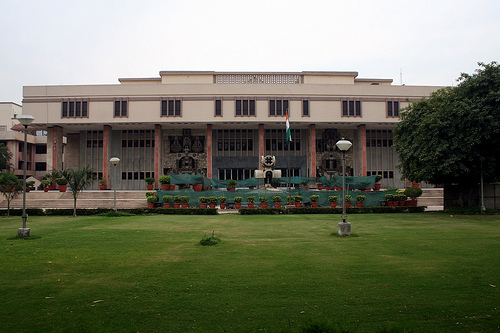
W.P.(C) 993/2012 and C.M. Nos. 2178-79/2012, Union of India v. Competition Commission of India

A commentator on a previous post recently  brought to my attention a recent judgement of the Delhi High Court in which the hon’ble Court chose to deal with the concept of what would constitute “a sovereign function”. (W.P.(C) 993/2012 & C.M. Nos. 2178-79/2012, Union of India  v. Competition Commission of India)

The Court in this case discussed the Supreme Court judgement’s of Common Cause v. Union of India, (1999) 6 SCC 667  and Agricultural Produce Market Committee Vs. Ashok Harikuni & Another, (2000) 8 SCC 61  where the Supreme Court held that sovereign functions in the new sense may have very wide ramifications, but essentially sovereign functions are primarily inalienable functions which only the State could exercise. It was also observed by the Court, quoting from the petitioners brief that:

“….it appears that the courts have taken a very narrow view of the term “sovereign function” by confining the same to strict constitutional functions of the three wings of the State. Welfare activities, commercial activities and economic adventures have been kept outside the purview of the term “sovereign functions”.”

While the judgement’s of the Supreme Court and the Delhi High Court may serve as effective guidelines for the government to help determine what sovereign functions should be exempted under the Act, I strongly  feel that it is in the end the sole prerogative of the Central Government to determine what enterprises and their sovereign functions, if any, should be exempted under the Act.  In fact, even a non – sovereign function of an enterprise may be exempted from the CCI’s jurisdiction by the government under Section 54(a) of the Act.

It should be noted that the Court was in fact in a way, forced to discuss this issue due to the contentions advanced by the Petitioner and that the actual issue was whether the function being performed by the governent could be classified as an “enterprise” under Section 2(h) of the Competition Act.