

We were planning a detailed post with a critical analysis on the Department of Justice (DoJ) complaint filed against the five publishers (Hachette, Penguin, Simon and Schuster, Macmillan and Harper Collins) alleging their agreement with Apple to be anti-competitive, but unfortunately, The Economic Times (ET) beat us to it !! 🙂
Being an excellent article, we would like to only add to what Avinash Celestine has written in his article.

What we fail to understand is that as publishers, the copyrights to the E-Books, be it on Amazon or Apple, are owned by the publishers themselves. Why did they not simply negotiate better terms with Amazon on wholesale prices on E-books ?!?! Also, as of now, they don’t really have a lot to complain about regards pricing, as per this blogpost, which claims that publishers may ultimately end up earning approximately seven dollars per E-Book copy “sold” (this is primarily due to the new agency model which publishers forced Amazon to implement, but more on that below.)
Also, if they were so concerned about the consequent fall in wholesale and retail prices of print books, why did they enter into the E-Books market in the first place ?!?! The publishers are themselves also partly to blame for there conundrums and add to that they decide to counter it by digging their own graves even deeper through an agreement with Apple. (this is the exact sentiment expressed by another blogger involved with the publishing business). Britannica realised that whether the organisation or customers liked it or not, it was time to go digital. The publishers should have learnt the same. They should have made a choice. In fact, to quote Jorge Cauz, president of Encyclopedia Britannica, Inc.
“print may not completely vanish from the market, but I think it is going to be increasingly less important. Many publications will never have a print analog and will only be printed on digital formats.”
Also, the Apple-publishers deals seems to be a classic case of a corporate panic attack with adverse consequences. Publishers should have realised that despite all the hype around E-Books, the fact remains that hard copy books will never really go out of fashion. Libraries will continue to buy them for quite some time. People like the author himself (who does not own a Kindle and is not even interested in getting one) prefer hard copy books over E-Books any day and always will. There is always a certain special comfort which one derives from actually holding a paper book and to be able to physically turn the pages with your fingers. granted, their demand shall fall as compared to today, but the losses could have easily been recouped through a better deal with E-Book retailers.
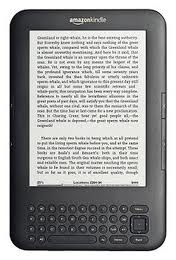
Which bring us to the other side of the story, which is exactly what publishers did in the agreement with Apple. Therefore, how exactly is it anti-competitive ?? After all, some would even say that Amazon was playing dirty, so the publishers decided to play dirty as well. This is probably the reason why Apple and the publishers who have not settled are willing to fight it out. The problem lies in the fact that they later used this agreement to force Amazon to do the same as well, i.e., sell the books under the exact same condition as Apple, effectively leading to the abuse of a re-emerged dominant position in the E-Book market.
It is intriguing how Amazon, which isn’t exactly innocent itself, has managed to gain the most out this entire quagmire and has largely escaped legal censure. However, in conclusion, we would like to stress on the fact that in a way, the reason for such disputes is because of the media revolution which we are experiencing right now on a daily basis. Laws are unfortunately till a large extent still ambiguous, with situations and cases as we are facing today never having been predicted when they were enacted, and it is safe to assume that such disputes shall arise for quite some time to come till one gains clarity. Till that extent, it really isn’t anybody’s fault. Not Amazon’s. Not the publishers. Not Apple’s.

 Indian Competition and Anti-Trust Blog
2 thoughts on “Lost the race to Economic Times. :P”